
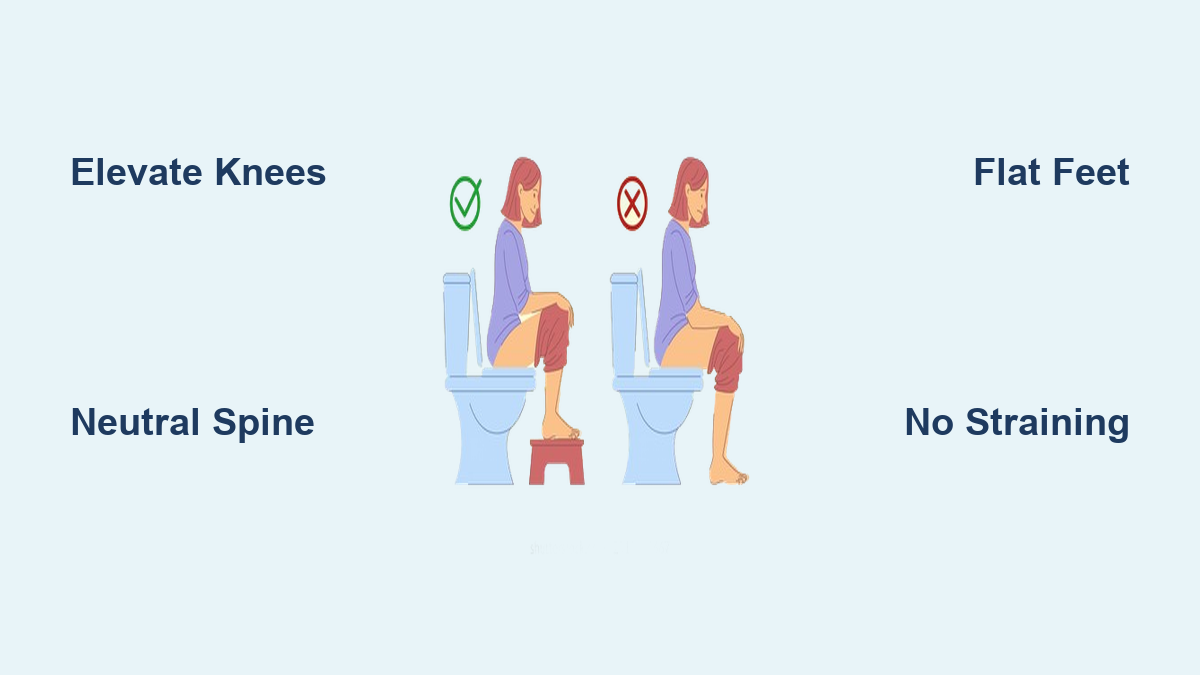
For millions of people, using the toilet is a daily routine taken for granted. That is, until discomfort, straining, or incomplete evacuation becomes a problem. The correct way to sit on the toilet is rooted in biomechanics that support natural, efficient bowel movements. Poor posture can lead to constipation, hemorrhoids, and long-term pelvic floor issues that affect quality of life.
This guide breaks down the science-backed method for optimal toilet posture. You will learn how small changes in foot placement, spinal alignment, and timing can dramatically improve digestive health. Whether you are struggling with constipation or simply want to optimize your bathroom habits, mastering the correct sitting position is a simple, cost-free solution with lasting benefits.
Achieve Optimal Toilet Posture for Natural Elimination
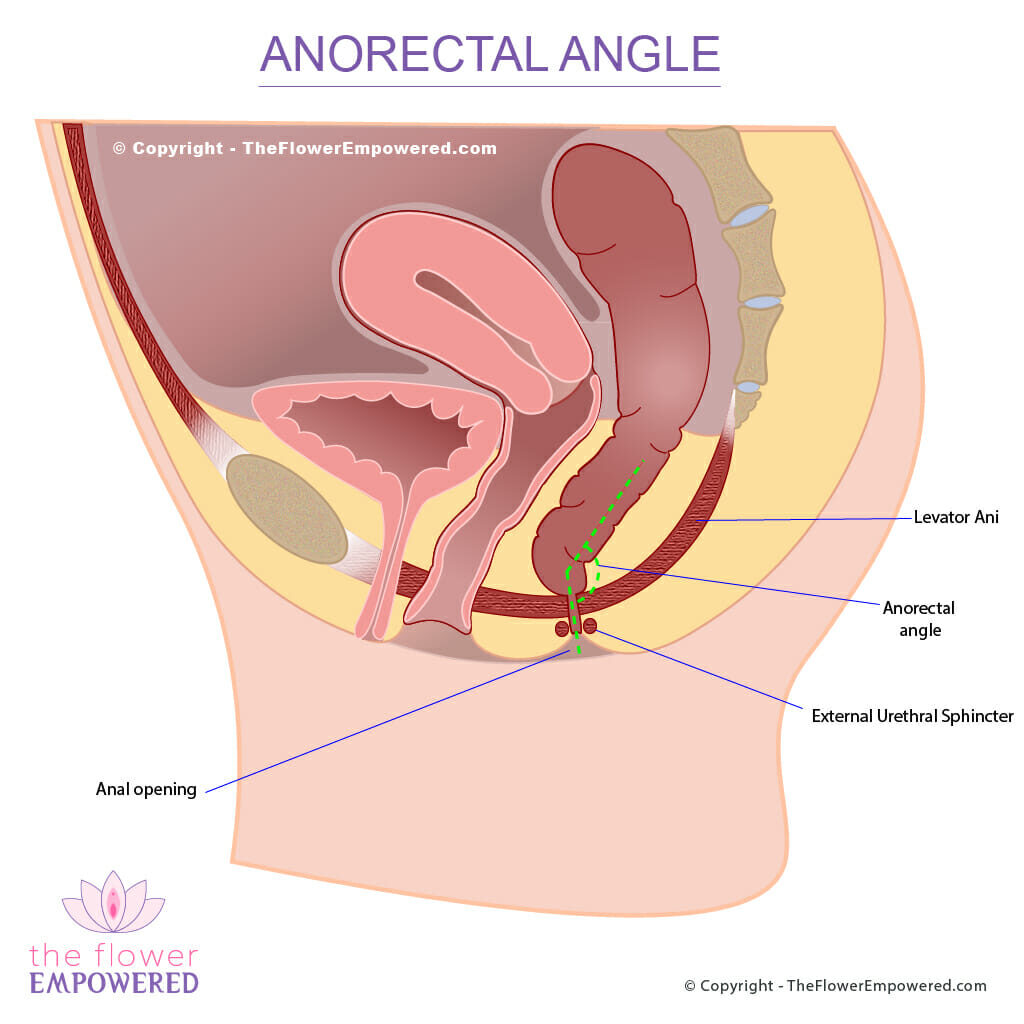
The foundation of healthy elimination lies in aligning your body to support natural defecation mechanics. The goal is to straighten the anorectal angle, which is the bend between your rectum and anus, by adjusting your posture. In a standard seated position, this angle remains partially closed, requiring more effort to pass stool. When you adopt the correct posture, the puborectalis muscle relaxes, opening the pathway and reducing strain.
This optimal position combines knee elevation, spinal neutrality, and abdominal relaxation. It is not about force. It is about alignment. With the right setup, bowel movements become quicker, more complete, and less taxing on your body. Consistency matters too. Using this posture every time helps train your bowels and supports long-term digestive wellness.
Elevate Knees Above Hips

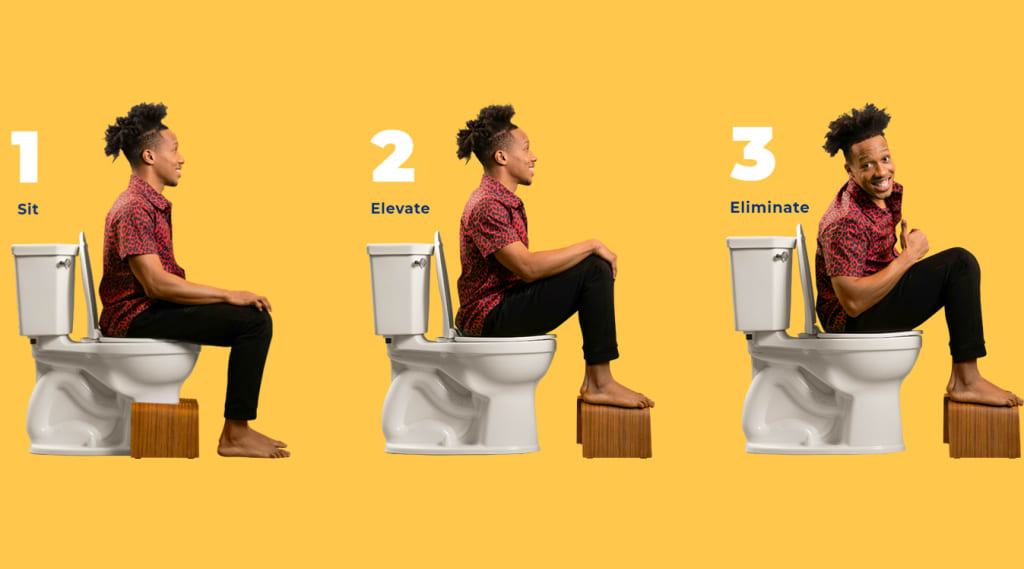
The single most effective change you can make is ensuring your knees are higher than your hips while sitting. This shift mimics the natural squatting position humans used for millennia before modern toilets. When your knees rise, your pelvis tilts forward, which straightens the anorectal angle and reduces resistance during evacuation.
If your feet do not rest flat on the floor with knees elevated, use a footstool or toilet stool. Place it about 8 to 12 inches from the base of the toilet and adjust the height so your thighs angle downward. Your feet should be flat, knees bent at approximately 90 to 120 degrees. Without this elevation, the rectal angle stays constricted, increasing the need to strain and raising the risk of hemorrhoids and pelvic floor damage.
Maintain Neutral Spine Alignment
Your spine plays a crucial role in efficient elimination. Sit with your back straight and spine in a neutral position, avoiding both slouching and over-arching. A neutral spine keeps your pelvis balanced and allows internal organs to function without compression.
Avoid hunching forward excessively. Even though a slight forward lean helps open the pelvic floor, bending too far strains the lower back and disrupts alignment. Instead, hinge gently from the hips while keeping your chest lifted and shoulders relaxed. This subtle tilt supports abdominal pressure without compromising spinal health.
Position Feet Flat and Stable
Foot placement directly impacts pelvic stability and muscle relaxation. Both feet must rest flat on the floor or stool, slightly apart, to create a stable base. Dangling feet or balancing on toes destabilizes your posture, restricts blood flow, and prevents proper hip flexion.
Ensure your foot support is wide enough and non-slip. Wobbling or gripping with your toes introduces tension, which counteracts the goal of pelvic floor relaxation. Stability allows your body to focus on the elimination process rather than maintaining balance.
Fix Common Sitting Mistakes That Harm Digestion
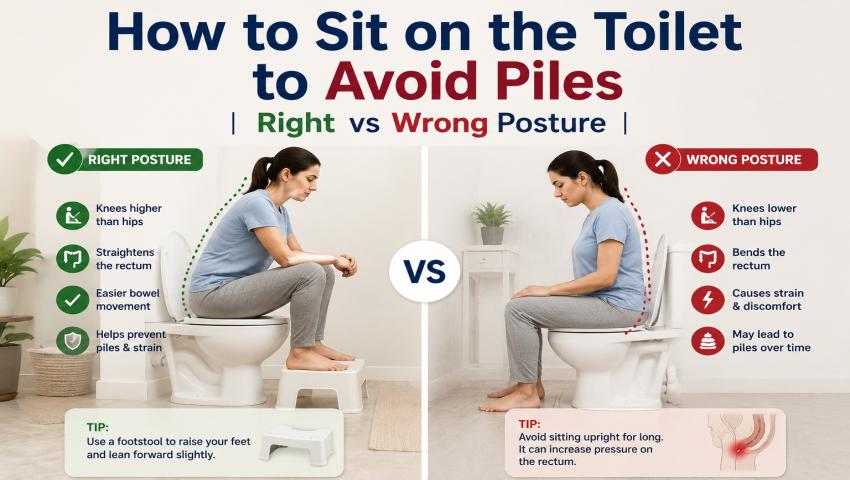
Even with good intentions, many people unknowingly adopt harmful toilet habits that undermine digestive health. These errors may seem minor but accumulate over time, contributing to chronic constipation, hemorrhoids, and pelvic floor dysfunction. Recognizing and correcting these mistakes is essential for long-term wellness.
By identifying faulty posture cues like crossing legs or holding your breath, you can transform an inefficient experience into a smooth, natural one. The following adjustments address the most frequent errors seen in everyday toilet use.
Avoid Crossing Legs
Crossing your legs while on the toilet is a common but harmful habit. It disrupts balance, restricts circulation, and limits the range of motion in the hips and pelvis. This restriction prevents the puborectalis muscle from fully relaxing, maintaining the anorectal angle and making evacuation harder.
Keep both feet grounded and hips open. If you tend to cross your legs out of habit, place a reminder note on the bathroom wall or use a footstool that physically prevents leg crossing. Proper leg positioning supports full pelvic floor relaxation and smoother bowel movements.
Stop Excessive Forward Leaning
While a slight forward lean from the hips aids defecation, leaning too far forward strains the lower back and can compress abdominal organs. Some believe they must push hard by bending aggressively, but this often leads to muscle fatigue and injury.
Instead, place your elbows gently on your knees or rest your hands on your thighs. This provides support without over-flexing the spine. The forward motion should come from hip flexion, not spinal rounding. Keep your neck aligned with your back and avoid jutting your head forward.
Do Not Sit Too Far Back or Forward
Sitting too far back on the toilet causes your spine to round, collapsing the chest and tightening the pelvic floor. This position increases pressure on the tailbone and reduces space for abdominal expansion. Conversely, perching too far forward compromises balance and limits muscle coordination.
Sit centered on the seat, with your sit bones evenly supporting your weight. Your body should feel stable without gripping the sides of the toilet. A centered position ensures proper alignment and allows for controlled, effective evacuation.
Follow the 4-Step Constipation Relief Method
When constipation strikes, posture becomes even more critical. The four-step constipation relief method combines biomechanical adjustments with mindful timing to promote safe, effective evacuation without excessive straining. This protocol is widely recommended by pelvic health specialists.
Each step builds on the previous one, creating internal conditions that facilitate natural bowel movement. Used consistently, this method can reduce reliance on laxatives and prevent complications like hemorrhoids and anal fissures.
Step 1: Elevate Knees
Begin by raising your knees above hip level using a footstool. This simple act changes the internal geometry of your pelvis, relaxing the puborectalis muscle and straightening the rectal canal. Without this step, even strong pushing may fail to initiate movement.
If no stool is available, use a stable object like a stack of books or a small box. Just ensure it supports flat-footed contact. The goal is a thigh-to-hip angle greater than 90 degrees.
Step 2: Lean Forward Gently
From the hips, lean your upper body forward slightly. Place your elbows on your knees or hands on your thighs for support. This forward tilt opens the pelvic outlet and increases intra-abdominal pressure in a controlled way.
Do not collapse your chest or round your back. Maintain a straight spine throughout the movement. This distinction ensures you are leveraging posture, not brute force.
Step 3: Bulge the Abdomen
Actively push your abdomen outward as you prepare to evacuate. This maneuver, known as abdominal bracing, uses the diaphragm and abdominal muscles to gently guide stool downward.
Breathe out slowly as you bulge. Do not hold your breath. Holding air increases internal pressure dangerously and can lead to dizziness or fainting. Controlled exhalation supports sustained, safe pushing.
Step 4: Keep Spine Straight
Throughout the process, maintain a neutral spine. Even with forward lean and abdominal effort, your back should remain straight. Hunching reduces efficiency and transfers strain to the lumbar region.
Imagine a straight line from your tailbone to the base of your skull. Preserving this alignment ensures maximum effectiveness with minimal physical cost.
Manage Timing and Bowel Habits for Better Results
How long you stay on the toilet and when you push matters as much as posture. Rushing or lingering too long can disrupt natural rhythms and cause harm. Your body needs time to respond, but patience has limits.
Developing healthy timing habits prevents tissue damage and trains your bowels for consistent, reliable function. These strategies help you work with your body, not against it.
Wait 5 Minutes Before Pushing
After sitting down, do not push immediately. Give your body 3 to 5 minutes to adjust and let the natural defecation reflex activate. Sudden straining can trigger spasms or incomplete evacuation.
Use this time to breathe deeply, relax your pelvic floor, and allow gravity and internal pressure to do their work. Many people miss this window, rushing into forceful efforts that do more harm than good.
Limit to 3 Attempts Per Session
Try to pass stool no more than three times in one bathroom visit. If nothing happens after three gentle attempts, get up and walk around. Prolonged sitting increases pressure on the rectal veins, raising the risk of hemorrhoids.
Walking stimulates peristalsis, which is the wave-like motion of the intestines. Drinking a warm beverage like tea or coffee can also help trigger movement. Return only when you feel a clear urge.
Avoid Using Toilet as a Chair
Never treat the toilet as a place to read, scroll, or relax for extended periods. Sitting longer than 5 to 7 minutes without active elimination promotes poor circulation, pelvic congestion, and habitual straining.
If you are not going to the bathroom for a bowel movement, do not sit on the toilet. Break the habit of multitasking in the bathroom. It is one of the leading causes of preventable pelvic floor disorders.
Prevent Health Risks and Complications From Poor Posture
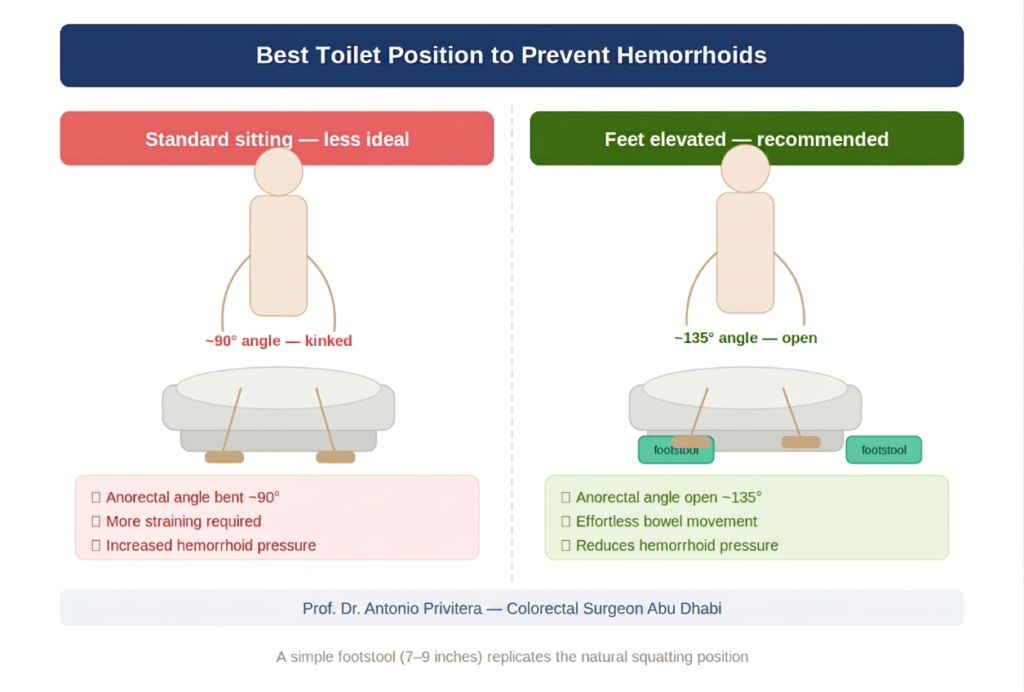
Improper toilet posture is not just inconvenient. It can lead to serious medical issues over time. Chronic straining, poor alignment, and extended sitting contribute to conditions that affect quality of life and require medical intervention.
By adopting the correct sitting method, you significantly reduce the risk of developing preventable but painful complications. Awareness and prevention are key.
Reduce Risk of Hemorrhoids
Hemorrhoids are swollen veins in the rectum caused by repeated straining and increased pressure. They can bleed, cause pain, and lead to itching or discomfort.
Proper posture, especially knee elevation and limited straining, reduces venous pressure. Combine this with adequate hydration and fiber intake to keep stools soft and easy to pass.
Prevent Faecal Impaction
When hard stool accumulates in the rectum and cannot be expelled, faecal impaction occurs. This condition often starts with ignored urges or chronic constipation.
If you feel stool is stuck halfway, stop pushing. Recheck your posture, drink water, walk, or take a mild laxative. Persistent impaction requires medical treatment, including manual disimpaction or enemas.
Avoid Incomplete Evacuation
Feeling like you have not fully emptied your bowels even after finishing is a sign of incomplete evacuation. This sensation often results from poor posture or pelvic floor dysfunction.
Using the correct sitting position helps achieve complete emptying. If symptoms persist despite proper technique, consult a healthcare provider. Conditions like IBS, rectal prolapse, or nerve damage may be involved.
Adapt for Public and Special Situations Anywhere
Not every bathroom offers ideal conditions. Public restrooms may lack footstools, have unclean seats, or limit your time. Yet, you can still apply core principles to protect your health and maintain proper form.
With a few smart adaptations, you can uphold good toilet habits anywhere you go.
Use Disinfectant Wipes in Public
Always wipe the toilet seat with a disinfectant wipe before sitting. This creates a cleaner surface and reduces exposure to bacteria. If wipes are not available, use toilet paper or a seat cover.
Avoid hovering over the seat. It destabilizes your posture and engages muscles unnecessarily, making elimination harder. Sitting properly, even briefly, is safer and more effective.
Mimic Knee Elevation Without a Stool
If no footstool is available, widen your stance and press your feet firmly into the floor. Some users find relief by placing one foot on the rim of the toilet base if clean and stable, creating a partial squat on one side.
Though not perfect, these adjustments help raise the hips relative to the knees and improve alignment compared to flat-footed sitting.
Carry a Toilet Access Card if Needed
For individuals with IBS, Crohn’s disease, or mobility issues, sudden urgency can be stressful. A toilet access card, which is a medical ID explaining the need for immediate restroom use, can help gain entry to staff-only or locked facilities.
These cards are recognized in many countries and can reduce anxiety when traveling or in public spaces.
Support Continence and Hygiene for Long-Term Health
Good toilet habits extend beyond posture. Hygiene practices and protective measures play a vital role in maintaining dignity, preventing infection, and managing incontinence.
Simple actions like wiping correctly and using supportive products enhance overall bathroom health.
Wipe Front to Back Always
Always wipe from front to back, especially for women. This prevents bacteria from the anal area spreading to the urethra or vagina, reducing the risk of urinary tract infections and other infections.
Use soft, unscented toilet paper or moist wipes designed for sensitive skin. Avoid aggressive wiping, which can irritate the perineal area.
Use Continence Wear When Necessary
For those experiencing bowel incontinence or leakage, continence products offer protection and confidence. Light-absorption pads made from materials like organic bamboo are breathable, leak-proof, and environmentally friendly.
These products manage minor leaks due to constipation overflow or muscle weakness, helping maintain hygiene and comfort throughout the day.
Frequently Asked Questions About Correct Toilet Sitting Posture
Why Does the Correct Way to Sit on Toilet Matter for Health?
The correct way to sit on the toilet matters because it directly affects the anorectal angle and the relaxation of the puborectalis muscle. Poor posture keeps this angle constricted, forcing you to strain. Over time, straining leads to hemorrhoids, pelvic floor damage, and chronic constipation. Proper alignment allows for natural, complete evacuation with minimal effort.
How High Should a Footstool Be for Proper Toilet Posture?
A footstool should elevate your knees so they sit higher than your hips, creating a thigh-to-hip angle greater than 90 degrees. Most people find a height of 8 to 12 inches works well. The goal is flat-footed contact with the stool or floor while your knees rise above hip level. This mimics the natural squatting position that straightens the rectal canal.
How Long Should You Sit on the Toilet Without Pushing?
You should wait approximately 3 to 5 minutes after sitting down before attempting to push. This allows your body’s natural defecation reflex to activate. Immediate straining can cause muscle spasms and incomplete evacuation. If nothing happens after three gentle attempts, get up, walk around, and return only when you feel a clear urge.
Can Crossing Your Legs on the Toilet Cause Problems?
Yes, crossing your legs on the toilet restricts blood flow, limits hip mobility, and prevents the puborectalis muscle from fully relaxing. This keeps the anorectal angle constricted and makes evacuation harder. Keep both feet flat and grounded to support proper pelvic alignment and muscle relaxation.
What Happens If You Sit on the Toilet Too Long?
Sitting on the toilet longer than 5 to 7 minutes without active elimination increases pressure on the rectal veins, raising the risk of hemorrhoids. It also promotes poor circulation and pelvic congestion. If you are not actively trying to pass stool, get up and wait for a stronger urge before returning.
Is Hovering Over a Public Toilet Better for Hygiene?
No, hovering over a public toilet is worse for both hygiene and elimination. It destabilizes your posture, engages pelvic muscles unnecessarily, and makes bowel movements harder. Instead, wipe the seat with a disinfectant wipe or use a seat cover, then sit normally. Proper seated posture is safer and more effective than hovering.
Key Takeaways for Mastering the Correct Way to Sit on Toilet
The correct way to sit on the toilet combines science and simplicity. By elevating your knees above your hips, aligning your spine in a neutral position, and using proper timing, you support natural, strain-free elimination. These changes require no medication or special equipment, just awareness and consistency.
Over time, this posture can prevent hemorrhoids, improve bowel regularity, and enhance overall pelvic health. Many people overlook toilet posture, but small adjustments deliver meaningful results for digestive wellness.
Start today. Place a footstool by your toilet, check your alignment, and give your body the support it was designed to have. Your digestive system will thank you for years to come.