If you’ve added a bidet to your bathroom, you’re already ahead in hygiene, but how often to clean bidet nozzle is a question many users overlook. While self-cleaning functions sound like a set-it-and-forget-it solution, they do not eliminate the need for regular maintenance. Without proper care, mineral buildup, biofilm, and sediment can compromise performance and cleanliness. This guide breaks down exactly when and how to clean your bidet nozzle based on usage, water quality, and model type.
Run Self-Clean Before and After Every Use
Activate Pre- and Post-Cycle Daily
Run the self-clean function before and after every use. This dual rinse removes contaminants from previous users and clears any residue left after your own use. Though not a substitute for manual cleaning, this automated flush significantly reduces surface-level contamination.
What the cycles accomplish:
- Pre-use rinse clears accumulated particles from shared bathrooms
- Post-use rinse washes away bodily fluids before they dry or attract microbes
- Cycle duration is typically 15 to 20 seconds, enough for surface rinsing
In households with multiple users, pre-cycle cleaning is essential. One Reddit user noted that using the self-clean before helps push off residue from someone else’s aim issues. While convenient, remember that self-cleaning does not remove mineral scale, biofilm, or housing grime. It is a first line of defense, not a complete solution.
Wipe Nozzle Every 1 to 2 Weeks
Light Cleaning for Routine Maintenance
Even with self-rinsing, wipe the nozzle and housing every 1 to 2 weeks using a soft, damp cloth and mild cleaner. This catches early buildup and keeps the unit looking and functioning like new.
What you will need:
- Soft microfiber cloth or sponge
- Mild dish soap and warm water, or one part vinegar to one part water
- Dedicated soft-bristle toothbrush labeled for bidet-only use
Step-by-step cleaning process:
- Unplug electric models to avoid electrical hazards
- Extend the nozzle using the wash or clean mode; never pull it manually
- Wipe the nozzle tip, paying attention to spray holes and crevices
- Clean around the housing and retraction track where grime collects
- Dry thoroughly with a lint-free cloth to prevent moisture retention
This quick task takes under 5 minutes and prevents long-term issues like clogs or odors.
Perform Monthly Deep Inspection
Check for Buildup and Function
Once a month, perform a detailed inspection to catch problems early. This is not just cleaning; it is preventive maintenance.
Focus areas for monthly inspection:
- Spray holes: Look for white mineral deposits or clogs
- Nozzle movement: Does it extend and retract smoothly?
- Spray pattern: Is it even, or split and crooked?
- Housing seams: Wipe and inspect for sticky residue or biofilm
Use a soft toothbrush to gently scrub around hard-to-reach spots. If the nozzle hesitates or stalls, mineral buildup or filter blockage may be the culprit. A gritty feeling when wiping suggests sediment in the water line, signaling it is time to check the inlet filter.
Descale Every 1 to 6 Months
Remove Mineral Buildup with Vinegar
How often you descale depends on your water. Hard water accelerates scale formation, requiring more frequent treatment.
Descaling frequency guidelines:
- Hard water: Every 1 to 3 months
- Soft water: Every 3 to 6 months
- Signs you need it now include weak water pressure, uneven spray, or visible chalky white residue
How to descale properly:
- Extend the nozzle
- Soak a cloth or cotton pad in white vinegar
- Wrap it around the nozzle tip and let sit 10 to 15 minutes
- Gently scrub spray holes with a soft brush
- Rinse by running a wash cycle or flushing with clean water
Vinegar dissolves mineral scale such as calcium and lime but does not remove sediment like sand or rust. If pressure remains low after descaling, check the inlet filter. Avoid bleach, ammonia, or abrasive pads, as they can damage seals and plastic components.
Clean Inlet Filter Twice Yearly

Prevent Clogs at the Source
The inlet filter stops debris from entering your bidet. If ignored, it becomes a silent cause of poor performance.
Filter cleaning steps:
- Turn off the water supply
- Flush the toilet to release pressure
- Disconnect the hose at the shut-off valve
- Remove the mesh filter, usually inside the connector
- Rinse under warm water and scrub with a soft brush
- Reassemble and restore water flow
When to clean the filter:
- Every 6 months as standard maintenance
- Every 3 months if you have sediment-prone water
- Immediately if water flow drops suddenly
Some models like Brondell Swash have built-in filters that should be cleaned annually or replaced every 6 months if using external carbon filters. If vinegar does not fix weak spray, your next step is checking the filter, not more descaling.
UV and Silver-Ion Features Require Maintenance
Sanitization Does Not Equal Cleaning
Premium bidets with UV light or silver-nano coating offer added germ protection, but they do not clean physical residue.
What these features accomplish:
- UV light kills surface microbes on the extended nozzle
- Silver-ion rinse inhibits bacterial growth in water
What these features do not accomplish:
- Remove mineral scale
- Clear biofilm from tracks or seams
- Replace manual wiping or descaling
Many users assume UV means no cleaning needed. This is false. These features reduce microbial load but do not scrub physical buildup. Even with advanced tech, manual cleaning is still required monthly.
Adjust Schedule by Water Quality
Hard Water Demands More Care
Your local water quality directly impacts cleaning frequency.
Water type maintenance guide:
- Hard water: Descale every 1 to 3 months, wipe every 2 weeks, clean filter every 3 to 6 months
- Soft water: Descale every 6 months, wipe every 1 to 2 weeks, clean filter every 6 months
- Sediment-heavy water: Descale as needed, wipe weekly if severe, clean filter every 3 months
If your kettle or showerhead scales quickly, expect the same from your bidet. Installing a whole-house softener or inline filter can drastically reduce maintenance and extend your bidet’s lifespan.
Avoid Common Cleaning Mistakes
Do Not Damage Your Bidet
Even with good intentions, improper cleaning can cause harm.
Never do the following:
- Pull the nozzle manually, as it can damage motors or gears
- Use sharp objects like pins or needles to unclog holes
- Apply bleach, acetone, or abrasive pads, as they degrade materials
- Spray water into control panels, risking electrical damage
- Soak the entire unit unless the manual allows it
Always use soft cloths, sponges, or toothbrushes. Unplug electric models before cleaning. Follow your owner’s manual, as features like UV or quick-release change care steps.
Watch for Warning Signs
Know When It Is Time to Clean
Your bidet will tell you when it needs attention. Act fast to avoid bigger issues.
Red flags indicating cleaning is needed:
- Weak or uneven spray, likely from scale or clog
- Slow extension or retraction, indicating buildup in track or motor strain
- White residue around nozzle, signaling hard water deposits
- Odd smells from biofilm or stagnant moisture
- Nozzle sticks or jams from grit in mechanism
These issues often appear after 6 months of neglect. If cleaning does not restore performance, contact the manufacturer, as internal damage may require service.
Model-Specific Cleaning Tips

Brondell, Bio Bidet, and Horow Compared
Cleaning needs vary slightly by brand.
Brondell Swash series features:
- Self-clean with auto pre- and post-rinse
- NozzleClean+ silver-ion rinse
- UV sanitization on premium models
- Quick-release seat for easy deep cleaning
- Filter: Clean built-in mesh annually; replace carbon filters every 6 months
Bio Bidet requires monthly manual cleaning using soapy water or vinegar solution. Wipe and dry thoroughly. There is no UV, but the self-rinse is strong.
Horow models have retractable nozzles with pre- and post-rinse. There is no advanced sanitization, so the unit relies on physical cleaning. Clean housing monthly to prevent grime buildup.
Always consult your owner is manual, as features like UV, silver-ion, or quick-release affect how and how often you clean.
Optimize Bathroom Layout for Access
Cleanability Starts with Installation
Even the best routine fails if you cannot reach the nozzle.
Ideal setup for easy cleaning:
- At least 2 inches of clearance behind or beside the toilet
- Easy access to shut-off valve and power outlet
- Unobstructed arm movement for wiping and inspection
Tight spaces make cleaning a chore, leading to skipped maintenance. If your bidet is cramped, consider relocating plumbing or choosing a wall-mounted model during renovation.
Frequently Asked Questions About Bidet Nozzle Cleaning
How often should I run the self-clean function?
Run the self-clean function before and after every use. This means activating it twice per bathroom visit. The pre-use rinse removes any residue from previous users, while the post-use rinse clears away bodily fluids before they dry. This 15 to 20 second cycle is your first line of defense but does not replace manual cleaning.
Can I skip manual cleaning if my bidet has UV sanitization?
No. UV light kills surface microbes on the extended nozzle, but it does not remove mineral scale, biofilm, or physical residue. You still need to wipe the nozzle weekly, descale monthly, and inspect regularly. UV reduces microbial load but does not scrub away buildup.
What happens if I never descale my bidet nozzle?
Neglecting descaling leads to mineral deposits that clog spray holes, causing weak or uneven spray. Over time, scale buildup can damage the mechanism and void your warranty. In hard water areas, visible white chalky residue appears within a few months without treatment.
How do I know if I have hard water?
Signs of hard water include scale buildup on showerheads, cloudy glassware, and soap scum in your bathroom. If your kettle or plumbing accumulates white deposits quickly, your bidet will too. Consider a water test kit or consult your local water utility for hardness levels.
Can I use bleach to clean my bidet nozzle?
No. Bleach, acetone, ammonia, and abrasive pads damage the nozzle materials and seals. Use only mild dish soap, white vinegar, or manufacturer-approved cleaners. Vinegar effectively dissolves mineral scale without harming plastic or rubber components.
Why does my bidet smell bad even after cleaning?
Odors indicate biofilm buildup in damp, enclosed areas. Scrub the housing, seams, and retraction track with a soft brush and mild cleaner. Ensure the nozzle is fully dried after cleaning. If odors persist, the inlet filter may be dirty or mold may be growing in the water line.
Key Takeaways for Maintaining Your Bidet Nozzle
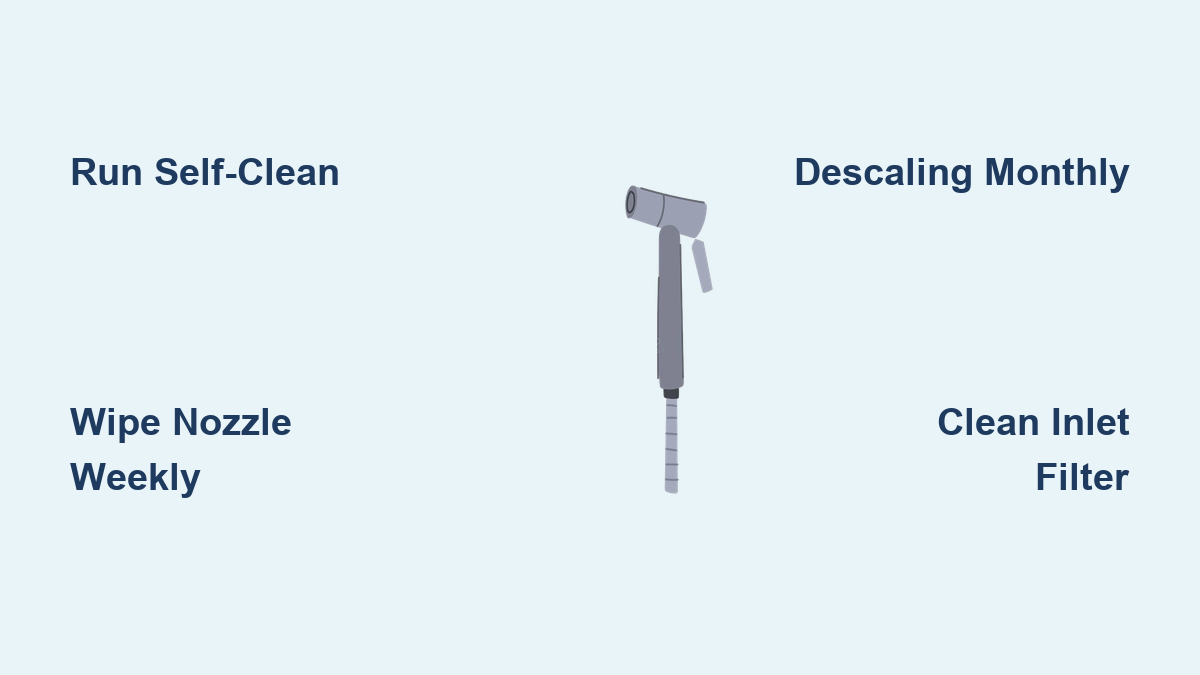
The key to a hygienic, long-lasting bidet is consistency, not complexity. Run self-clean before and after every use to reduce cross-contamination. Wipe the nozzle and housing every 1 to 2 weeks to prevent early buildup. Perform a deep inspection monthly to catch issues early. Descale every 1 to 6 months depending on your water hardness. Clean the inlet filter every 6 months to prevent clogs at the source.
Never rely solely on self-cleaning functions. Even smart bidets with UV sanitization require hands-on attention. Adjust your cleaning schedule based on water quality, and always use safe cleaning methods. With just minutes of effort, you will ensure your bidet delivers the clean, comfortable experience it was designed for.