You flush the toilet and hear an unsettling gurgling sound from toilet that wasn’t there before. The noise might happen every flush or only when other fixtures drain. Either way, it signals your plumbing system is trying to tell you something important.
That bubbling or glugging noise means air is trapped somewhere in your drainage or venting system. Left alone, this minor annoyance can escalate into slow drains, foul odors, or even a sewage backup. The toilet often acts as the first warning sign for deeper plumbing issues. In this guide, you’ll learn how to diagnose the source, identify common causes, and take the right steps to fix it fast and prevent future problems.
Is It One Toilet or the Whole House?
Single Fixture Gurgling
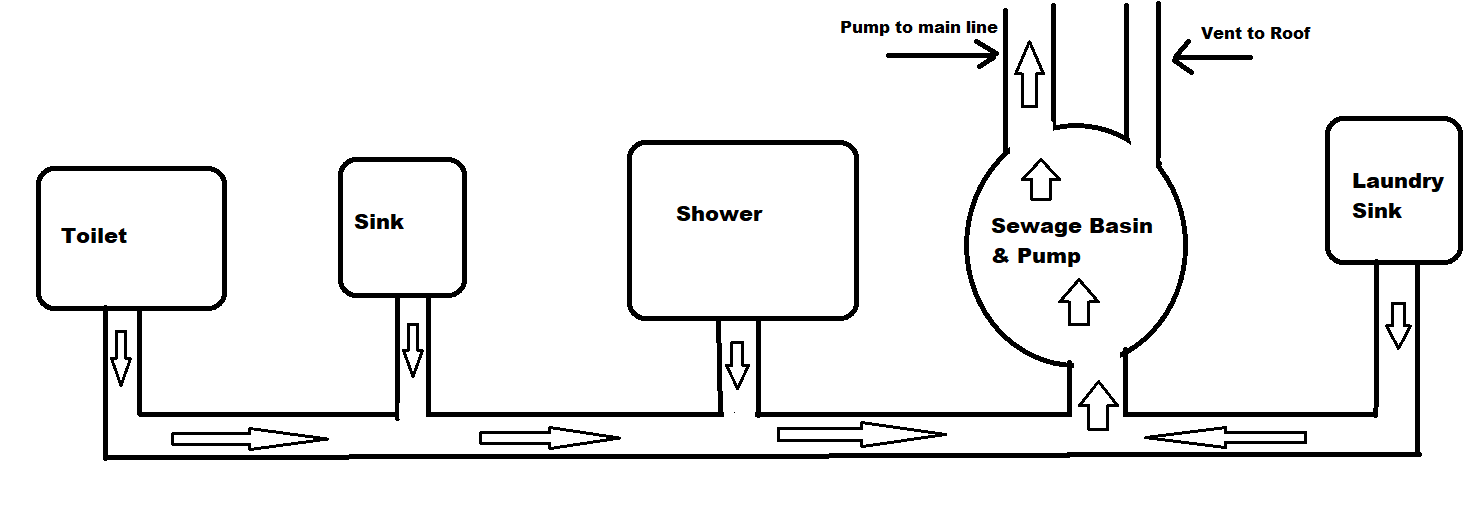
When only one toilet makes noise and only during flushing, the blockage is usually close by. Water forces past a partial clog, but the displaced air cannot follow the same path. Instead, it bubbles back up through the bowl.
This typically points to a shallow clog in the toilet trap or the branch line just beyond it. Common culprits include:
- “Flushable” wipes that don’t actually break down
- Excessive toilet paper
- Q-tips, dental floss, or small objects
Since the issue is localized, it is often the easiest and cheapest to fix. Try plunging or using a toilet auger before calling a plumber.
Multiple Fixtures Affected
When the toilet gurgles as the shower drains, the washing machine runs, or another toilet flushes, the problem runs deeper in the system. This cross-fixture gurgling means air is backing up through your toilet because the main drain or vent stack is blocked.
Key red flags include:
- Toilet bubbles when washing machine drains (15 to 30 gallons overwhelms a restricted line)
- Gurgling in lower toilets when upper ones flush
- Sinks or tubs gurgle when toilet is flushed
This is not a clog you can plunge away. It is a main line or vent stack issue requiring professional diagnosis.
Find the Real Cause

Blocked Vent Stack
Every plumbing system has roof vents that let air in and sewer gases out. When these are blocked, water cannot flow smoothly, creating suction that pulls air back through traps.
Common vent obstructions include:
- Bird nests or leaves
- Ice or snow in cold weather
- Debris or small objects
Without proper venting, every drain creates a vacuum. The toilet, with its large trap, becomes the easiest escape route for trapped air, which produces the gurgle.
Main Sewer Line Clog
A partially blocked main line causes wastewater and air to back up into the lowest fixtures, usually toilets. Top causes include:
- Tree roots: Aggressive roots enter pipe joints and form a net that catches debris
- Grease buildup: Cooking oil solidifies over time and narrows the pipe
- Collapsed pipe: Age, shifting soil, or poor installation can cause pipe sag or collapse
Warning signs include gurgling when high-volume appliances drain, slow drains in multiple fixtures, and foul odors. A full blockage leads to sewage backup, so act early.
Septic System Issues
Homes on septic systems face unique risks. A gurgling toilet may mean:
- Full tank: Solids fill the tank, leaving no room for air or liquid
- Inlet baffle clog: Toilet paper or sludge blocks the entry point
- Failing drain field: Saturated soil prevents effluent from leaving the tank
These conditions cause pressure buildup that forces air back through the toilet. Often, all drains slow down and bowl water levels drop.
Never open a septic tank yourself. Toxic gases like methane and hydrogen sulfide can be deadly.
Weather and Municipal Problems
Heavy rain or snowmelt can overwhelm sewer systems, especially if your yard drains into the line or the soil is saturated. This causes temporary back-pressure that leads to gurgling and usually clears within 24 hours.
If neighbors have the same issue, it might be a municipal main overload. But if it is just your home, the problem is internal.
What to Do Right Now
Try These DIY Fixes First
Plunge the Toilet
Use a flange plunger, the kind with an extended rubber lip that fits snugly into the toilet drain.
Steps:
- Ensure the bowl has enough water to cover the plunger cup
- Create a tight seal over the drain hole
- Push down gently, then pull up sharply without breaking the seal
- Repeat 10 to 15 times
If the water drains fast and the gurgle stops, you have cleared a shallow clog.
Use a Toilet Auger
If plunging fails, a toilet auger can reach clogs deeper in the line.
How to use:
- Insert the auger’s end into the drain hole
- Crank the handle while pushing the cable forward
- When you feel resistance, rotate and push to break up or hook the clog
- Retract slowly, wipe clean, and flush
Caution: Do not force it. Scratching porcelain or damaging the wax seal can cause leaks.
Pour Hot Water
For minor grease or paper buildup, pour hot (not boiling) water into the bowl from waist height. Boiling water can crack porcelain or melt PVC joints, so never use it.
What NOT to Do
Avoid Chemical Drain Cleaners
Products like Drano generate extreme heat that can:
- Melt PVC pipe joints
- Corrode metal pipes
- Damage septic systems
They are ineffective against roots, wipes, or deep clogs and can make repairs more expensive.
Don’t Hose the Roof Vent
While it seems logical to flush debris from the vent, do not blast water down it yourself. High-pressure water can damage roof shingles, void roofing warranties, and push blockages deeper. Leave vent cleaning to pros with specialized tools.
When to Call a Plumber
Call Immediately If You Have:
- Gurgling in multiple fixtures
- Sewage odors (rotten-egg smell indicates hydrogen sulfide)
- Slow drains across the house
- Recurring gurgling after DIY fixes
- Signs of septic failure (low water levels, soggy yard)
These indicate a main line, vent, or septic issue beyond DIY scope.
Professional Solutions
Video Camera Inspection
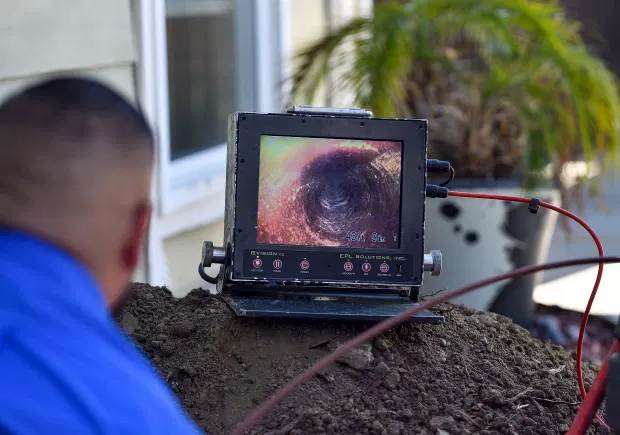
A plumber inserts a waterproof camera into the line to see the exact clog location, root intrusion, pipe collapse, or vent blockage. This avoids guesswork and unnecessary digging.
Hydro Jetting
Instead of snaking a hole through a clog, hydro jetting uses high-pressure water to remove grease and buildup, cut through roots, and clean the entire pipe interior. It is more thorough than mechanical snakes and helps prevent future clogs.
Septic Pumping and Inspection
If you are on a septic system, a full tank or clogged baffle needs professional pumping. Technicians remove accumulated solids, inspect inlet and outlet baffles, and check drain field condition.
Costs vary, but expect $299 or more for drain cleaning with camera inspection. Hydro jetting or septic service adds more.
Prevent Future Gurgling
Maintain Your System
Clean Sewer Lines Every 1 to 2 Years
Even without symptoms, schedule professional cleaning every 1 to 2 years, especially if you have large trees nearby, have had clogs before, or live in an older home. Regular cleaning extends pipe life and prevents emergencies.
Pump Septic Tank Every 3 to 5 Years
Frequency depends on household size and tank capacity. Do not wait for problems. Schedule routine pumping.
Use Enzyme Treatments Monthly
Flush enzyme-based cleaners monthly to break down organic matter safely. Unlike chemicals, they do not damage pipes, work continuously, and prevent buildup. Avoid bleach-heavy cleaners because they kill the good bacteria needed in septic systems.
Stop Clogs Before They Start
Never flush:
- “Flushable” wipes (they don’t dissolve)
- Paper towels or tissues
- Feminine hygiene products
- Q-tips, dental floss, or cotton balls
These are top causes of clogs, even if the package says “flushable.”
Never pour:
- Cooking grease or oil down the kitchen sink
- Coffee grounds or starchy foods
Collect grease in a container and throw it in the trash.
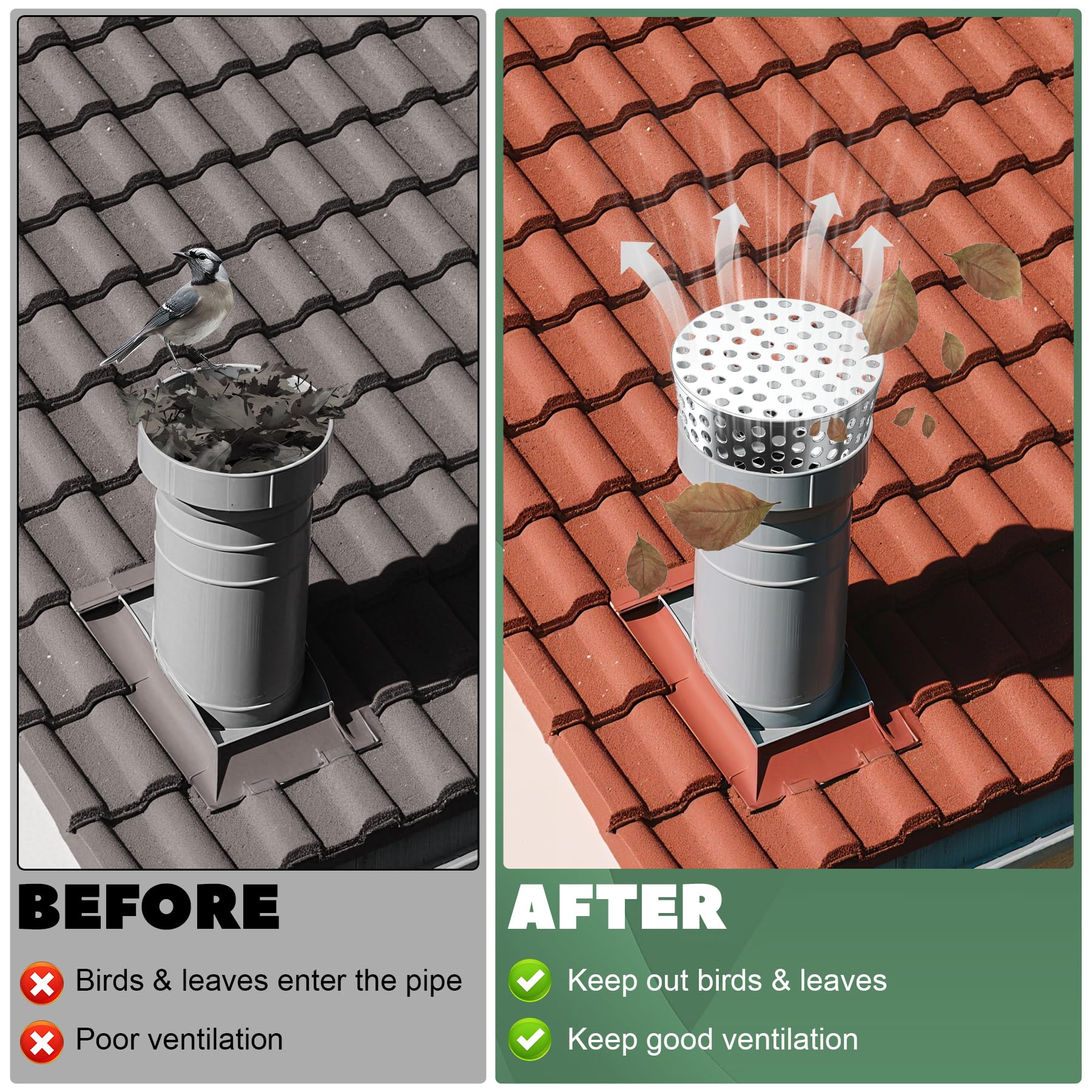
Protect Roof Vents
Install mesh vent guards to keep out birds, rodents, leaves, twigs, snow, and ice. They allow airflow while blocking debris, which makes them simple and effective.
Know the Risks of Ignoring It
Health Hazards
A gurgling toilet often means sewer gases are entering your home. These gases contain methane (flammable in high concentrations) and hydrogen sulfide (toxic, causes headaches and nausea). Prolonged exposure is dangerous. Foul odors mean your trap seal is compromised. Fix it now.
Structural Damage
Ignoring gurgling leads to sewage backups that are costly to clean and sanitize, mold growth from water damage in floors or walls, and pipe damage from pressure swings or chemical misuse. A $300 camera inspection can prevent $5,000 in water damage.
Financial Cost of Delay
Minor clog repair runs $150 to $250. Main line hydro jetting costs $300 to $600. Sewer line replacement ranges from $3,000 to $8,000 or more. Sewage cleanup and mold remediation adds another $2,000 to $10,000. Fix it early and save thousands.
Frequently Asked Questions About Gurgling Toilets
Why does my toilet gurgle when I flush?
A gurgling sound from toilet during flushing means air is trapped in your drainage system. Water creates a vacuum as it flows, and when vents are blocked or lines restricted, air escapes back through the toilet trap, creating the bubbling noise.
Is a gurgling toilet an emergency?
Not always, but persistent gurgling with multiple fixtures, foul odors, or slow drains indicates a serious issue. Sewer gas exposure and potential backups make timely action important. Call a plumber if symptoms persist beyond basic plunging.
Can I fix a gurgling toilet myself?
Yes, for isolated clogs. Use a flange plunger or toilet auger to clear shallow blockages. Avoid chemical drain cleaners. If gurgling affects multiple fixtures or returns after DIY fixes, call a professional.
How much does it cost to fix a gurgling toilet?
Simple plunging costs nothing. Professional drain cleaning with camera inspection averages around $299. Hydro jetting runs $300 to $600. Main sewer line replacement can exceed $8,000 depending on damage and pipe length.
What causes gurgling in multiple fixtures?
When sinks, tubs, or other toilets gurgle along with the toilet, the problem is in the main sewer line or vent stack. Common causes include tree roots, grease buildup, collapsed pipes, or blocked roof vents.
Can heavy rain cause a gurgling toilet?
Yes. Excessive rainfall can overwhelm municipal sewer lines or saturate soil around private pipes, creating temporary back-pressure. This usually clears within 24 hours after the storm passes.
Key Takeaways for Fixing a Gurgling Toilet
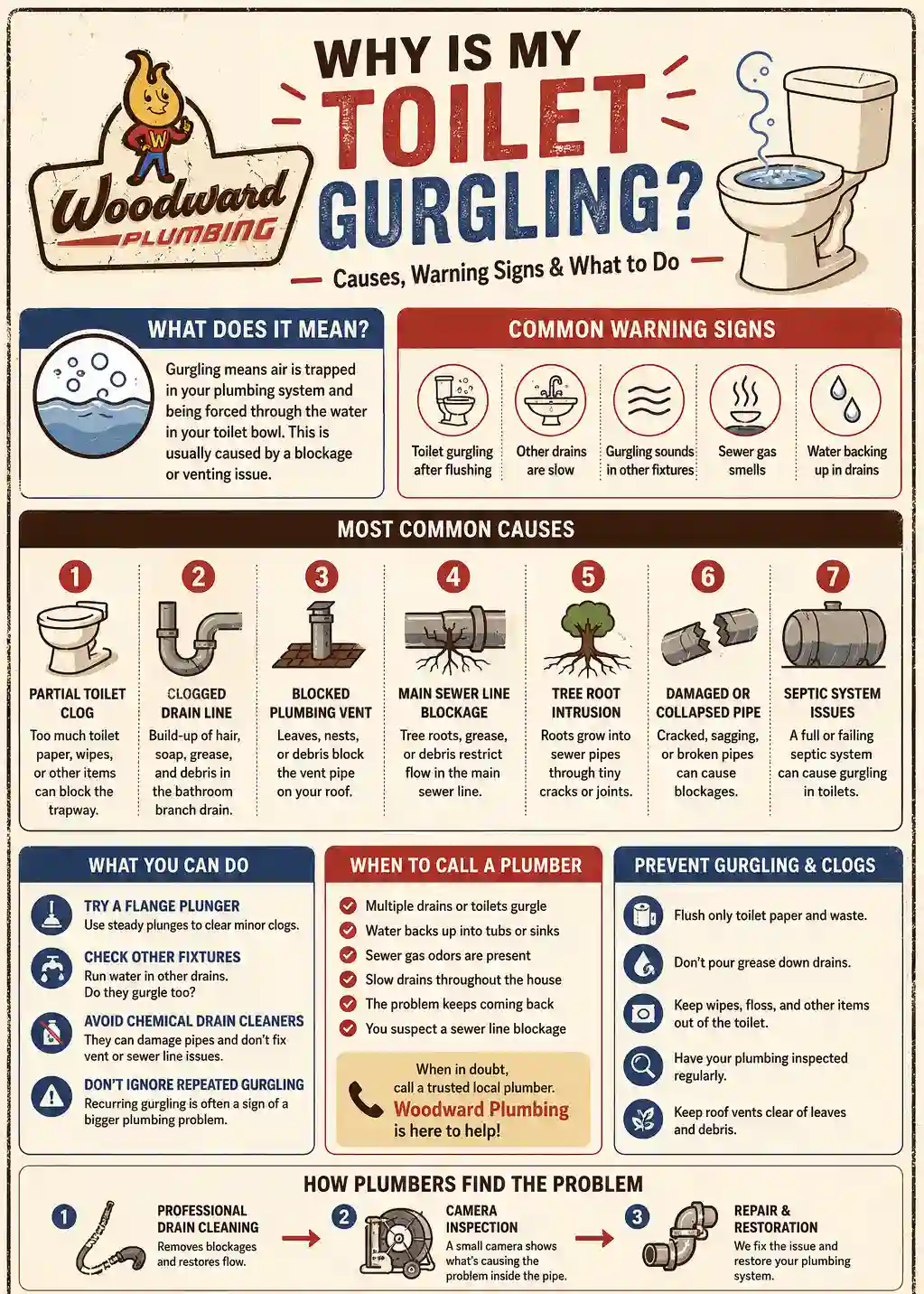
A gurgling sound from toilet is more than a nuisance. It is a warning that something is wrong with your drainage or venting system. Start by identifying whether the issue is isolated to one fixture or affects multiple drains. For single toilets, plunging or augering often solves the problem. For whole-house symptoms, professional diagnosis is essential.
Address the issue quickly to avoid health hazards from sewer gases and prevent costly structural damage. Schedule routine sewer cleaning every 1 to 2 years, pump your septic tank regularly, and use enzyme treatments monthly. Avoid flushing wipes, grease, and non-degradable items. When in doubt, call a licensed plumber. Early intervention keeps your system running smoothly and your home safe, clean, and odor-free.