If you’re using a portable bidet, you already know how much cleaner and more comfortable it makes your bathroom routine. But here’s the truth: a dirty bidet defeats its own purpose. Without proper cleaning, your portable bidet can harbor bacteria, mold, and mineral buildup, turning a hygiene tool into a health risk. The good news? Keeping it clean is simple when you know exactly what to do.
This guide breaks down how to clean a portable bidet effectively based on its type. You’ll learn daily wipe-downs, weekly deep cleans, monthly descaling, and smart storage tips that prevent odor and prolong lifespan. Whether you’re at home or traveling, these steps ensure your bidet stays hygienic, odor-free, and fully functional.
Post-Use Cleaning Essentials
After every use, take just 60 seconds to prevent contamination and buildup.
Empty the Reservoir Completely
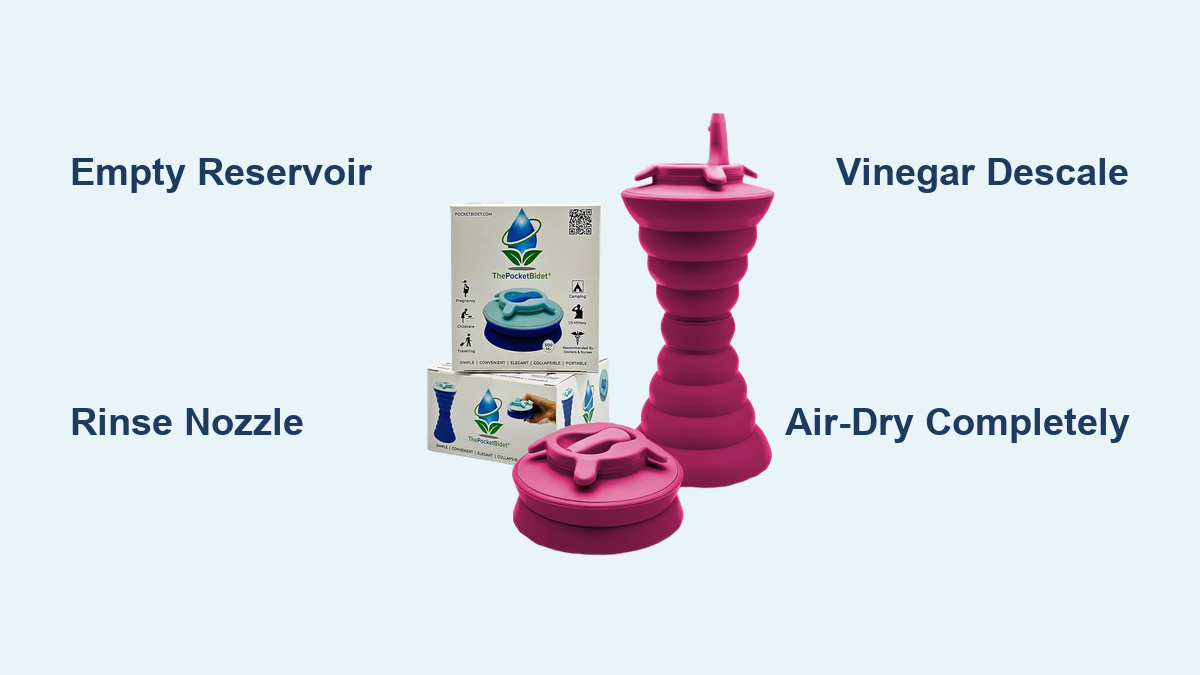
Stagnant water breeds bacteria and biofilm. Always fully depress the trigger or squeeze mechanism until no water remains in the chamber or tubing. For electric models, pump until the motor runs dry. Leaving even a small amount of water invites microbial growth within hours.
Rinse the Nozzle Thoroughly
Hold the nozzle under clean running water for 10 to 15 seconds. For electric bidets with a self-rinse function, activate it immediately after use. This flushes internal passages and removes residual moisture. Manual models should be inverted and rinsed from the inside out to clear any backflow.
Wipe and Dry All Surfaces
Use a clean paper towel or microfiber cloth to wipe the nozzle tip, trigger, and body. Avoid reusing the same wipe because this spreads germs. If you travel with your bidet, carry a dedicated drying towel to avoid contamination from public restrooms.
Store It Right
Place the bidet in a breathable fabric pouch or mesh bag, never sealed plastic. Keep it upright in a dry area, not in a damp bathroom or wet toiletry bag. A cool, ventilated spot prevents mildew and extends seal life.
Weekly Deep Cleaning Routine

A thorough weekly clean keeps your bidet fresh and functional.
Disassemble Removable Parts
Take apart the nozzle, cap, spray head, filter, and reservoir if possible. Check your model manual because some electric bidets have sealed units while most manual ones allow full disassembly.
Wash With Mild Soap
Fill a sink with warm water and a few drops of antibacterial dish soap. Soak all parts for 5 to 10 minutes. Use a soft-bristle toothbrush or bottle brush to scrub threads, crevices, and internal reservoir walls. Avoid steel wool or abrasive pads because they scratch surfaces and trap bacteria.
Flush Internal Systems (Electric Models)
For non-removable tanks, fill the reservoir halfway with soapy water. Shake gently and pump the solution through the nozzle. Repeat 2 to 3 times, then rinse with clean water 3 to 4 times to remove all soap residue.
Air-Dry Completely
Lay components tip-down on a clean towel to drain. Never use a cloth to dry inside parts because lint and fibers can clog the nozzle. Allow 6 to 8 hours of air-drying before reassembly. Reassemble only when fully dry to prevent mold.
Monthly Descaling and Hard Water Care
Mineral deposits reduce spray power and clog tubing, especially in hard water areas.
Use Vinegar to Remove Buildup
Fill the reservoir with white vinegar, undiluted for heavy buildup or 1:1 with water for light scaling. Let it soak for 1 to 4 hours or overnight for stubborn scale. Pump the vinegar through the system to circulate it through tubing and nozzle.
Soak the Nozzle
Wrap a vinegar-soaked cloth around the nozzle for 30 minutes. For electric models, avoid getting vinegar into the battery compartment. After soaking, use a fine needle or pin to gently clear the spray hole without scratching or forcing it.
Rinse Until Odor-Free
Flush the system with clean water 3 to 4 times until the vinegar smell is gone. Residual vinegar can irritate skin and degrade seals over time.
Prevent Future Buildup
Use filtered or distilled water instead of tap water. This drastically reduces limescale and extends time between cleanings. Avoid well water or untreated sources.
Clean by Bidet Type

Different models need different care. Follow these type-specific steps.
Manual Squeeze Bidets
Most common and affordable, but require diligent cleaning.
Clean the Interior
After emptying, fill the reservoir halfway with clean water, shake, and squeeze out. Repeat 2 to 3 times. For deep cleaning, use a long-handled bottle brush to scrub the inside. Never use boiling water because it warps BPA-free plastic.
Store With Cap Off
Leave the cap loose or removed when storing. This allows airflow and prevents mildew. Replace every 12 to 24 months because plastic retains odors over time.
Electric Pump Bidets
Higher maintenance but often include self-cleaning features.
Activate Self-Clean Mode
If your model has auto-rinse or UV-C sanitization, run it after each use. UV bulbs kill 99.9% of surface microbes but do not remove physical grime, so combine with manual cleaning.
Wipe Electronics Safely
Use a slightly damp microfiber cloth on the control panel and charging port. Never submerge or spray directly. Dry the charging port with a cotton swab if wet.
Maintain Battery Health
Charge to 40 to 80% for long-term storage. Avoid overcharging and unplug once full. Check the battery compartment monthly for corrosion or moisture.
Bottle-Adapter Bidets
Use standard water bottles for longer spray time.
Clean the Adapter Tip
Wash the nozzle adapter and rubber seals weekly with soapy water. Mineral deposits collect here and cause leaks.
Handle Bottles Properly
Reusable bottles should be washed with hot soapy water after each use and sanitized monthly with vinegar. Disposable bottles should be discarded immediately and never reused.
Disinfect for Maximum Hygiene
For germ-conscious users, disinfection adds an extra layer of safety.
Use 70% Isopropyl Alcohol
Wipe external surfaces with an alcohol-dampened cloth. For internal sanitizing, mix 1 part 70% alcohol with 3 parts water. Fill the reservoir partially, pump through the system, let sit 5 minutes, then flush with clean water 3 to 4 times. Do not use on rubber seals or electronics because alcohol degrades them.
Try Hydrogen Peroxide (3%)
Safe for plastic and effective against viruses. Apply to surfaces or use in a rinse cycle. Rinse well afterward.
Leverage UV-C Sanitization
Premium models use UV-C light before and after use. Replace the bulb every 6 to 12 months because it loses effectiveness over time. Remember that UV light does not replace physical cleaning.
Drying: The Most Important Step
Moisture is the enemy. Even a clean bidet grows mold if not dried properly.
Drain Tips Down
Always position nozzles and reservoirs opening-down during drying. This lets trapped water escape naturally.
Never Towel-Dry Internals
Towels leave lint and can introduce new bacteria. Use only air-drying for internal parts.
Avoid Heat and Sunlight
Do not place near radiators or in direct sunlight because this warps plastic and degrades silicone seals. Room-temperature air drying is safest.
Smart Storage Solutions
Proper storage prevents damage and contamination.
Short-Term (Daily Use)
Store in a mesh or fabric pouch. Keep in a dry cabinet or drawer, not the bathroom counter. Ensure the device is empty and dry before closing the case.
Long-Term (Travel or Off-Season)
Perform a final vinegar or alcohol flush. Leave the cap off or loose. Add silica gel packets to absorb moisture. Store upright to avoid pressure on the pump.
Travel Packing Tips
Use the original protective case if available. Pack in an outer luggage compartment, not with heavy or sharp items. Use a resealable bag for wet parts if cleaning is not possible until arrival.
Troubleshoot Common Problems
Fix issues fast with these targeted solutions.
Weak or Intermittent Spray
Cause: Clogged nozzle, dirty filter, low battery, or mineral buildup. Fix by soaking nozzle in vinegar for 1 to 4 hours. Clean or replace inline filter. Recharge electric model. Flush system with vinegar solution.
Leaking Reservoir
Cause: Damaged O-ring, loose cap, or cracked housing. Fix by inspecting rubber seals and replacing if cracked or warped. Tighten cap securely. If housing is cracked, replace the bidet.
Bad Smell
Cause: Bacterial growth, stagnant water, or biofilm. Fix by deep cleaning with vinegar soak. Use baking soda solution overnight. Always empty and dry after use. Replace manual bidets every 1 to 2 years.
Mold or Mildew
Cause: Poor drying, humid storage. Fix by scrubbing with baking soda paste. Disinfect with hydrogen peroxide. Improve drying routine and storage location.
Travel Cleaning Hacks
Stay clean on the go even with limited resources.
No Sink? No Problem
Carry a small bottle of drinking water for post-use rinsing. Use alcohol wipes for emergency exterior cleaning.
Handle Dirty Water Sources
In areas with hard or untreated water, fill your bidet with bottled or filtered water. This reduces limescale and contamination risk.
Public Restroom Safety
Never place your bidet on the floor or counter. Use a disposable seat cover or paper towel as a barrier. Wipe the exterior with an alcohol wipe after use.
Pack a Mini Cleaning Kit
Include travel-sized mild soap, a mini brush or toothbrush, alcohol wipes, a resealable bag for wet parts, and a microfiber towel.
Maintenance Schedule at a Glance
Follow this timeline for peak performance.
| Frequency | Task |
|---|---|
| After Each Use | Empty reservoir, rinse nozzle, wipe dry, store in breathable case |
| Daily | Inspect for moisture or residue |
| Weekly | Disassemble and wash parts with mild soap, air-dry completely |
| Biweekly | Deep clean with warm water and soft brush |
| Monthly | Descale with vinegar, clean filter, inspect seals |
| Every 6 to 12 Months | Replace UV-C bulb, check battery health |
| Every 1 to 2 Years | Replace manual bidet or evaluate electric model |
Choose a Cleanable Model
Pick a bidet designed for easy maintenance.
Look For These Features
Self-cleaning nozzle, UV-C sanitization, removable and washable parts, wide reservoir opening, IPX7 waterproof rating that allows full rinsing, and bottle adapter compatibility.
Avoid Hard-to-Clean Designs
Narrow openings, sealed tanks, or non-removable nozzles make cleaning difficult. Opt for models that let you see and reach all internal parts.
Key Takeaways for Cleaning Your Portable Bidet
A portable bidet is only as clean as your cleaning routine. By following these steps, emptying after every use, rinsing daily, deep cleaning weekly, and descaling monthly, you ensure it remains a safe, hygienic, and long-lasting tool. Stick to mild soap, vinegar, or alcohol for disinfection and avoid harsh chemicals like bleach or ammonia. Replace worn parts promptly and manual bidets every 1 to 2 years to prevent odor retention. Whether you’re at home or on the road, a well-maintained bidet supports better personal hygiene and a more sustainable lifestyle.
Frequently Asked Questions About Cleaning a Portable Bidet
How often should I clean my portable bidet?
Clean your portable bidet after every use with a quick rinse and wipe. Perform a deep clean weekly and descale monthly. This prevents bacterial growth and maintains spray performance.
Can I use bleach to clean my portable bidet?
Never use bleach, ammonia, or abrasive cleaners on your bidet. These chemicals damage plastic and silicone components. Stick to mild soap, white vinegar, 70% isopropyl alcohol, or 3% hydrogen peroxide.
Why does my portable bidet smell bad?
Bad smells come from bacterial growth, stagnant water, or biofilm buildup. Deep clean with a vinegar soak and use a baking soda solution overnight. Always empty and dry the bidet after each use to prevent odor.
How do I remove hard water deposits from my bidet?
Fill the reservoir with undiluted white vinegar and let soak for 1 to 4 hours. Pump the vinegar through the system, then rinse thoroughly with clean water 3 to 4 times. Use filtered or distilled water to prevent future buildup.
Can I travel with my portable bidet?
Yes, pack it in a protective case and use a resealable bag for wet parts. Carry a mini cleaning kit with soap, alcohol wipes, and a travel towel. Use bottled or filtered water in areas with hard or untreated water sources.
When should I replace my portable bidet?
Replace manual bidets every 1 to 2 years due to odor retention and material degradation. Electric models typically last 3 to 5 years with proper care. Replace UV-C bulbs every 6 to 12 months for optimal sanitization.