Low water pressure in a bidet can turn a refreshing hygiene experience into a frustrating one. If your bidet’s spray feels weak or inconsistent, you are not alone. Many users face this issue, especially in high-rise apartments, older homes, or RVs. This guide will show you exactly how to increase water pressure in a bidet, using proven diagnostic steps, maintenance routines, and hardware upgrades.
Whether you have an electric seat, non-electric sprayer, or integrated bidet toilet, you will learn how to restore strong, reliable spray performance. We will start with the most common culprits and move to advanced solutions.
Check the Shutoff Valve First
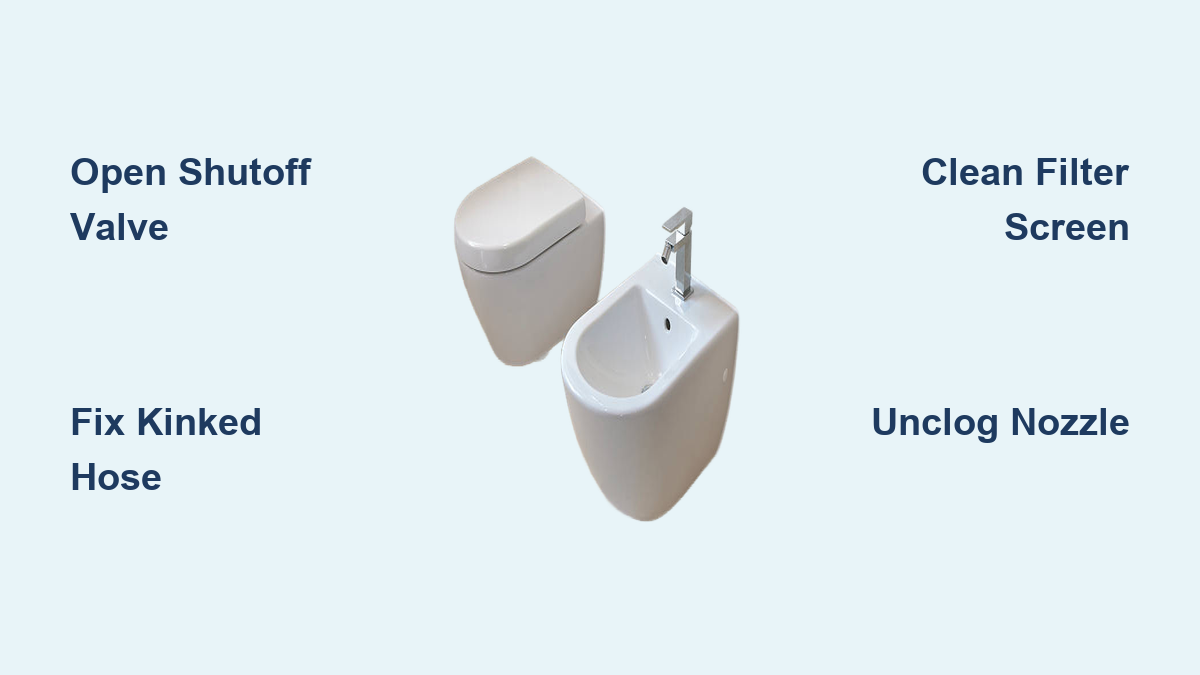
The angle valve behind your toilet controls water flow to both the tank and bidet. If it is not fully open, your bidet will not get enough pressure.
Fully Open the Angle Valve
Locate the shutoff valve, usually on the wall or floor near the toilet base. Turn the handle counter-clockwise until it stops. Even a slightly closed valve can reduce flow by 50% or more. If the valve is stiff or leaks, replace it. Expect to pay $5 to $15 for a new valve.
Warning: Forcing a corroded valve can cause leaks. Shut off the main water first if replacing.
Inspect the Supply Hose for Kinks
A bent or compressed hose restricts water flow, leading to weak spray. This is one of the most overlooked causes of low bidet pressure.
Fix Hose Kinks and Damage
Pull the toilet away from the wall if needed to inspect the hose. Look for sharp bends, pinches, or flattened sections. Reposition the hose bracket 10 to 15 centimeters higher to prevent wall contact. Replace rubber hoses with braided stainless steel. These cost $10 to $25 and offer better flow and durability.
Pro Tip: Braided hoses resist kinking and last longer than standard rubber ones.
Adjust or Replace the T-Valve

The T-valve splits water between the toilet tank and bidet. Many models limit bidet flow by default, which is why learning how to increase water pressure in a bidet often starts here.
Turn T-Valve to Favor Bidet Flow
Find the T-valve where the supply line connects to the bidet. If it has a lever or knob, turn counter-clockwise to increase bidet pressure. For fixed T-valves, replace with an adjustable 3-way valve costing $10 to $20. This allows fine-tuning without affecting toilet fill.
User Insight: “I turned the T-valve and suddenly my bidet had power-wash strength.” — DIYPlumberSG
Clean the Inlet Filter Screen

A clogged mesh filter is one of the top causes of sudden pressure loss. This is a common reason why users search for how to increase water pressure in a bidet.
Remove and Soak the Filter
Shut off water at the angle valve. Disconnect the hose from the bidet. Locate the small mesh screen inside the bidet inlet. Remove it with fingers or pliers, using a cloth to avoid scratches. Soak in white vinegar for 15 to 60 minutes. Rinse under running water and reinstall.
Frequency: Clean every 3 to 6 months. Clean every 3 months in hard water areas.
Unclog the Spray Nozzle
Mineral deposits and biofilm can block spray holes, weakening the stream. This directly impacts your ability to increase water pressure in a bidet.
Scrub Nozzle with Vinegar
Activate self-clean mode or manually extend the nozzle. Dip a soft toothbrush in a 1-to-1 vinegar-water solution. Gently scrub each spray hole. For tough buildup, wrap a vinegar-soaked cloth around the nozzle for 15 to 20 minutes. Flush with clean water and test spray.
Warning: Never use sharp objects. Scratches can harbor bacteria.
Reset Electric Bidet Settings
Software glitches can reset pressure to low default levels. This is an often-overlooked step when learning how to increase water pressure in a bidet.
Perform a Power Reset
Unplug the bidet from the power outlet. Wait 30 seconds. Plug back in. This clears temporary faults and often restores normal pressure.
Note: Some models may reset to level 3 out of 5. Readjust manually after reset.
Test Whole-House Water Pressure
If multiple fixtures have weak flow, the issue is system-wide. This helps determine whether you need to increase water pressure in a bidet specifically or address whole-house pressure.
Measure PSI with a Gauge
Buy a $15 to $30 water pressure gauge. Attach to an outdoor faucet or washing machine outlet. Turn on water and read the PSI.
| Pressure Reading | Action |
|---|---|
| Below 30 PSI | Likely too low for reliable bidet use |
| 40 to 60 PSI | Ideal range |
| Above 80 PSI | Risk of fixture damage |
Singapore Tip: Upper-floor HDB units often fall below 30 PSI. Report to Town Council if consistent.
Adjust the Main Pressure Regulator
If home pressure is too low, adjust the PRV. This is a more advanced step for those learning how to increase water pressure in a bidet.
Increase Pressure at the Source
Locate the brass PRV where main water enters your home. Loosen the lock nut with a wrench. Turn the adjustment bolt clockwise in quarter-turn increments. Test pressure after each adjustment. Retighten lock nut when 40 to 60 PSI is reached.
Caution: Raising pressure affects all plumbing. Ensure pipes can handle it.
Upgrade to a Bidet with a Built-In Pump
Electric bidets without pumps rely entirely on home pressure. Knowing how to increase water pressure in a bidet sometimes means choosing the right model.
Choose Models with Internal Boosters
Toto Washlet models C5 and C8 have self-powered pumps that maintain strong spray even at low input. Bio Bidet BB-1000 and BB-2000 offer 8 pressure levels with active flow enhancement. Black Bidet Toilet has an integrated booster pump for 40 to 60 PSI output.
Key Benefit: These models compensate for low building pressure. They are ideal for high-rises and well systems.
Install a Bidet Booster Pump
For chronic low pressure, a point-of-use pump delivers instant results. This is a permanent solution for those who need to increase water pressure in a bidet.
Add a Dedicated Pressure Booster
Mount near the toilet. You will need an electrical outlet. Connect in-line with the water supply. The pump automatically boosts pressure to 40 to 60 PSI. Cost is $100 to $300. Professional installation is required for plumbing and electrical work.
Best For: Upper floors, RVs, older buildings with corroded pipes.
Remove Flow Restrictors (Advanced)
Some electric bidets limit flow to protect internal heaters. This advanced step helps increase water pressure in a bidet but carries risks.
Bypass Internal Flow Controls
Disassemble the bidet. This voids the warranty. Locate and remove flow-restricting washers or nozzles. Reassemble and test.
Risk: Can cause overheating or leaks. Only attempt if comfortable with plumbing repairs.
User Note: “I took apart my Brondell and removed a tiny restrictor. Pressure doubled.” — LaphroaigAndRibeye
Optimize RV Bidet Systems
RVs often have pressure regulators and inline screens that limit flow. This is essential for RV owners learning how to increase water pressure in a bidet.
Remove Restrictive Screens
Unscrew hose ends, aerators, and shower heads. Check for small plastic screens inside fittings. Remove and discard or replace with high-flow versions. Test the bidet. Many users report immediate improvement.
Expert Insight: “It is not pressure you need. It is volume.” — Alan Murphy, RV Hacking Camping Ideas
Prevent Future Pressure Loss
Regular maintenance stops buildup before it affects performance. This ensures you do not have to repeatedly learn how to increase water pressure in a bidet.
Follow a Maintenance Schedule
Clean the spray nozzle monthly. Clean every 2 weeks in hard water. Clean the inlet filter every 3 to 6 months. Inspect the hose for kinks every 6 months. Test home water pressure annually. Replace mesh filters every 6 to 12 months. Descale internal components every 6 months.
Pro Tip: Use vinegar every time you clean. It dissolves limescale and kills biofilm.
When to Call a Plumber
Some issues require professional help. Knowing when to call a pro is part of learning how to increase water pressure in a bidet effectively.
Seek Expert Help If
The angle valve is seized or leaking. Home pressure is below 30 PSI on all fixtures. The PRV needs replacement. Internal leaks are suspected. Booster pump installation is needed. The bidet is under warranty.
A licensed plumber ensures safe, code-compliant repairs.
Troubleshoot Step-by-Step
Use this quick decision path to fix low pressure fast. This consolidates everything you need to know about how to increase water pressure in a bidet.
Is Pressure Low Only at Bidet
Yes means focus on T-valve, filter, and nozzle. No means test whole-house pressure.
Is the Shutoff Valve Fully Open
No means turn counter-clockwise. Yes means move to next step.
Is the T-Valve Adjusted
Turn counterclockwise to boost bidet flow.
Are Nozzle and Filter Clean
Clean with vinegar. Replace if damaged.
Is Home Pressure Below 40 PSI
Yes means adjust PRV or install booster. Still low means consult a plumber.
Issue Persists
Upgrade bidet model or call a professional.
Frequently Asked Questions About Increasing Bidet Water Pressure
Why is my bidet spray suddenly weak?
Most common causes include a partially closed angle valve, kinked supply hose, clogged nozzle or filter, or a software glitch in electric models. First step: verify the shutoff valve is fully open.
How do I adjust bidet pressure settings?
For manual bidets, adjust the nozzle width. A narrower stream gives higher perceived pressure. For electric bidets, use the remote or side panel to increase pressure incrementally. If unresponsive, perform a power reset by unplugging for 30 seconds.
Can I increase pressure by modifying the bidet?
Cleaning filters and nozzles is safe and effective. Removing internal flow restrictors may increase pressure but can damage the unit or void the warranty. Consider upgrading to a higher-pressure model instead, such as Bio Bidet BB-1000 or Toto Washlet.
Does floor level affect bidet pressure?
Yes. In high-rise buildings, especially older ones, water pressure decreases with height. Upper-floor units often experience suboptimal flow. Consider a booster pump if all fixtures are affected.
How often should I clean my bidet?
Clean the nozzle monthly. Clean every 2 weeks in hard water areas. Clean the internal filter every 3 to 6 months. Perform full descaling every 6 months.
What tools do I need for bidet maintenance?
You will need an adjustable wrench for hose and filter removal, a soft toothbrush, white vinegar, and a small brush or pipe cleaner. Optional: a PSI pressure gauge costing $15 to $30.
Key Takeaways for Increasing Bidet Water Pressure
Over 90% of weak bidet spray issues come from just four causes: closed valves, kinked hoses, clogged filters, and dirty nozzles. Start with these simple fixes. Most take under 10 minutes and cost less than $20.
For long-term reliability in low-pressure homes, invest in an electric bidet with a built-in pump or install a booster system. Models like Toto Washlet, Bio Bidet BB-1000, and Black Bidet Toilet are specifically designed to maintain strong spray even when home pressure is suboptimal.
With regular cleaning and smart upgrades, you can enjoy powerful, consistent spray every time. If simple fixes do not resolve the issue, consult a licensed plumber to assess your home water pressure and recommend permanent solutions.