
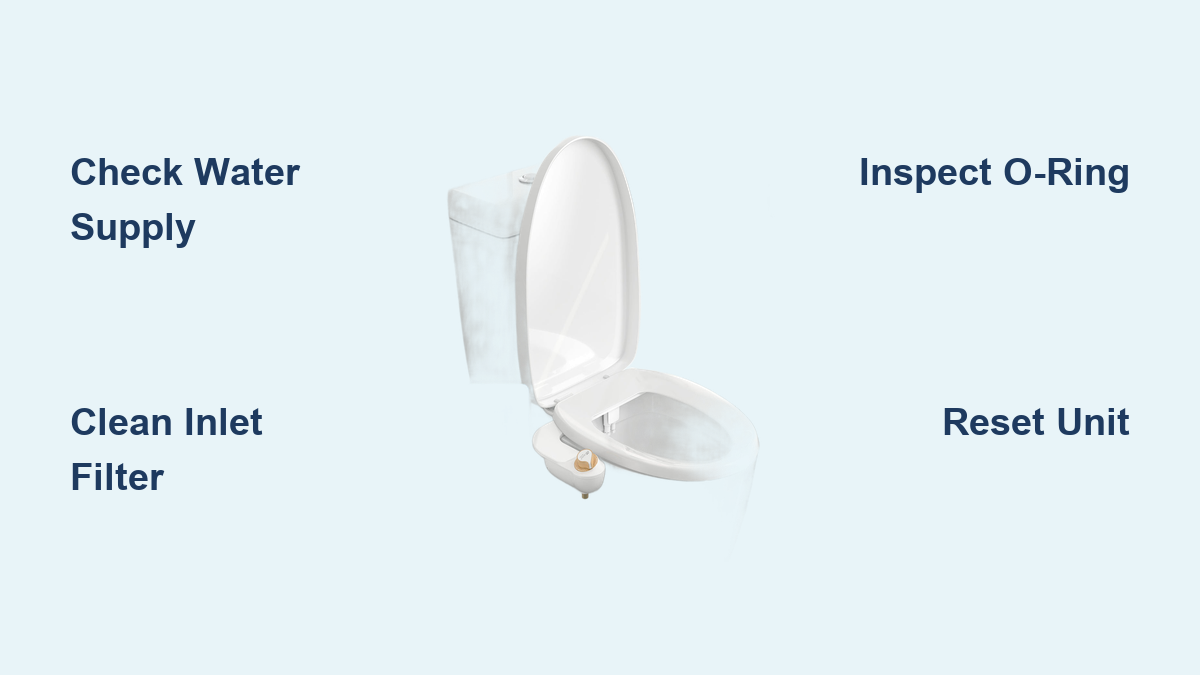
If your Bio Bidet isn’t spraying water, you’re not alone. The issue of bio bidet water not coming out affects many users, and while it can be frustrating, most causes are fixable without professional help. Whether the nozzle extends but no spray appears, or nothing happens at all, this guide walks you through every possible cause, from simple clogs to internal disconnections. You’ll learn how to diagnose the problem in minutes and apply proven fixes that real users and technicians trust.
No more guesswork. By the end, you’ll know exactly why your bidet stopped working and how to get it running again.
Confirm Water Supply Is Reaching Your Bidet
Before diving into complex repairs, verify that water is actually reaching your bidet. A surprising number of no-water issues trace back to simple supply problems that take seconds to fix.
Run a Toilet Flush Test
Flush the toilet. If it doesn’t refill properly, the water supply valve is likely closed or blocked. Bio Bidet units share the same water line as your toilet tank, so no water to the tank means no water to the bidet.
Open the Supply Valve Fully
Locate the shut-off valve behind the toilet. Turn the handle counterclockwise until it stops completely. Even a partially closed valve can restrict flow enough to stop the bidet from working. This is one of the most overlooked causes of bio bidet water not coming out.
Inspect the T-Valve Connection Points
The T-valve splits water between the toilet and bidet. Look for drips or moisture around the connection to the toilet fill line, the bidet hose outlet, and the base of the valve. A leaking T-valve may not deliver sufficient pressure to power the spray function.
Examine the T-Valve and O-Ring for Damage

A faulty T-valve or missing O-ring can completely block water flow. This section covers how to inspect and fix these common issues.
Check and Replace the O-Ring
Turn off the water supply. Disconnect the bidet hose from the T-valve. Inside the female end, you should see a black rubber O-ring. If it’s missing, damaged, or misaligned, water won’t seal properly and won’t reach the bidet. Replace with a new O-ring available from Bio Bidet support or repair kits. Reinstall the hose securely after checking.
Clean Sediment from the T-Valve
Sediment from plumbing work can clog the T-valve and cause bio bidet water not coming out. Flush the valve under running water or soak it briefly in white vinegar if mineral buildup is visible. This simple step restores proper flow in many cases.
Look for Kinks or Damage in the Supply Hose
A kinked hose is one of the simplest explanations for why your bio bidet water not coming out. Here’s how to find and fix it.
Trace the Entire Water Supply Line
Follow the water hose from the T-valve to the bidet unit. Look for sharp bends behind the toilet, pinching between the wall and tank, or flattened sections under the base. Even a small kink can block flow completely and stop the spray function.
Replace a Damaged Hose
If the hose is cracked, bulging, or permanently bent, replace it immediately. Use manufacturer-recommended tubing to avoid compatibility issues. A damaged hose is a common cause of bio bidet water not coming out that many users overlook.
Test Your Household Water Pressure
Water pressure directly affects whether your Bio Bidet sprays properly. Low pressure can make the spray weak or nonexistent.
Know the Ideal Pressure Range
Bio Bidet requires 40 to 60 psi for reliable operation. Some models, like those from Living Star, perform best at 70 to 100 psi. Low pressure is common in upper floors or older homes. High pressure above 80 psi risks damaging valves and seals, so consider installing a pressure regulator if needed.
Perform a Quick Pressure Check
Remove the bidet hose from the unit after shutting off water. Briefly turn on the valve and observe flow strength. A weak stream indicates low pressure or a clog upstream. This test helps you determine if pressure is the reason for bio bidet water not coming out.
Clean the Inlet Filter Screen
A clogged inlet filter is one of the top causes of no water flow, especially in hard water areas. This component catches debris before it enters your bidet.
Locate the Inlet Filter
The inlet filter sits where the water hose connects to the bidet. It’s a small mesh screen designed to catch sediment and particles. In hard water areas, this filter clogs frequently and causes bio bidet water not coming out.
Clean the Filter Step by Step
- Shut off the water supply.
- Disconnect the hose from the bidet.
- Use pliers or fingers to remove the filter gently.
- Rinse under warm water to remove debris.
- Soak in white vinegar for 10 minutes if scale is present.
- Reinstall the filter fully before reconnecting the hose.
Regular cleaning every one to three months prevents this common cause of bio bidet water not coming out.
Clear Mineral Deposits from the Spray Nozzle
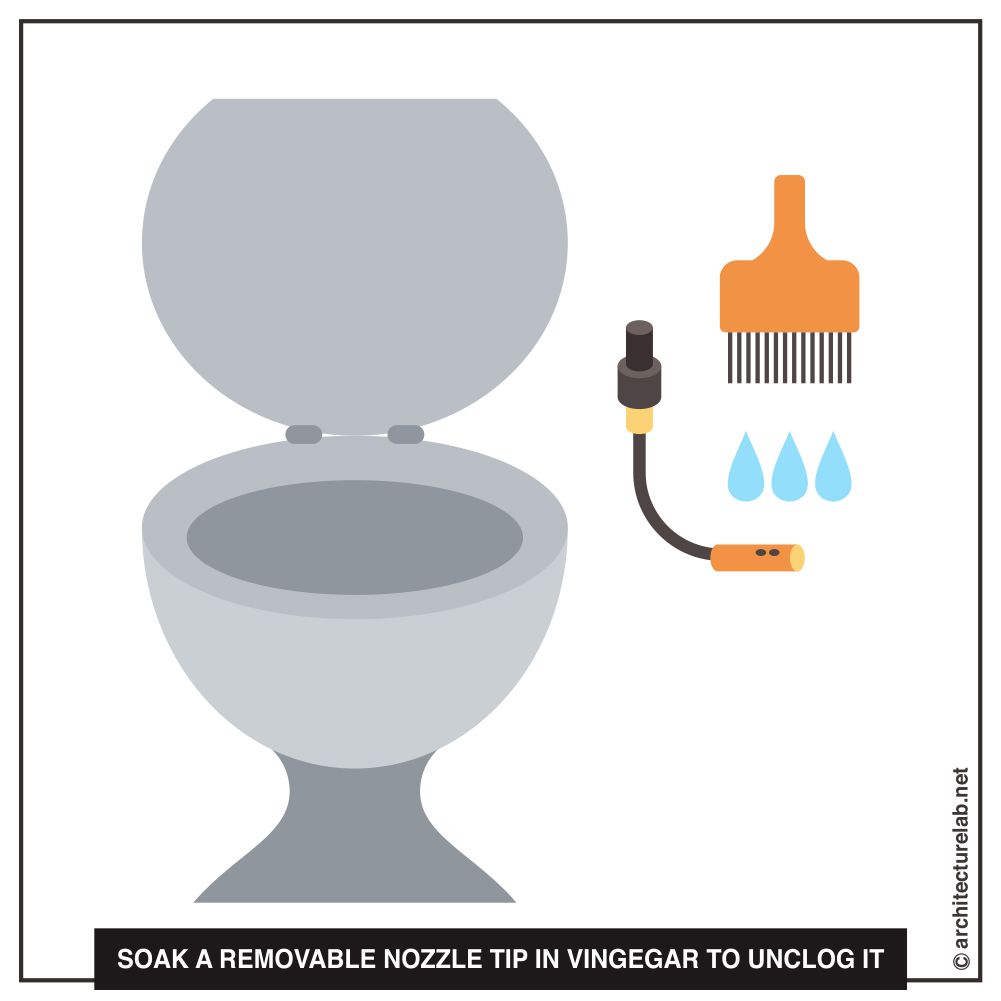
A clogged nozzle is another frequent culprit. Mineral buildup and sediment can block the spray holes completely.
Try the Self-Cleaning Mode First
Press the nozzle clean button if your model has one. This extends the nozzle and sprays backward to clear minor blockages. If this doesn’t work, proceed to manual cleaning.
Soak and Scrub the Nozzle Manually
Mix equal parts white water and white vinegar, then add a few drops of pH-neutral dish soap. Soak a cloth or cotton pad and wipe the nozzle tips thoroughly. For stubborn buildup, use a soft toothbrush to gently scrub the spray holes. Avoid metal tools because they can scratch or misalign the nozzles.
Use CLR for Severe Scaling
User reports confirm CLR (Calcium, Lime, Rust remover) clears severe scaling on the nozzle. Apply it sparingly, wait one to two minutes, then rinse thoroughly with water. Never leave CLR on for extended periods due to corrosion risk. This method works when bio bidet water not coming out stems from heavy mineral deposits.
Fix Occupant Sensor Activation Problems
Some Bio Bidet models, like the BB-2000, have a digital skin sensor that must detect body contact before allowing spray. If the sensor doesn’t activate, no water will come out even though everything else works.
Understand How the Sensor Works
The occupant sensor sits on the front-left rim of the seat. It detects skin contact before enabling the spray function. No contact means no water, even if the seat is warm and controls respond normally. This is an often-overlooked cause of bio bidet water not coming out.
Adjust Your Seating Position
The sensor commonly fails to activate for users of Squatty Potty or similar stools. Elevated posture lifts the thighs, breaking skin contact with the sensor. Sit farther forward or press your left side against the front edge of the seat. Test spray while maintaining contact. If water flows, the sensor was the issue, not a mechanical failure.
Reset Your Bidet Unit
Electronic glitches can cause temporary malfunctions that reset easily. This step should be attempted early in your troubleshooting.
Perform a Hard Reset
Unplug the bidet from the wall outlet for 30 seconds. Plug it back in. This clears temporary software glitches, especially after power surges, electrical noise, or system lockups. Test all functions afterward to see if bio bidet water not coming out is resolved.
Investigate Internal Hose Disconnection
If your bidet powers on, the nozzle extends, and the pump makes a buzzing noise but no water sprays, the internal water tube has likely come loose. This is a common but underdiagnosed issue.
Recognize the Symptoms
Watch for these signs of internal hose disconnection. The power turns on, the nozzle extends normally, and the pump makes a buzzing noise, but no water sprays. This pattern often means the internal water tube has come loose from its fitting.
Access and Reconnect the Internal Hose
- Remove the bidet from the toilet.
- Locate the two screws on the back cover.
- Unscrew and carefully pry off the panel. It may resist, so go slowly.
- Look for disconnected tubing, especially the upper hose near the red pump module.
- Reconnect it firmly into the fitting. Ensure it’s seated all the way.
User tip: “I opened the back and found the hose just hanging. Pushed it back in, fixed!” This confirms this is a real solution for bio bidet water not coming out.
Reassembly Caution
Getting the back panel back on can be tricky. Align clips slowly and press evenly. Forcing it may crack the housing and cause additional problems.
Diagnose Pump or Valve Failure
If internal hose reconnection doesn’t fix the problem, the pump or solenoid valve may have failed. These are sealed components that require professional attention.
Listen for Unusual Pump Sounds
Press the wash button and listen carefully. A click followed by silence suggests possible solenoid failure. A continuous buzz with no water indicates a likely pump issue. No sound at all could mean a power or control board fault.
Test Water Flow at the Inlet
Disconnect the hose at the bidet inlet. Hold it over a cup while someone activates the spray function. If water flows, the problem is inside the unit, specifically the pump or valve. If no flow occurs, go back to check the filter, hose, and supply.
Contact Support for Internal Failures
The pump and solenoid valve are sealed components. Attempting repair voids your warranty and risks electric shock. Contact Bio Bidet support if internal failure is suspected. This is the safest approach when bio bidet water not coming out stems from internal component failure.
Prevent Future Clogs and Failures
Regular maintenance keeps your Bio Bidet running smoothly for years. Follow this schedule to avoid recurring issues.
Stick to a Maintenance Schedule
Clean the nozzle monthly using vinegar and dish soap. Clean the inlet filter every one to three months, or every three to four weeks in hard water areas. Inspect the T-valve annually. Reset the system after power outages. This routine prevents most cases of bio bidet water not coming out.
Install an In-Line Filter
Add a micro-mesh inline filter between the T-valve and bidet hose. It traps sediment before it enters the system, which is ideal for older plumbing or well water. This proactive step reduces future clogs significantly.
Consider Water Quality Upgrades
For severe hard water problems, consider a whole-house water softener, reverse osmosis system, or point-of-use filter. These reduce scaling and extend your bidet’s life considerably.
Know When to Call Bio Bidet Support
Some situations require professional help. Here’s when to reach out for assistance.
Contact Support If These Apply
Contact Bio Bidet if water supply is confirmed but no spray occurs, if reset and cleaning didn’t help, if the pump runs but no water sprays, if red indicator lights flash, or if the issue began after a power surge. Have your model number and purchase date ready when you call.
Replace Instead of Repair When
Consider replacing if the unit is over five years old, if you’ve had repeated clogs or leaks, if repair cost exceeds half the price of a new unit, or if the warranty has expired and internal parts failed. Newer tankless models offer better reliability, hygiene, and energy efficiency.
Why Tankless Models Are Worth Considering
If you’re in the market for a replacement, tankless bidets offer significant advantages over tank-style models.
Compare Tank vs. Tankless Performance
Tankless bidets have no stagnant water, so they’re more hygienic. They experience fewer leaks and failures, lasting longer overall. They use 47% less energy than tank models. They also have less scaling and easier cleaning. Living Star and industry experts recommend tankless bidets for long-term performance and reliability.
Final Troubleshooting Checklist
Use this step-by-step flow to resolve bio bidet water not coming out systematically.
Complete Diagnostic Flow
- Flush the toilet to confirm water reaches the tank.
- Open the supply valve fully.
- Inspect the T-valve and O-ring for leaks or damage.
- Check for kinked or pinched hose.
- Clean the inlet filter screen.
- Clean the nozzle with vinegar or CLR.
- Reset the unit for 30 seconds.
- Ensure skin contact with the occupant sensor.
- Open the back panel and check the internal hose connection.
- Call support if all else fails.
Frequently Asked Questions About Bio Bidet Water Not Coming Out
Why is my Bio Bidet not spraying water even though it’s turned on?
Several issues can cause this. Start by checking the water supply valve, cleaning the inlet filter, and clearing nozzle clogs. If those don’t work, the internal hose may be disconnected, or the occupant sensor may not be detecting your presence.
How do I know if the T-valve is causing the problem?
Inspect the T-valve for leaks or moisture around connections. Remove the bidet hose and check the O-ring inside the female end. A missing or damaged O-ring restricts water flow and causes bio bidet water not coming out.
Can hard water really block my bidet completely?
Yes. Hard water causes mineral deposits that clog the nozzle holes and inlet filter. Regular cleaning with vinegar or CLR prevents this buildup. In hard water areas, clean filters every three to four weeks.
What does it mean if my pump buzzes but no water comes out?
This usually indicates either an internal hose disconnection or pump failure. First, check the internal hose connection inside the back panel. If that’s secure, the pump may be failing and professional repair is needed.
Is the occupant sensor really a common cause of no spray?
Yes, especially for users of Squatty Potty or elevated toilet seats. The sensor on models like the BB-2000 detects skin contact on the front-left rim. Elevated knees break contact and prevent spray even when you’re seated.
Should I try to repair the pump myself?
No. The pump and solenoid valve are sealed components. Attempting DIY repair voids your warranty and risks electric shock. Contact Bio Bidet support for internal component issues.
Key Takeaways for Fixing Your Bio Bidet
The most common reasons for bio bidet water not coming out are simple: a clogged filter, kinked hose, or sensor misfire. Start with the basics because most fixes take under ten minutes. Check your water supply first, then clean the filter and nozzle before attempting internal repairs. Save opening the back panel as a last resort since reassembly can be challenging.
With regular maintenance, your Bio Bidet can last seven or more years. Don’t replace it too soon because most issues are repairable. Keep up with monthly nozzle cleaning and filter checks to prevent future problems. If all else fails, contact Bio Bidet support with your model number ready for professional assistance.