You sit down, press the wash button, and nothing happens. No spray. No warm air. Maybe not even a light. A bidet toilet seat not working can be frustrating, especially when you have invested in comfort and hygiene. The good news is most issues are fixable in minutes with basic checks.
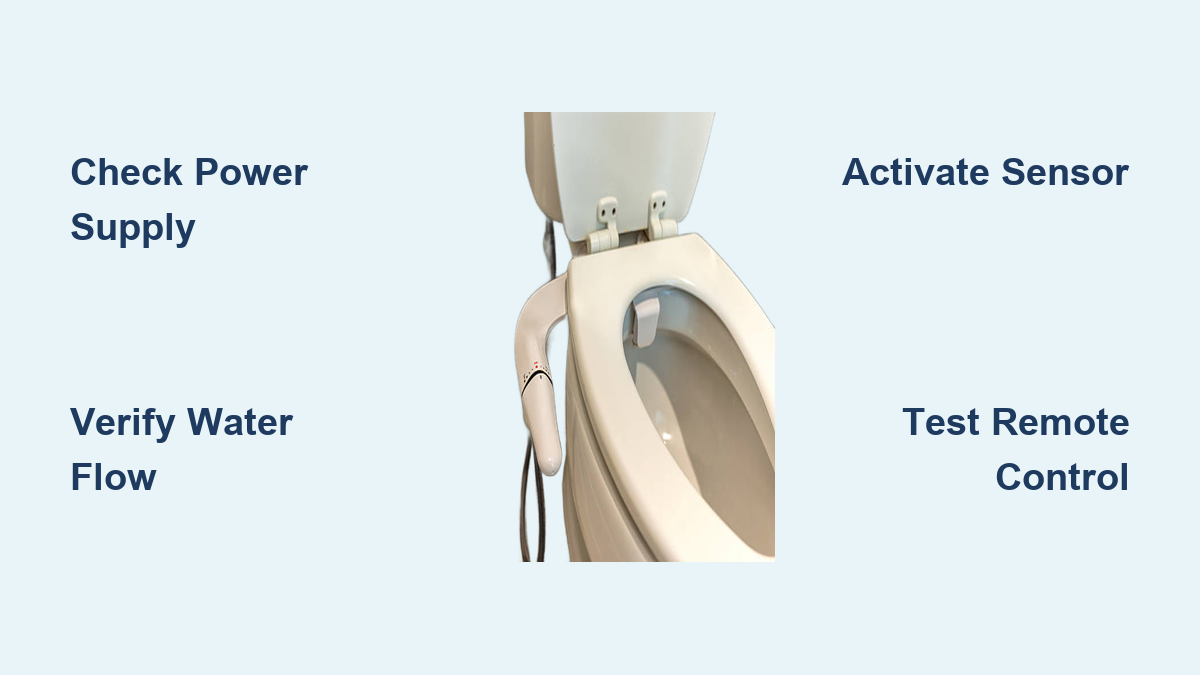
This guide walks you through diagnosing why your bidet toilet seat not working and provides step-by-step fixes. You will learn how to check power supply, water flow, sensor activation, remote controls, and mechanical components to get your bidet back online.
Check Power Supply First
Before diving into complex diagnostics, confirm your bidet is receiving electricity. A lack of power disables everything, even if water flows and sensors seem intact.
Test the Outlet and Plug
• Ensure the bidet’s power cord is fully inserted into the wall outlet
• Plug in another device like a phone charger or lamp to verify the outlet works
• If the test device fails, check if it is a GFCI outlet common in bathrooms
– Press the Reset button on the outlet to restore power
– If the circuit breaker tripped, reset it at the main electrical panel
Warning: Never use an extension cord or power strip. Plug directly into a grounded bathroom outlet.
Look for Power Indicator Lights
Most bidet seats have an LED that glows when powered. No light means even with a working outlet, suspect a damaged power cord, internal fuse blowout, or faulty circuit board. Perform a hard reset by unplugging for 30 seconds, then reconnect and wait 10-15 seconds for the system to reboot. This often resolves frozen controls or sensor sync issues. If the unit still shows no signs of power, contact the manufacturer, especially if under warranty.
Confirm Water Supply Is Active

No water means no spray, regardless of power or settings. Even slight restrictions can disable bidet operation.
Open the Shut-Off Valve Fully
Locate the water shut-off valve behind the toilet. Turn it counterclockwise until fully open. A partially closed valve may allow toilet flushing but block bidet flow due to lower pressure needs.
Inspect Hose for Kinks or Pinching
Check the supply hose from the valve to the bidet inlet for sharp bends, compression under mounting brackets, or flattened sections. Disconnect the hose after turning off water and run water into a cup to test flow rate.
Clean the Built-In Water Filter
Some models include a mesh filter at the inlet. Remove the filter and rinse under running water to clear sediment or limescale. Reinstall securely and retest. Hard water areas should clean this filter every 3 months to prevent clogs.
Activate the Seat Sensor Correctly
Bidets will not spray unless they detect someone is sitting. How you trigger the sensor varies by brand, and using the wrong method makes it seem like the unit is broken.
Skin Contact Sensor (Alpha, Brondell, Bio Bidet)
Found on most mid-range models. The sensor is located on the seat surface near the 4-5 o’clock position. Wet a paper towel or folded toilet paper under tap water and place it over the 4-5 o’clock zone. Listen for a short self-clean burst into the bowl. This confirms the sensor activated and the nozzle moved. Some models light up a status LED. Bio Bidet A8 has the sensor at 7-8 o’clock.
Weight Sensor (TOTO Washlet, Kohler Novita BN-330)
Apply firm pressure near the left-rear hinge while the seat is down. You should feel a soft click. This engages the sensor. Keep pressure applied during testing.
Infrared Sensor (Kohler Novita BH-90 / BH-93)
Find the dark IR panel at the back of the seat. Cover it with a damp paper towel to simulate body heat. This activates user detection mode.
Critical: Without proper sensor activation, no spray, dry, or nozzle movement will work, even with full power and water.
Diagnose Remote Control Failure

If buttons do not respond, the problem may not be the bidet. It could be the remote. Let us isolate the issue.
Replace Batteries with Quality Brands
Use alkaline batteries like Duracell or Energizer. Avoid cheap zinc or expired cells. They cause weak signals. Install fresh batteries and test immediately.
Fix Signal Interference Issues
Bidet remotes use infrared signals that require line-of-sight or reflection. Signals fail when body blocks the path, enclosed toilet cabinets, remote mounted too high or crooked, or distance beyond 6 feet. The best signal test is to stand in front of the toilet, hold remote in hand not mounted, and point it over your right shoulder toward the ceiling. This bounces the IR signal off walls and ceiling to the receiver. Press the dryer button first (safer than spray). If dryer runs, test rear wash but cover the nozzle first.
Re-pair the Remote (If Required)
Some models lose sync after battery change or reset. Check your manual for re-pairing steps. Common method involves holding remote close to IR receiver and pressing Dry plus Stop for 5 seconds.
Test with Auxiliary Control Panel
Your bidet likely has manual buttons on the side or top. These bypass the remote and reveal where the fault lies.
How to Use
Activate the seat sensor first. Press the rear wash button on the unit. Cover the nozzle with your hand or a cup before pressing.
What the Results Mean
Spray activates means the bidet is fine and the remote is the problem. No spray means internal failure. Proceed to mechanical checks.
Safety Note: Always cover the nozzle when testing manually. Unexpected spray can cause injury or mess.
Verify Proper Mounting and Lock-In
Even slight misalignment can disable the bidet via safety switches.
Check Seat Lock Status
Pull the seat gently toward you. If it moves forward, it is not fully locked. Look at the back of the seat. If it touches the toilet tank, the bracket is too far back.
Re-seat the Unit Correctly
Press and hold the seat release button. Slide the seat forward to disengage from the bracket. Realign and slide back until you hear a firm click. Test functionality.
Adjust the Bracket Position
If the seat hits the tank, loosen the bracket mounting bolts. Shift the bracket 1/4 inch forward. Retighten. Reinstall the bidet and test.
Fact: Improper reinstallation after cleaning is a top cause of sudden bidet failure.
Troubleshoot Nozzle Problems
Spray issues often stem from the nozzle, not electronics.
Nozzle Will Not Extend or Retract
Possible causes include mechanical jam, debris blockage, motor failure, or bent mechanism. Run the self-clean cycle to activate nozzle movement and flush. Visually inspect for paper fibers, mineral crust, or lint buildup. Gently wipe around the nozzle with a soft cloth or brush. Never use pins or sharp tools. They can damage internal gears.
Clean a Clogged Nozzle
Hard water and infrequent use lead to clogs. Run 3-5 self-clean cycles in a row. Soak the nozzle area with a vinegar-soaked cloth for 10-15 minutes. White vinegar dissolves mineral deposits. Rinse with water and test spray. Use the manufacturer’s cleaning tool if included.
Pro Tip: Set a weekly self-clean reminder to prevent future clogs.
Address Dryer and Error Code Failures
Other functions failing requires checking them fast.
Dryer Not Blowing Warm Air
Confirm the sensor is activated. The dryer will not run without user detection. Check settings. Is auto-dry disabled in the menu? If no air at all, the fan motor may be dead or heating element could be faulty. This requires professional repair or replacement.
Decode Error Messages
Modern bidets display LED error codes. Common ones include E1 for water heater fault, E3 for nozzle motor jam or obstruction, and H2O for low water pressure or flow. Fix by addressing the likely cause (clean filter for H2O), power cycle the unit by unplugging 30 seconds then reconnecting, and see if code clears.
Always consult your user manual for model-specific error meanings.
Prevent Future Failures with Maintenance
Avoid breakdowns before they happen.
Recommended Maintenance Schedule
| Task | Frequency | Tips |
|---|---|---|
| Run self-clean cycle | Weekly | Use both rear and front wash |
| Wipe down exterior | Weekly | Use soft cloth, mild soap |
| Deep clean nozzle | Monthly | Vinegar soak or brush |
| Inspect water filter | Every 3 months | Clean or replace |
| Check seat lock | Every 6 months | Ensure full click-in |
What to Avoid
Do not spray water directly into the seat. Do not use bleach, ammonia, or abrasive cleaners. Do not sit on the lid or press hard on controls. These habits shorten lifespan and void warranties.
Frequently Asked Questions About Bidet Toilet Seats
Why is my bidet not spraying even when it is powered on?
The most common causes are a closed water valve, inactive seat sensor, or clogged nozzle. Check that the shut-off valve behind the toilet is fully open, verify the sensor is properly activated using the wet paper method or weight test depending on your model, and run the self-clean cycle to clear any nozzle blockages.
How do I reset my bidet toilet seat?
Unplug the bidet from the wall for 30 seconds, then reconnect and wait 10-15 seconds for the system to initialize. This hard reset clears frozen controls and synchronization issues between sensors, nozzles, and control systems.
Why will not my bidet remote control work?
The remote likely needs new batteries (use quality alkaline ones), has signal interference issues (try pointing it over your right shoulder toward the ceiling), or needs re-pairing after a battery change. Check our section on remote diagnostics for detailed troubleshooting steps.
How do I activate the seat sensor on my bidet?
For most models with skin contact sensors (Alpha, Brondell, Bio Bidet), wet a paper towel and place it on the 4-5 o’clock position of the seat. For weight sensors (TOTO, Kohler BN-330), press firmly near the left-rear hinge. For infrared sensors (Kohler BH-90/BH-93), cover the dark IR panel at the back of the seat with a damp paper towel.
What does error code E3 mean on my bidet?
Error code E3 typically indicates a nozzle motor jam or obstruction. Try running multiple self-clean cycles, gently clean around the nozzle with a soft brush, and check for visible blockages. If the error persists, contact manufacturer support.
How often should I clean my bidet nozzle?
Clean the nozzle deeply at least monthly by running self-clean cycles and soaking it with white vinegar to dissolve mineral deposits. Weekly maintenance should include running both rear and front wash functions to keep the mechanism moving freely.
Final Thoughts on Fixing a Bidet Toilet Seat Not Working
Most bidet toilet seat not working issues stem from simple oversights. A tripped GFCI outlet, closed water valve, failed sensor trigger, or improper mounting can disable the entire unit. By following this guide, you have systematically tested every critical system including power, water supply, sensor activation, remote functionality, mechanical integrity, and nozzle operation.
If all checks pass and your bidet still does not work, contact the manufacturer with your model number and troubleshooting history. Most brands offer 1-3 year warranties covering electrical and mechanical failures. Keep your proof of purchase handy and reach out to customer support for professional repair or replacement options.
Now check your outlet, verify your water valve is open, and trigger that sensor correctly. Your bidet should be back in working order within minutes.