If you have ever wondered how a bidet toilet works, you are not alone. Millions of people around the world rely on this simple yet advanced system for a cleaner, gentler, and more hygienic bathroom experience. Unlike traditional wiping, a bidet toilet uses a targeted stream of fresh water to cleanse the genital, perineal, and anal areas after using the toilet, functioning like a personal hygiene shower. This method removes residue more effectively than dry wiping, reduces skin irritation, lowers infection risks, and cuts down on toilet paper use.
Modern bidet toilets integrate seamlessly with your existing plumbing and, in many cases, your electrical system. Whether it is a basic handheld sprayer or a high-tech smart seat with heated surfaces and air drying, the core principle remains the same. In this guide, you will learn exactly how bidet toilets operate, the different types available, what happens during each use, and why they are gaining popularity across North America and beyond.
Types of Bidet Systems You Can Choose
Bidet systems come in multiple configurations, each varying in design, features, installation complexity, and cost. All share the same core function of water-based cleansing but differ significantly in technological sophistication.
Standalone Bidets: Separate Fixtures
A standalone bidet is a porcelain fixture installed next to the toilet, resembling a small washbasin. Users straddle the bowl facing the faucet and direct water manually. These are common in Europe, especially Italy and France, where they have been part of bathroom design for over a century. While highly effective, they require dedicated floor space and additional plumbing, making them impractical for smaller bathrooms. Drying is typically done with a separate towel.
Handheld Bidet Sprayers: Manual Control
Also known as a shattaf, bum gun, or health faucet, this portable device attaches to the toilet tank or wall with a flexible hose and spray nozzle. Activated by hand, it gives users complete control over spray direction and pressure. Popular in Islamic cultures for religious purification, it is also widely used across Asia and the Middle East. Most models use cold water, though some connect to hot lines. It is inexpensive, easy to install, and doubles as a tool for cleaning the toilet bowl or diapers.
Non-Electric Bidet Attachments
These budget-friendly devices replace your toilet seat and connect directly to the water supply via a T-valve. No electricity is needed. A side-mounted knob controls the spray, allowing adjustments in pressure and sometimes temperature. Ideal for renters or those without nearby outlets, these attachments cost under $100 and install in minutes. While they lack advanced features like heated seats or dryers, they offer a simple, effective upgrade from toilet paper.
Smart Bidet Toilet Seats
The most popular type in North America, electric bidet seats replace your existing toilet seat with a high-tech unit. These require a GFCI-protected electrical outlet within six feet and offer features such as heated seat, adjustable water temperature and pressure, oscillating or pulsating spray, warm air dryer, deodorizer, and remote control. They attach to your current toilet, making installation DIY-friendly. Brands like TOTO and Bio Bidet dominate this space, offering customizable settings and memory presets for multiple users.
All-in-One Bidet Toilets
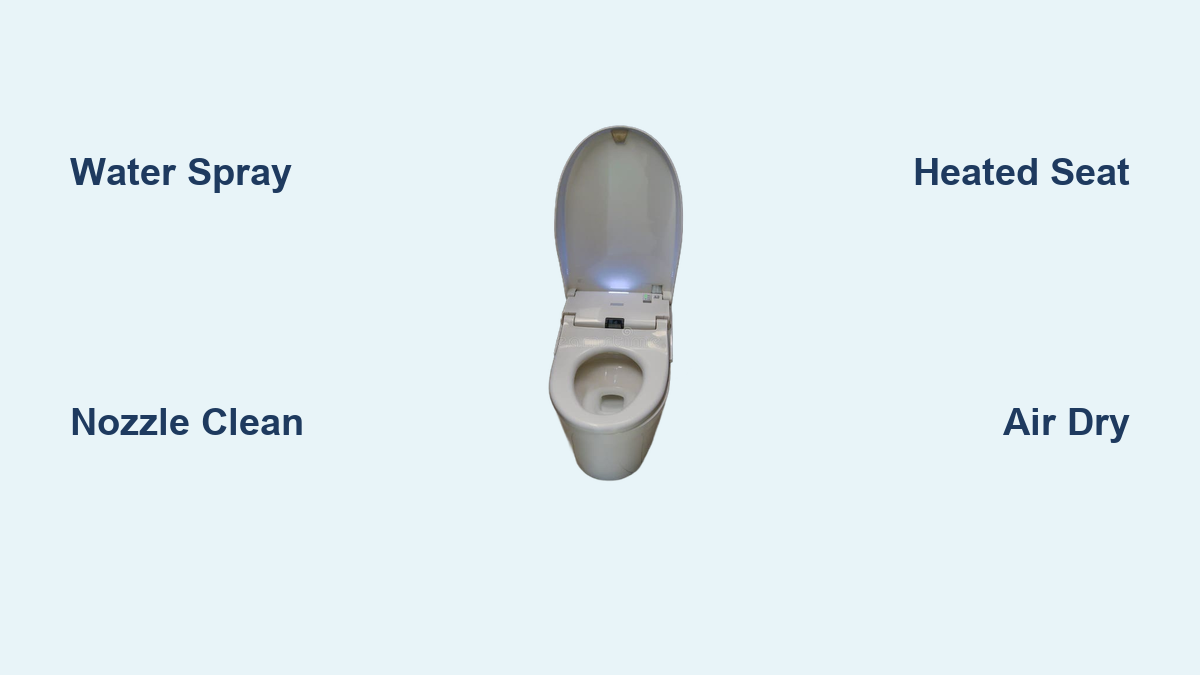
These integrated units combine the toilet and bidet into one sleek fixture. Often called Washlets (TOTO) or Sanitarinas (INAX), they come with full automation including automatic lid opening, sensor-activated flushing, self-cleaning nozzles, and app connectivity. Found in luxury homes and high-end hotels, they offer the ultimate in convenience and design. However, they are expensive and usually require professional installation. They are standard in Japan and South Korea, where bidet adoption exceeds 70 percent.
Portable Travel Bidets
For on-the-go hygiene, travel bidets come in squeeze-bottle or battery-powered electric forms. Fill with clean water, aim, and spray while seated on any toilet. No installation, no plumbing, just portability. Great for camping, flights, or public restrooms, they help maintain hygiene routines anywhere. Limitations include no heated water or drying function, but they ensure cleanliness when facilities are subpar.
Step-by-Step: How a Smart Bidet Operates
The operation of an electric bidet toilet seat involves a coordinated sequence of mechanical, hydraulic, and electronic processes working together seamlessly.
User Activation and Detection
After using the toilet, you stay seated. To begin, press a button on the side panel or remote control. High-end models use weight or proximity sensors to detect your presence and activate automatically. This prevents accidental spraying and enables hands-free use, especially helpful for seniors or those with limited mobility.
Nozzle Deployment and Positioning
Once activated, a retractable stainless steel nozzle extends from beneath the seat. Most units have two nozzles. The rear nozzle cleans the anus and inner buttocks. The front nozzle is shorter and angled forward for feminine hygiene. The nozzle moves into position just below you, ready to deliver a precise water stream. Some models allow adjustable nozzle position for personalized comfort.
Water Delivery and Spray Options
Fresh water is drawn from your home is cold water line through a T-valve connected to the toilet is supply. Electric models heat the water instantly or from a small internal tank. You can customize water temperature from cool to warm, pressure from light mist to strong jet, and spray mode including standard, oscillating, pulsating, or enema. An oscillating wash moves the nozzle side-to-side for broader coverage, while a pulsating mode offers a massaging effect.
Self-Cleaning and Retraction
After use, the nozzle automatically retracts into its housing. Before and after each use, it runs a self-cleaning cycle, rinsing with water and sometimes using UV light, silver-ion coating, or electrolyzed water to disinfect. This ensures hygiene and prevents bacterial buildup. The nozzle remains sealed when not in use.
Warm Air Drying
On electric models, a ceramic heating element and quiet fan blow warm air through a vent under the seat. Drying takes one to three minutes, depending on humidity and settings. With this feature, many users eliminate toilet paper entirely. Multiple heat levels let you choose between a gentle breeze or fast dry.
Odor Removal System
As you sit, an intake fan pulls air from the toilet bowl through an activated carbon filter. This neutralizes odors caused by hydrogen sulfide and ammonia, far more effective than masking with sprays. The deodorizer turns off automatically when you stand up.
Control Interface and Memory Settings
All functions are managed by an internal microprocessor. You interact via a side panel that is always attached and requires no batteries, a wireless remote that is wall-mounted and easy to use, or memory presets that save preferences for multiple users. Families can store different profiles for water temp, pressure, seat heat, and dryer settings, making shared bathrooms more convenient.
Water Supply and Plumbing Setup

Understanding the plumbing integration helps you install and maintain your bidet properly.
T-Valve Connection to Toilet Line
Bidet toilets connect to your existing water supply using a T-valve adapter. This small device splits the flow, with one stream going to the toilet tank for flushing and one going to the bidet system. The T-valve installs easily on the toilet is inlet pipe behind the bowl. It ensures fresh, potable water is used, never recycled or gray water. No major plumbing changes are needed for most models.
Cold vs. Heated Water Systems
Most non-electric bidets use cold water only. Electric models add on-demand heating through either a tankless instant heater that heats water as it flows or a tank-style heater that stores warm water. Higher-end units blend hot and cold water for precise temperature control. A micro-thermostat adjusts in real time to prevent scalding.
Installation Requirements
To install a bidet seat, turn off the water supply, remove the old toilet seat, install the T-valve on the water inlet, connect the bidet hose to the T-valve, mount the seat and tighten the bolts, plug into a GFCI outlet for electric models, and test for leaks and function. Most installations take under 30 minutes with basic tools. If no outlet is nearby, hiring an electrician adds $100 to $300.
Safety and Hygiene Features

Modern bidet toilets include multiple safety mechanisms to ensure clean and safe operation.
Nozzle Sanitization Methods
Bidet nozzles are designed for maximum hygiene through self-rinsing before and after each use, stainless steel or antimicrobial plastic construction, and UV-C light or silver-ion coating in premium models. These features prevent cross-contamination and keep the system clean without manual intervention.
Electrical and Leak Protection
Electric bidet seats are fully sealed and waterproof. Safety systems include GFCI outlet requirement that cuts power if moisture is detected, thermal cut-offs to prevent overheating, and overflow sensors with emergency shut-offs. These protections make modern bidets safe for home use even in humid environments.
Seat Sensors and Hands-Free Use
Weight-activated sensors ensure the bidet only operates when someone is seated. This prevents accidental activation and supports hands-free operation, a key benefit for elderly or disabled users.
Health and Skin Benefits
Switching to a bidet offers significant advantages for your health and skin.
Reduced Risk of Infections
Water cleansing removes fecal residue more effectively than wiping, lowering the risk of urinary tract infections, yeast infections, hemorrhoids, and anal fissures. It is especially recommended post-surgery, after childbirth, or for those with inflammatory bowel disease.
Gentle on Sensitive Skin
Unlike abrasive toilet paper, water does not cause micro-tears or inflammation. Ideal for people with eczema, psoriasis, diabetes-related skin fragility, or arthritis. The result is less itching, redness, and discomfort.
Improved Accessibility
Bidets reduce the need to twist or reach, making hygiene easier for seniors, post-surgical patients, people with back pain or spinal injuries, and caregivers assisting others. Handheld sprayers are particularly useful for bedridden or wheelchair users.
Environmental and Cost Advantages
Bidets offer compelling benefits for both your wallet and the planet.
Toilet Paper Reduction and Tree Conservation
Switching to a bidet can eliminate or drastically reduce toilet paper use. If the U.S. adopted bidets widely, it could save 15 million trees annually. Even partial use cuts household paper consumption by 75 percent or more.
Water and Carbon Footprint Savings
A bidet uses just 0.5 liters per use. In contrast, producing one roll of toilet paper requires 140 liters of water. Bidets also reduce carbon emissions from manufacturing and transport and prevent sewer blockages caused by flushable wipes.
Long-Term Cost Savings
The average U.S. household spends $100 to $250 per year on toilet paper. A $50 bidet attachment pays for itself in 2 to 3 months. Even a $500 smart seat pays back in 1 to 3 years.
Global Use and Cultural Adoption
Bidets have varying levels of adoption around the world, shaped by history and culture.
High-Adoption Countries
Japan has approximately 76 percent household use since TOTO launched the first Washlet in 1980. South Korea has nearly universal adoption in homes. Italy, France, and Spain commonly include bidets in new builds. The Middle East and North Africa require water cleansing religiously in Islam. Thailand and Malaysia use handheld sprayers or scooper basins as standard.
Low-Adoption Regions and Changing Trends
North America, the UK, and Australia have historically low usage due to cultural unfamiliarity. But adoption is rising fast, driven by toilet paper shortages during the pandemic, environmental awareness, celebrity endorsements, and increased product availability.
Historical Origins
The word bidet comes from French, meaning pony, referencing the straddling motion. First used in 1710 in France, early models were in bedrooms. Japan revolutionized the concept in 1980 with the electronic Washlet, adding heat, spray control, and drying.
Maintenance and Troubleshooting
Keeping your bidet working properly requires simple regular care.
Weekly Cleaning Routine
Wipe down the seat, controls, and housing with a mild bathroom cleaner. Avoid bleach or ammonia, which can damage plastics and electronics. Use a soft cloth to prevent scratches.
Monthly Filter and Nozzle Care
Clean the water inlet filter at the T-valve monthly by removing it, rinsing it under tap water, and reinstalling. Descale the nozzle with white vinegar in hard water areas to prevent clogs.
Annual System Checks
Inspect hoses for cracks or leaks, replace worn gaskets, and change deodorizer filters as recommended. Check electrical connections if using a GFCI outlet.
Common Issues and Fixes
Leaking at the T-valve requires tightening connections or replacing the rubber washer. Low water pressure means cleaning the inlet filter or upgrading to a pump-boost model. No water flow requires checking the shut-off valve and hose for kinks. Strange odors call for running the self-cleaning cycle and wiping under the seat with vinegar. Electrical errors require resetting the unit and ensuring the GFCI outlet is working.
Choosing the Right Bidet for Your Needs
Select a bidet based on your specific situation and requirements.
Renters and Budget Users
Go for a handheld sprayer priced at $20 to $50 or a non-electric attachment. These are affordable, easy to install, and removable, perfect for temporary spaces.
Homeowners Wanting Comfort
An electric bidet seat priced at $200 to $800 offers heated seating, warm water, air drying, and remote control. It transforms your bathroom into a spa-like experience.
Seniors and Disabled Users
Choose a smart seat with remote control and memory settings. Hands-free activation, adjustable settings, and warm air drying promote independence.
Caregivers and Medical Needs
A handheld sprayer provides maximum flexibility for assisting others. It is easy to aim and can be used for wound care or post-surgical hygiene.
Travelers
Pack a portable travel bidet that is lightweight, requires no setup, and maintains your hygiene routine anywhere.
Frequently Asked Questions About Bidet Toilets
Does a bidet toilet use the same water as the toilet?
No. Bidet toilets connect directly to your fresh water supply line, not the toilet bowl. The T-valve adapter draws clean, potable water from the same line that supplies your toilet tank, ensuring hygienic water for cleansing.
Can I install a bidet seat myself?
Yes. Most electric bidet seats install in 20 to 45 minutes using basic tools. You need to turn off the water, remove the old seat, install the T-valve, connect the hose, mount the seat, and plug it into a GFCI outlet. Non-electric attachments install even faster.
Do bidets require electricity?
Only advanced models require electricity. Handheld sprayers and non-electric attachments operate purely on water pressure. Electric bidet seats need a GFCI-protected outlet within six feet of the toilet for features like heated seats, warm water, and air drying.
Are bidets safe for sensitive skin?
Yes. Bidets are gentler than toilet paper because water does not cause abrasion, micro-tears, or inflammation. They are particularly beneficial for people with eczema, psoriasis, hemorrhoids, or post-surgical recovery.
How much water does a bidet use per use?
A bidet uses approximately 0.5 liters (one-eighth of a gallon) per use. This is significantly less water than is required to produce one roll of toilet paper, which needs about 140 liters.
Key Takeaways on How Bidet Toilets Work

A bidet toilet works by delivering a controlled stream of fresh water from a retractable nozzle to cleanse the anal and genital areas after bathroom use. It connects to your toilet is water supply via a T-valve and, in electric models, to a power outlet. When activated, the nozzle extends, sprays warm or cool water at adjustable pressure, then retracts and self-cleans. Many models include a warm air dryer and deodorizer, completing the process without toilet paper.
From simple handheld sprayers to high-tech smart seats, bidets offer a cleaner, gentler, and more sustainable alternative to wiping. They improve hygiene, support skin health, reduce environmental impact, and save money over time. With easy installation and growing availability, bidet toilets are no longer a luxury but are becoming the future of bathroom hygiene worldwide.