If you have ever wondered how a bidet faucet works, you are not alone. As more people seek cleaner, gentler, and more sustainable alternatives to toilet paper, bidets are gaining popularity across North America and beyond. At the heart of every bidet system is the mechanism that delivers a precise stream of water for personal hygiene. Unlike what many assume, this is not toilet water. It is fresh, clean water drawn directly from your home plumbing.
So how does a bidet faucet work? It controls the flow, temperature, and direction of water to clean the genital and anal areas after using the toilet. While traditional bidet faucets look like small sink faucets mounted on a separate basin, modern systems integrate this function into attachments, electronic seats, or handheld sprayers. Regardless of design, all rely on smart plumbing and user friendly controls to deliver targeted, hygienic cleansing. In this guide, you will learn exactly how each type operates, how water is delivered safely, and what makes todays bidet systems so effective.
Standalone Bidet Faucet Operation
The original form of the bidet faucet is found on standalone bidets, which resemble low sinks installed beside the toilet. These units use a dedicated faucet to control water delivery directly into the basin or through a spray nozzle.
Manual Temperature and Flow Control
Standalone bidet faucets typically feature two handles. One handle controls hot water and one controls cold water, or a single lever mixes both. Turning the handle opens internal valves connected to your bathroom hot and cold water lines. This allows you to mix water to a comfortable temperature before releasing it through the spout. Some models include a diverter valve that redirects water from the spout to a pull out spray nozzle at the base of the fixture, directing a vertical stream upward for targeted cleaning.
User Positioning and Use
To use the bidet, users straddle the fixture facing either the spout or the wall, depending on preference. Once seated, they adjust the water temperature and pressure manually and allow the stream to cleanse the area. Since the water flows into the basin, some splashing may occur, making proper positioning key. A built in pop up drain lets you fill the basin slightly if desired, though most users opt for a continuous rinse.
Installation Requires Full Plumbing
Installing a standalone bidet faucet involves connecting it directly to both hot and cold water supplies, just like a bathroom sink. This usually requires mounting the faucet through holes in the bidet rim, securing with locknuts and rubber washers, connecting flexible supply lines to shut-off valves, applying Teflon tape to threaded joints, and attaching the drain assembly. Because this setup demands additional floor space and professional plumbing, standalone bidets are less common in compact bathrooms but remain popular in Europe and luxury homes.
Bidet Attachment Water Delivery System
For those who want bidet functionality without replacing their toilet or installing new plumbing, bidet attachments offer a simple solution. These devices install under the existing toilet seat and use a retractable nozzle to deliver water, mimicking the function of a traditional bidet faucet.
T-Valve Connects to Toilet Water Line
The attachment connects to the toilet cold water supply using a T-valve, which splits the incoming water between the toilet tank and the bidet. When the control knob is turned, a valve inside the device opens, allowing pressurized water to flow through a hose to the nozzle. No electricity is needed. The system runs entirely on household water pressure.
Side Knob Controls Pressure and Flow
Most attachments feature a side-mounted dial that controls on/off function and water pressure. Turning the knob gradually widens the internal valve opening, increasing flow. The nozzle, usually made of stainless steel or antimicrobial plastic, automatically extends when activated and retracts when turned off. Many models include a self-cleaning feature, flushing the nozzle with water before and after use.
Cold or Warm Water Options Available
Basic models use cold water only. However, advanced attachments can be connected to a nearby sink hot and cold lines using a dual T-valve and tubing, allowing users to mix warm water for greater comfort. This requires access to sink plumbing but still avoids electrical installation.
Electric Bidet Seat Technology Explained

Electric bidet toilet seats represent the most advanced form of bidet faucet technology. They replace your standard seat and integrate electronic controls, heated water, air drying, and more, all while maintaining the core function of delivering a clean, adjustable water spray.
Instant Water Heating System
Unlike non-electric models, electric bidet seats heat water on demand. A ceramic heating element warms the water as it flows through a chamber. A flow sensor detects when the spray is activated and triggers the heater, delivering preset temperatures within seconds. Some premium models use a storage tank to maintain a small reserve of pre-heated water for consistent warmth, even during long sprays.
Air-Assist Spray Boosts Pressure
One challenge with low household water pressure is weak spray. To counter this, many electric seats use an air pump. Air is drawn in and mixed with water at a multiway valve, creating a softer, bubbly spray that feels more forceful without increasing water usage. This also reduces splashback and enhances comfort.
Remote-Controlled Functions
Users operate electric bidet seats via a remote control or side panel. Infrared signals send commands to an internal microprocessor, which activates specific functions. These include rear wash for general cleansing, front wash with a gentler wider spray, oscillating mode where the nozzle moves slightly back and forth for thorough coverage, pulsating mode with intermittent bursts that improve stimulation and cleaning, and adjustable nozzle position for perfect alignment. The system automatically retracts the nozzle when not in use and flushes it with fresh water to maintain hygiene.
Handheld Bidet Sprayer Mechanics
A handheld bidet sprayer, also called a bidet shower or shattaf, works like a mini showerhead on a hose. It gives users full manual control over spray direction and intensity, making it one of the most versatile bidet options.
Trigger-Activated Spray Control
Mounted on a wall bracket or clipped to the toilet tank, the sprayer features a trigger handle similar to a kitchen sprayer. Pressing the trigger opens a valve, releasing water through a nozzle with adjustable spray settings. These settings include jet, mist, or rinse. Releasing the trigger stops the flow instantly.
Hot and Cold Mixing Valve Option
Standard models use cold water from the toilet supply line. But mixing valve models connect to both hot and cold lines, often tapped from the sink, allowing users to adjust water temperature directly on the sprayer. This requires running additional tubing but greatly improves comfort, especially in colder climates.
Multi-Purpose Use
Beyond personal hygiene, handheld sprayers can clean the toilet bowl, rinse diapers, or even bathe pets. Their flexibility makes them popular in family bathrooms and households with special care needs.
Travel Bidet Portable Functionality
For on-the-go hygiene, travel bidets offer a portable, no-plumbing solution. These compact devices bring bidet functionality anywhere, from airplanes to camping trips.
Manual Squeeze or Pump Operation
Most travel bidets are bottle-style units filled with clean water. To use, you squeeze the bottle or press a lever, forcing water through a nozzle. Some advanced models use a hand pump to build pressure for a stronger, more consistent stream. Battery-powered versions include a small motorized pump for automatic spray.
No Installation, Fully Portable
Since they do not connect to plumbing, travel bidets require no installation. Simply refill with clean water after each use. While they lack temperature control and automation, they provide a hygienic alternative to dry wiping when away from home.
Water Source and Plumbing Safety
A common myth is that bidets use water from the toilet tank. This is false. All permanent bidet systems draw fresh, potable water directly from your home plumbing supply.
T-Valve Ensures Clean Water Split
The T-valve is the key component. Installed between the toilet water supply line and the fill valve, it diverts a portion of clean water to the bidet while still filling the tank. Because the water never enters the toilet bowl, it remains sanitary. High-quality T-valves include anti-siphon features to prevent backflow contamination.
Direct Plumbing for Standalone Units
Standalone bidets and some sprayers connect directly to hot and cold shut-off valves under the sink or behind the toilet. These use standard quarter-inch flexible supply lines and must be sealed properly to prevent leaks.
Water Pressure Requirements
Most bidets work efficiently at standard household pressure, which is 40 to 80 psi. If pressure is too low, some electric models include built-in boosters to maintain spray strength. Extremely high pressure may require a regulator to protect internal components.
Control Systems: Manual vs Electronic
How you control your bidet depends on the model and your preference for simplicity or high-tech convenience.
Mechanical Knobs for Simplicity
Non-electric bidet attachments and standalone faucets use manual controls. A turn knob or lever adjusts flow and pressure. These systems are reliable, easy to maintain, and require no power. They are ideal for renters or those avoiding electrical work.
Smart Electronic Interfaces
Electric bidet seats use digital controls. These include remote controls with backlit buttons, side touch panels with LED indicators, memory settings that save user preferences, and child lock to prevent accidental activation. These interfaces communicate with internal solenoids, pumps, and sensors to deliver a customized experience with the press of a button.
Hygiene and Self-Cleaning Features
Modern bidet systems are designed with hygiene as a top priority. The nozzle, the part that delivers water, is never exposed to waste during use and includes multiple cleaning safeguards.
Automatic Nozzle Rinse
Before and after each use, the nozzle is flushed with fresh water to remove any residue. In electric models, this happens automatically when the seat detects the user has sat down or stood up.
Antimicrobial and Stainless Steel Materials
Nozzles are typically made from stainless steel or antimicrobial plastic, both resistant to bacterial growth. Some high-end models include UV-C light sanitization, which zaps microbes after each cycle.
Optional Water Filtration
For added safety, some bidets support inline water filters that remove chlorine, sediment, and impurities. This is especially useful in areas with hard water or low water quality.
Installation Requirements by Type

Bidet type determines installation complexity. Here is what you need to know for each option.
Standalone bidets require hot and cold water lines with no electrical needs. Tools include a basin wrench, Teflon tape, and silicone. Professional plumbing installation is recommended.
Bidet attachments connect to the cold water line via a T-valve with no electrical needs. Tools required are a screwdriver and wrench. This is a DIY-friendly option that takes under 30 minutes.
Temperature-controlled attachments connect to hot and cold lines from the sink with no electrical needs. The same tools as basic attachments are required, plus tubing, if sink lines are accessible.
Electric bidet seats connect to cold water via a T-valve and require a GFCI outlet. Tools needed are a screwdriver and wrench. This is DIY-friendly, but an electrician may be needed for the outlet.
Handheld sprayers connect to cold or hot and cold lines with no electrical needs. Tools include a wrench, T-valve, and hose. Moderate plumbing skill is required.
Travel bidets require no water connection or electrical needs. No tools are needed. This is fully portable.
Benefits: Cleanliness, Comfort, and Sustainability
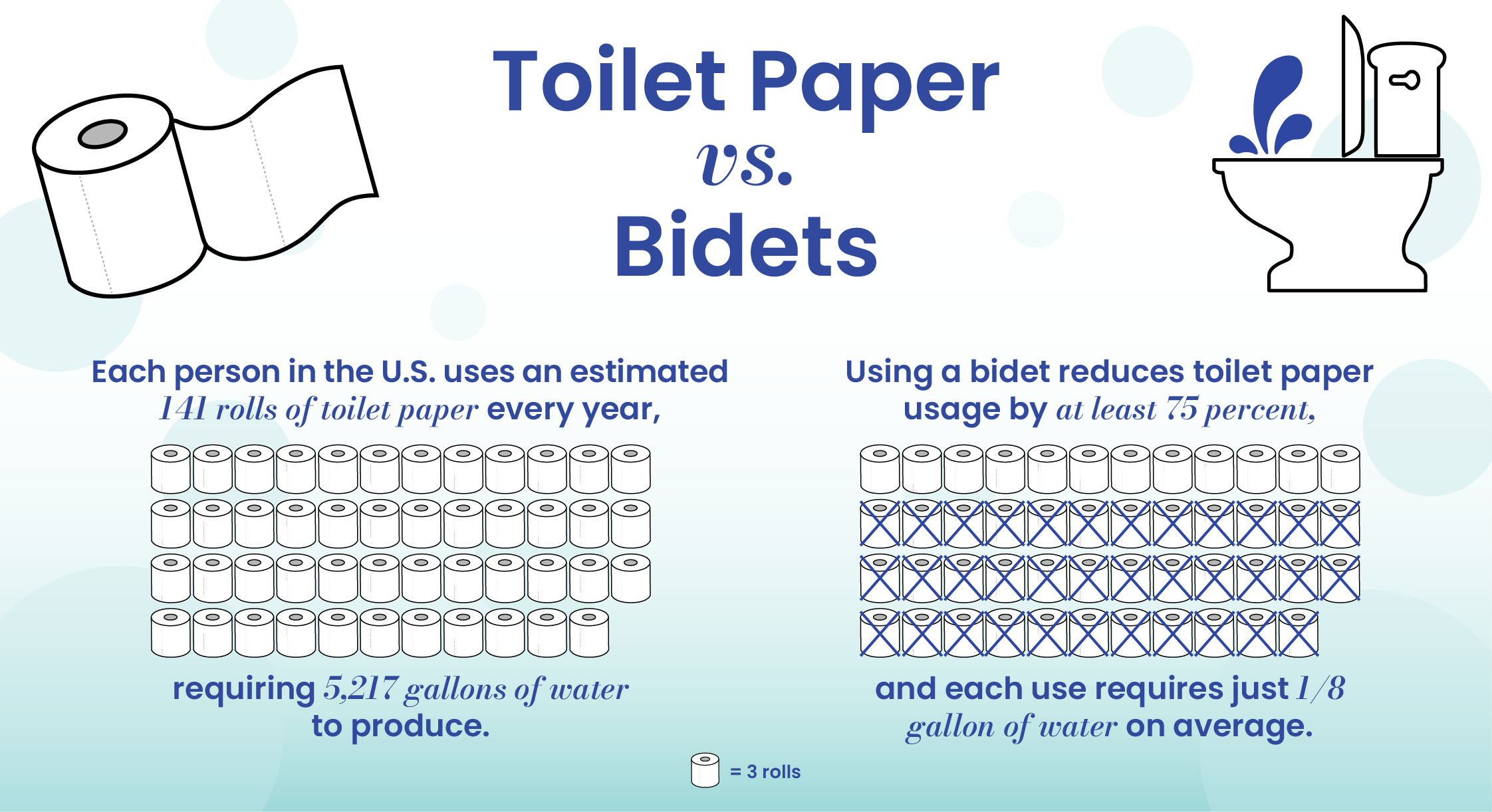
Using a bidet faucet system offers tangible benefits over traditional wiping.
Superior Hygiene
Water removes fecal residue more effectively than toilet paper, reducing the risk of irritation, hemorrhoids, and urinary tract infections. It is especially beneficial for individuals with limited mobility, post-surgery patients, or those with chronic conditions like IBS or Crohn disease.
Gentle on Skin
Unlike dry paper, which can cause micro-tears, water cleansing is gentle and non-abrasive. Heated water and adjustable pressure further enhance comfort.
Eco-Friendly and Cost-Effective
Bidet users report 75 to 100 percent less toilet paper use, leading to significant savings over time. From an environmental standpoint, this reduces deforestation, water waste from paper production, and sewage clogs.
Frequently Asked Questions About Bidet Faucets
Does a bidet use toilet water?
No. All permanent bidet systems use fresh, clean water from your home plumbing supply, not from the toilet tank or bowl. The T-valve diverts clean water directly to the bidet mechanism.
How does a bidet attachment work without electricity?
Bidet attachments operate entirely on household water pressure. A T-valve splits the water supply between the toilet tank and the attachment. When you turn the control dial, it opens an internal valve that allows pressurized water to flow through a nozzle. No electrical connection is needed.
Can I get warm water from a bidet attachment?
Basic bidet attachments use cold water only. However, advanced models can be connected to your sink hot and cold water lines using a dual T-valve and tubing, allowing warm water delivery without electricity.
Do electric bidet seats require special plumbing?
Electric bidet seats connect to the same cold water line as a standard bidet attachment, using a T-valve. The main requirement is a nearby GFCI electrical outlet. No special plumbing modifications are needed beyond the water connection.
How does the self-cleaning feature work on bidet nozzles?
Most bidet nozzles automatically flush with fresh water before and after each use. In electric models, this happens when the seat sensor detects you sitting down or standing up. Many nozzles are also made from stainless steel or antimicrobial plastic for added hygiene.
Are handheld bidet sprayers difficult to install?
Handheld sprayers are relatively easy to install for those with basic plumbing skills. They connect to the toilet water supply via a T-connector and include a mounting bracket. Models with hot water capability require connecting to sink lines, which adds complexity.
Key Takeaways for Understanding Bidet Faucet Operation
A bidet faucet, whether mechanical or electronic, works by delivering a controlled stream of fresh water for personal cleansing. From simple attachments to smart toilet seats, all systems prioritize hygiene, comfort, and ease of use.
The core principles remain consistent across all types. Fresh water is drawn from your home supply through a T-valve or direct connection. Valves, nozzles, and user controls direct the stream to the appropriate area. Temperature, pressure, and spray pattern are customizable. Self-cleaning nozzles and antimicrobial materials maintain hygiene.
With minimal installation requirements and significant long-term benefits, bidets are transforming bathroom routines worldwide. Whether you choose a simple attachment or a high-tech seat, understanding how a bidet faucet works helps you select the right system for your home and lifestyle.