
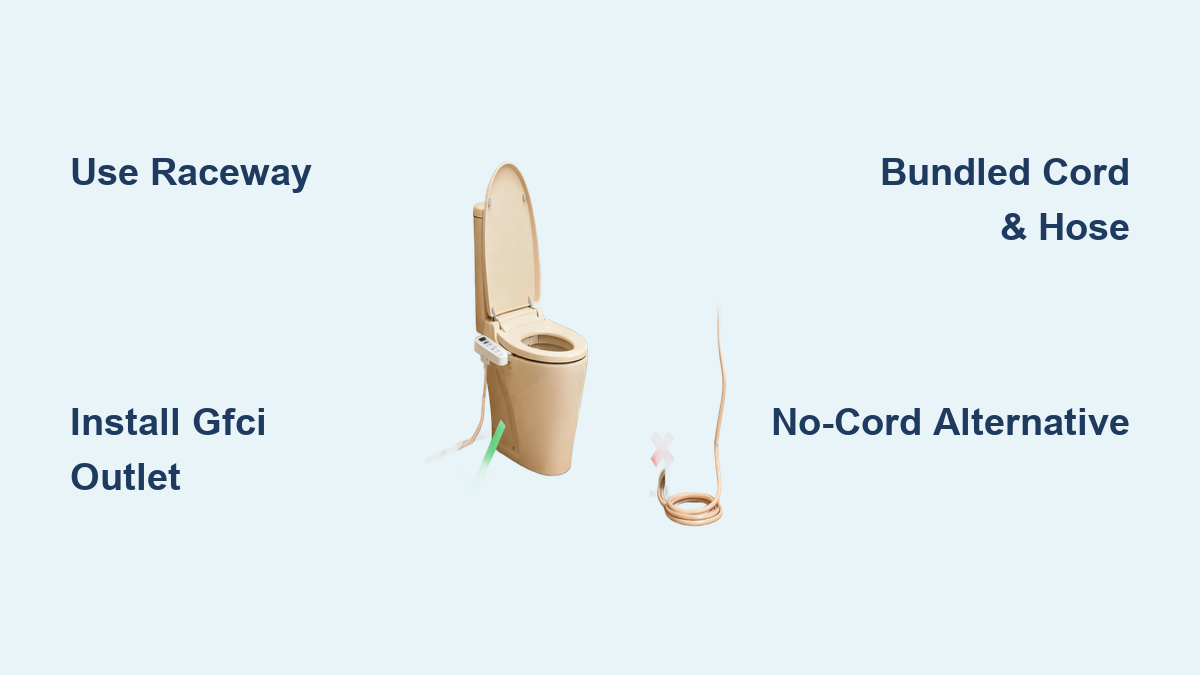
Electric bidets offer comfort and hygiene, but their power cords can be an eyesore. Most models come with a short 4-foot cord, and if your bathroom outlet is not nearby, you are left with a visible wire snaking across the floor or baseboard. This not only looks unattractive but can also pose safety risks. The good news: you can hide your bidet cord effectively without sacrificing safety or functionality.
You will learn how to choose the right extension cord, install drip loops, use cable raceways, and even upgrade to a permanent outlet. We will also cover the only bidet model designed for full cord concealment and explore no-cord alternatives.
Use a Cable Raceway for Baseboard Routing
A cable raceway is the go-to solution for hiding bidet cords along walls or baseboards, especially in rentals or homes where drilling is not allowed.
Install a Paintable Adhesive Raceway
Self-adhesive plastic channels snap over cords and blend into your walls. Brands like D-Line or CableOrganizer offer low-profile options that mount in minutes.
Clean the baseboard with alcohol to ensure adhesion. Lay the cord inside the track and snap the cover shut. Paint the raceway to match your wall color if desired. This method keeps the cord flush, prevents tripping, and eliminates visible clutter.
Choose the Right Size and Rating
Not all raceways are equal. Pick one that fits a 3-prong, 12 AWG extension cord for longer runs. Opt for a 0.75-inch wide channel if bundling the power cord with the water hose.
Avoid placing raceways in high-traffic zones or under rugs. Never use flat, two-prong cords because they lack grounding and overheat easily.
Upgrade to the Bio Bidet A8 Serenity
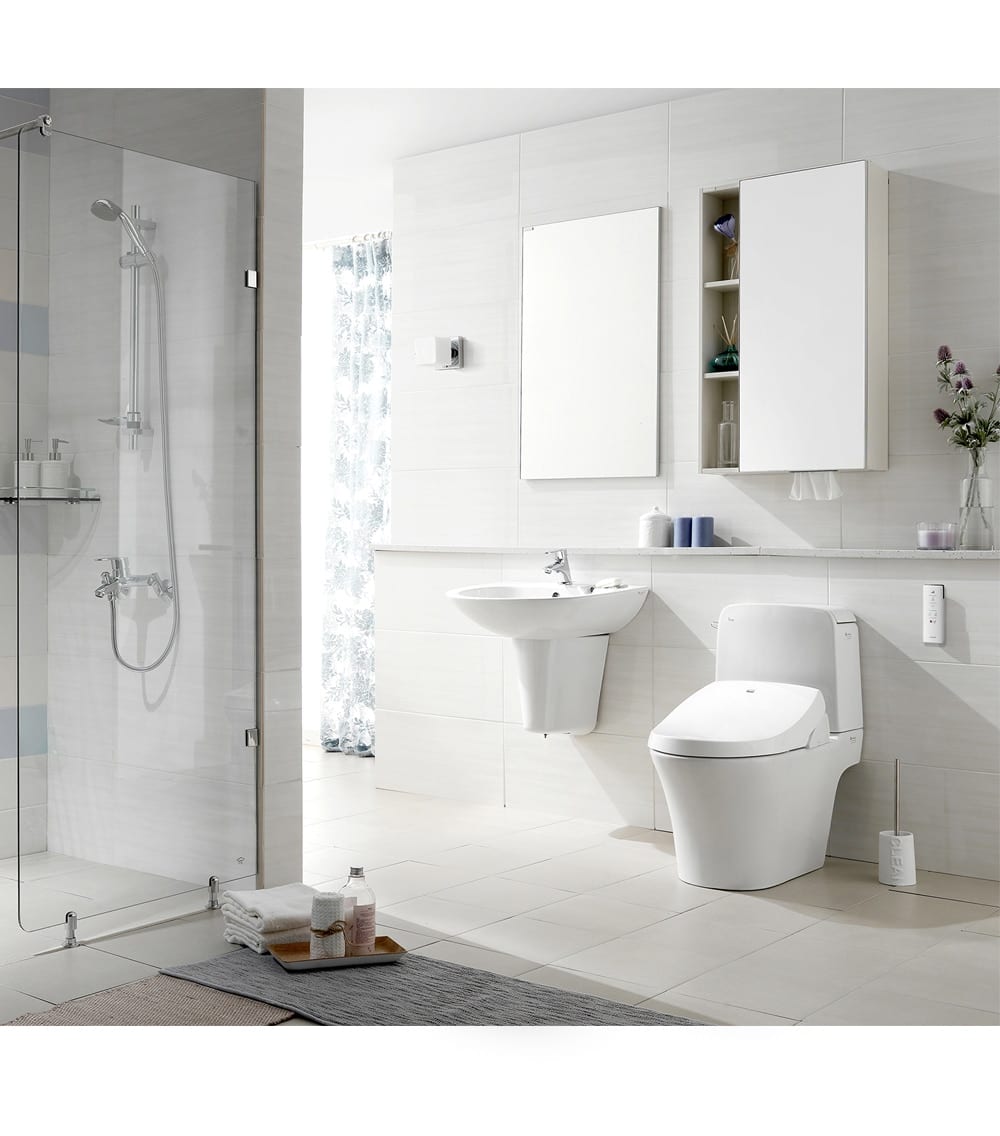
Most bidets expose both the power cord and water hose, making concealment difficult. The Bio Bidet A8 Serenity is the only major model engineered for full cord hiding.
Bundle Cord and Hose Together
Unlike standard bidets, the A8 Serenity routes the power cord from the center rear of the seat. It includes clips to bind the cord and water supply hose into one neat bundle. This design allows left or right-side routing to match your outlet location.
This setup lets you tuck everything behind the toilet tank or under the seat for a clean, minimalist look without third-party covers needed.
Install with Factory Clips
Follow these steps to install properly.
Measure the distance from your outlet to the toilet. Clip the cord and hose together every 6 to 8 inches. Route the bundle along the wall or behind the tank. Use the side release button to reattach the seat securely.
With all components hidden, the result is a seamless, high-end appearance unmatched by other models.
Install a GFCI Outlet Behind the Toilet
The cleanest, safest, and most permanent fix is to add a dedicated GFCI outlet within 12 inches of the toilet.
Hire a Licensed Electrician
A professional can tap into an existing bathroom circuit or fish wire through the wall from an adjacent room. They can install a 20-amp GFCI outlet that is code-compliant and safe.
Even if one electrician says it is impossible due to wall obstructions, others may succeed by accessing from a closet or utility space. Always get a second opinion before giving up.
Once installed, the bidet plugs in directly with no extension cord, no raceway, and no compromise.
Why GFCI Is Non-Negotiable
The National Electrical Code (NEC 210.8) requires all bathroom outlets to be GFCI-protected. These outlets cut power in milliseconds if a ground fault is detected, which is critical in wet environments.
Test your GFCI monthly using the TEST and RESET buttons. Never bypass GFCI protection, even temporarily.
Choose the Right Extension Cord

If you cannot install an outlet, a high-quality extension cord is your next best option, but only if it meets strict safety standards.
Use UL-Listed, 3-Prong, 12 AWG Cord
Check these specifications before purchasing.
The plug must be 3-prong and grounded. The cord must be UL or ETL listed. The jacket should be SJT or SJTW for indoor, abrasion-resistant use. The gauge must be 12 AWG for runs over 8 feet. The capacity must be at least 1500 watts since bidets draw 500 to 1400 watts.
Calculate amperage by dividing watts by 120V. For example, a 1400W bidet draws about 11.7A, so your cord must handle at least 13A.
Avoid These Common Mistakes
Using 2-prong or flat cords creates a fire risk because they lack grounding. Never daisy-chain multiple cords together. Avoid running cords under rugs or furniture because this traps heat. Replace any damaged or frayed cords immediately.
Follow Safe Routing Practices
Even the best cord needs proper installation to stay safe and hidden.
Plan the Shortest Path
Common routes include along baseboards from an adjacent wall, behind the toilet tank, under a vanity if accessible, or through a shared wall from a closet.
Measure the distance and add only 6 to 12 inches for loops. Excess cord increases voltage drop and creates clutter.
Create a Drip Loop
Form a U-shaped downward loop just before the plug enters the outlet. This prevents water from running down the cord and into the receptacle, which is critical in humid bathrooms.
Leave a Service Loop
Keep a 6 to 8 inch coil near the bidet. This allows easy removal for cleaning or repairs and reduces strain on the connection.
Secure the Cord Without Damage
Never use tape, staples, or zip ties because they can cut into insulation and create fire hazards.
Use Non-Damaging Clips
Adhesive cable clips used every 2 to 3 feet work well. Raceway fasteners and removable hooks are also good options, especially in rentals.
These keep the cord flush and prevent sagging while allowing future removal. Avoid sharp bends or pinching behind the toilet, and ensure the plug fits snugly because loose connections cause overheating.
Consider a Mechanical Bidet Attachment
No outlet? No problem. A non-electric bidet eliminates cords entirely.
Use Water-Pressure-Only Models
These $20 to $50 attachments install between the seat and bowl and deliver a cold water spray using line pressure. They require no electricity or outlet.
The pros include zero cords, zero electrical risk, strong spray pressure, and durable stainless steel hose options. The cons include no heated water, warm air drying, or heated seat. Cold spray may be uncomfortable in winter, and some budget models have brittle plastic parts.
Recommended Option
The AmazonBasics Bidet Attachment is a top-rated model praised for durability and ease of use at around $30. One user reported using theirs for 8 years with no issues, proving simplicity can outlast high-tech alternatives.
Perform Monthly Safety Checks
Even hidden cords need maintenance.
Inspect for Damage
Check monthly for cuts, cracks, or flattened sections. Look for discoloration or warmth at the plug. Check for loose GFCI outlet or bent prongs. Watch for dust buildup in the raceway.
Wipe down the channel to prevent abrasion.
Respond to Warning Signs
A hot plug or outlet means you should unplug immediately because this could indicate loose wiring. A buzzing sound suggests arcing, so replace the cord or call an electrician. Frequent GFCI trips mean you should test the cord on another outlet to isolate the cause.
Replace cords every 3 to 5 years in high-humidity bathrooms.
Frequently Asked Questions About Hiding a Bidet Cord
Can I use any extension cord for my bidet?
No. You must use a 3-prong, grounded extension cord that is UL or ETL listed. The cord should be at least 12 AWG for runs over 8 feet and rated for 1500 watts or more. Using the wrong cord creates fire and shock hazards.
Is it safe to hide a bidet cord behind the toilet?
Yes, if done properly. The cord should be secured with clips, not taped or stapled. Create a drip loop before the outlet to prevent water entry. Ensure the cord is not pinched or sharply bent. The outlet must be GFCI-protected.
How do I hide a bidet cord in an apartment without drilling?
Use a paintable adhesive cable raceway along your baseboard. This solution requires no drilling, is renter-friendly, and can be removed when you move. Clean the surface with alcohol before applying the adhesive backing.
What is the best bidet for hiding the power cord?
The Bio Bidet A8 Serenity is the only major model with built-in cord and hose bundling. The power cord exits from the center rear, and included clips bind both lines together for a clean, hidden installation.
Do I need an electrician to install a bidet outlet?
For a new GFCI outlet, yes. A licensed electrician ensures the work meets NEC code requirements. They can fish wire through walls, install the proper 20-amp GFCI outlet, and verify safe operation.
Are non-electric bidets a good alternative?
Yes, if you want zero electrical concerns. Mechanical bidet attachments use water pressure only, require no outlet, and cost between $20 and $50. They lack heated features but provide effective cleaning with no cord management needed.
Key Takeaways for Hiding Your Bidet Cord

The best permanent solution is installing a dedicated GFCI outlet behind the toilet. This eliminates extension cords entirely and provides the cleanest, safest result. If you rent or cannot modify electrical, use a 12 AWG UL-listed extension cord inside a paintable adhesive raceway routed along your baseboard.
For factory-integrated concealment, the Bio Bidet A8 Serenity remains the only major model with built-in cord-hose bundling. If cords stress you out entirely, consider a mechanical bidet attachment that uses water pressure only and requires no electricity.
Whatever method you choose, never compromise on GFCI protection, and inspect your setup monthly for signs of damage or wear.