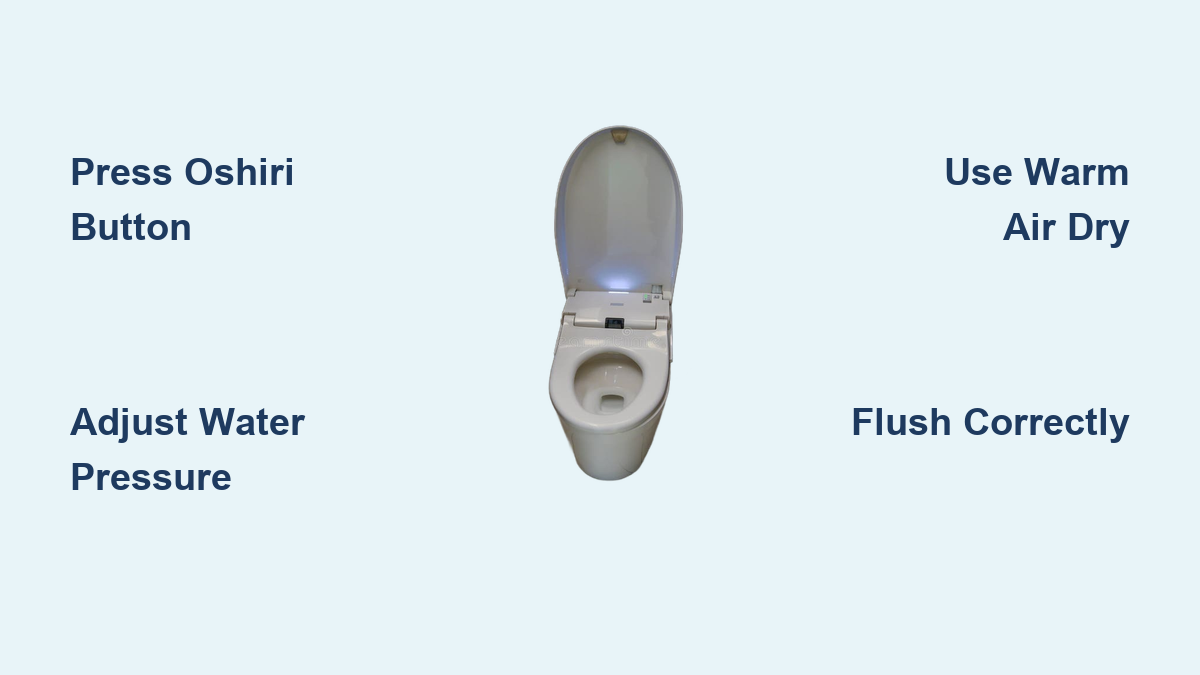
If you have ever stepped into a restroom in Japan and stared at a toilet covered in buttons, symbols, and a remote control, you are not alone. The Japanese bidet, often called a Washlet, is a high-tech marvel that combines hygiene, comfort, and innovation in one sleek fixture. Unlike traditional Western toilets, these smart toilets offer automated cleaning, heated seats, warm air drying, and even sound-masking features, all designed to elevate your bathroom experience.
For first-time users, the controls can seem overwhelming. But once you understand the basics, using a Japanese bidet becomes intuitive, and many people find it hard to go back. This guide breaks down exactly how to use a Japanese bidet, step by step, with clear explanations of every function, cultural tips, and practical advice for travelers and new owners alike. Whether you are visiting Tokyo or installing a Toto Washlet at home, you will walk away confident and ready to press those buttons.
Entering the Restroom: Slippers and Signs
Before using the restroom, check for toilet slippers near the entrance. In many Japanese homes and traditional inns, you are expected to change from your regular slippers into dedicated toilet slippers. This keeps the bathroom clean and prevents tracking dirt. After use, do not forget to switch back. Wearing toilet slippers beyond the restroom is a common faux pas.
Public restrooms in Japan are clean, well-labeled, and easy to find. Look for signs with these common terms.
• お手洗い (otearai) is the most polite and widely used term.
• トイレ (toire) is casual, like bathroom.
• 化妆室 (keshoshitsu) is formal, often used in offices or hotels.
• 多機能トイレ (takitsuki toire) is the universal design restroom for accessibility.
Symbols like WC, the restroom icon, or the wheelchair symbol are also standard. Always follow posted instructions, especially regarding toilet paper disposal.
Identifying Your Toilet Type
Not all Japanese toilets are high-tech. Washiki toire, or squat toilets, are still found in parks, temples, and older buildings. These require you to hover over a porcelain trough. Flush with a pull-chain or lever on the wall. Though unfamiliar to many, they are hygienic and promote natural posture.
Most modern toilets are yoshiki toire, Western-style seats with bidet functions. These are the ones with control panels, heated seats, and spray nozzles. Look for a side panel or wall-mounted remote to access bidet features.
Takitsuki toire are spacious, accessible stalls with full Washlet features, baby-changing stations, and emergency buttons. Designed for wheelchair users or families, they are open to all and often the most user-friendly option.
Activating the Bidet: Oshiri and Bidet Functions
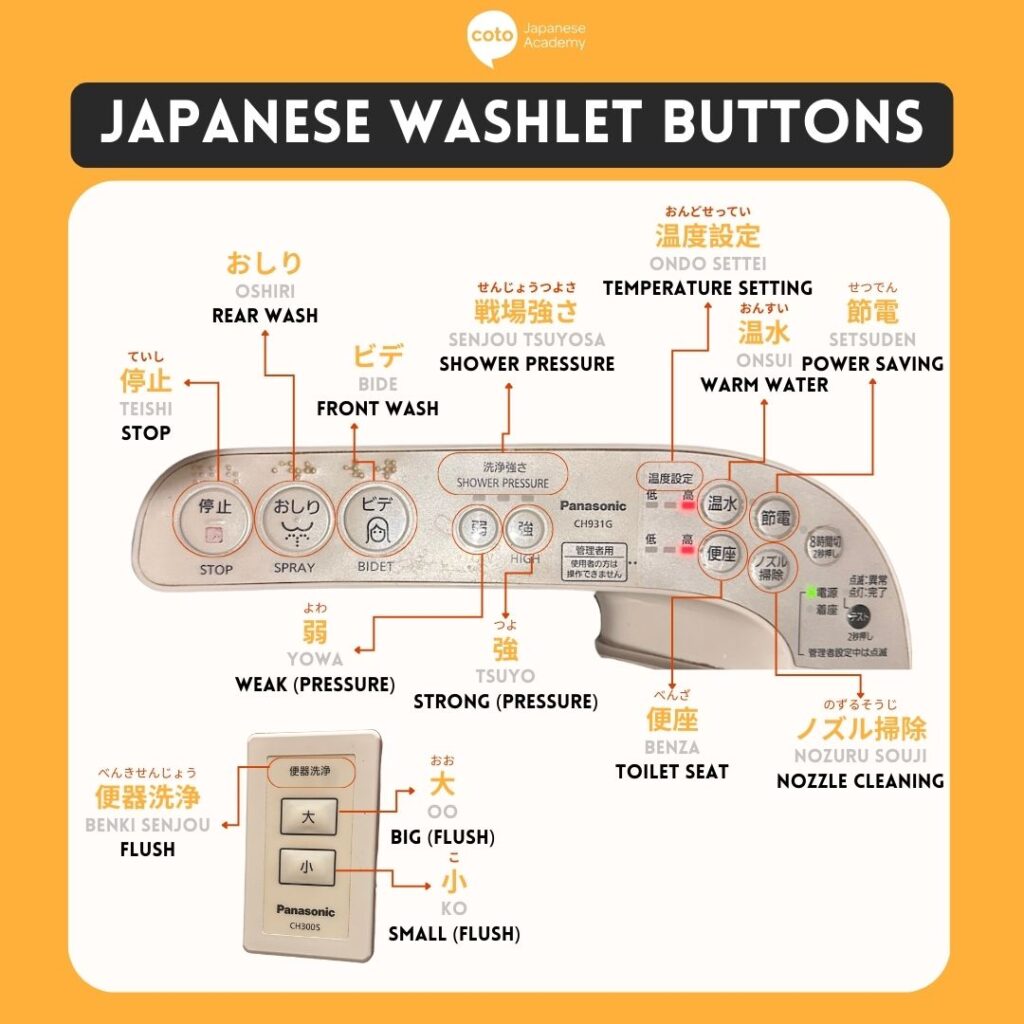
Sit down and locate the Oshiri button, usually labeled with a rear-end icon. Press it once to begin a targeted water spray for cleaning your backside. The nozzle extends automatically from beneath the seat and retracts after use, often with a self-cleaning rinse.
• No need to wipe first. The spray is designed to clean directly.
• Press Oshiri again or the stop button to end the spray.
• The nozzle cleans itself before retracting. No manual maintenance needed.
For women, the Bidet or B-dei button provides a gentler, wider spray for feminine hygiene. It is ideal for menstruation, post-toilet freshness, or sensitive skin. The nozzle extends slightly farther and adjusts the spray pattern for comfort.
Pro Tip: If you are unsure which button is which, look for icons. Oshiri often shows a rear view. Bidet shows a front female figure.
Customizing Your Wash Experience
Fine-tune the spray strength using the plus and minus buttons. Start on low pressure if you are new to bidets. High pressure can feel intense but is useful for thorough cleaning. Most models offer three to five pressure levels.
Cold water can be a shock, especially in winter. Use the heat or temp button to warm the spray. Japanese bidets heat water on demand, so warmth is consistent and comfortable.
Premium models let you adjust the nozzle front-to-back position for personalized targeting. Use the position button to shift the spray closer or farther from your body.
Some remotes include a Massage, Wave, or Pulsation mode. This creates a rhythmic, oscillating spray that feels like a gentle cleanse or spa treatment. It is not essential, but pleasant for relaxation.
Drying Off Without Toilet Paper
After washing, press the Dry button, often with a fan icon. A stream of warm air will blow from the rear nozzle for 30 to 60 seconds. It is not instant, but it significantly reduces the need for toilet paper.
Note: Drying effectiveness varies by model and humidity. In public restrooms, you may still want a small wipe.
If the dryer is not strong enough, use a small amount of toilet paper. Japanese toilets promote minimal paper use, which is better for plumbing and the environment.
Flushing Correctly
Most Japanese toilets have two flush buttons. The small button is for liquid waste and uses less water. The large button is for solid waste and provides a full flush. Press the appropriate one. Some models use icons instead of text. Look for half and full water droplets.
Many modern toilets flush automatically when you stand up. The sensor detects movement and triggers the flush. Do not leave immediately. Wait a second to ensure the flush activates.
If the auto-flush fails or you are using an older model, press the flush button manually. In public restrooms, some toilets require you to press the button after the sensor confirms you have stood up.
Enjoying Heated Seats and Comfort Features
The heated seat is one of the most loved features, especially in winter. It stays warm automatically and often includes eco-mode, turning off when no one is present. Use the seat heat button to adjust or disable it if the room is warm.
Fun Fact: Many visitors to Japan say the heated seat is the hardest feature to give up when returning home.
Using Sound Masking for Privacy
Need privacy? Press the Otohime button to play artificial flushing sounds or nature audio like a waterfall. This feature, literally Sound Princess, masks bowel movement noises in public restrooms.
• It does not flush the toilet. Do not confuse it with the flush button.
• Some models activate it automatically when you sit.
• Volume and sound type may be adjustable.
Understanding Sink Integration and Water Recycling
Many Japanese toilets have a sink on top of the tank. After using the toilet, turn on the faucet. The water flows into the tank and is reused for the next flush. This conserves water and encourages handwashing.
Note: The water is clean and safe for handwashing, but do not drink it.
Reading Control Panel Symbols
Since many toilets use icons instead of text, here is a quick reference.
| Icon | Meaning |
|---|---|
| Peach or rear view | Oshiri (posterior wash) |
| Woman or front view | Bidet (feminine wash) |
| Square | Stop spray |
| Plus or minus | Pressure adjustment |
| Sun or flame | Water temperature |
| Fan | Dry function |
| Wave | Massage/pulsation |
| Speaker | Otohime (sound mask) |
| Toilet with half droplet | Small flush |
| Toilet with full droplet | Large flush |
If in doubt, start with low pressure and warm water. You can always adjust.
Avoiding Common Mistakes
Do not press Otohime thinking it flushes. The Sound Princess button plays audio. It does not flush. Always use the flush button or wait for auto-flush.
Do not stand up too fast. If your toilet has auto-flush, wait a second after standing. Some models require a brief delay to register departure.
Do not ignore the remote location. In public restrooms, the control panel is often on the wall, not the toilet. Look to your right or left for a wall-mounted remote.
Final Tips for First-Time Users
• Experiment freely. No button will harm you or the toilet.
• Start with low pressure and warm water for comfort.
• Use the heated seat and dryer to reduce paper use.
• In public restrooms, look for the wall remote.
• Always flush or wait for auto-flush before leaving.
• If unsure, watch others or ask politely. Many Japanese people are happy to help.
Frequently Asked Questions About Japanese Bidets
Do I need to wipe before using the bidet?
No, wiping before using the bidet is not necessary. The water spray is designed to clean thoroughly without prior wiping. Simply sit on the toilet, activate the Oshiri button, and let the water do the work. You can adjust water pressure and temperature for comfort.
What is the difference between Oshiri and Bidet buttons?
Oshiri activates a targeted posterior wash for cleaning your backside. Bidet provides a gentler, wider spray specifically designed for feminine hygiene. Both are effective for their intended purposes, and you can choose based on your needs.
Can I flush toilet paper in Japanese toilets?
In cities and modern buildings, you can flush toilet paper. Japanese plumbing handles it well. However, in older or rural areas, look for a wastebasket and dispose of paper there. Always follow posted signs.
Is the water from the sink on top of the tank safe?
Yes, the water from the integrated sink is clean and safe for handwashing. It flows directly into the toilet tank and is recycled for the next flush. This system promotes water conservation. However, do not drink this water.
What should I do if the auto-flush does not work?
If the auto-flush does not trigger when you stand up, press the flush button manually. Some models require you to press the button after the sensor confirms you have left the seat. Wait a moment before leaving to ensure the flush activates.
Are Japanese bidets difficult to use for first-timers?
They may seem overwhelming due to the multiple buttons and icons, but they are intuitive once you understand the basics. Start with low pressure and warm water, and experiment with other features. All functions are safe to use, and no button will cause harm.
Key Takeaways for Using a Japanese Bidet
Using a Japanese bidet is more than a novelty. It is a smarter, cleaner way to use the bathroom. With a little practice, you will master the controls and appreciate features like heated seats, self-cleaning nozzles, and water-saving sinks. The key is to start simple. Use the Oshiri button with low pressure and warm water, then explore other functions like the dryer and massage mode at your own pace.
Whether you are traveling in Japan or installing a Washlet at home, this guide ensures you will use, enjoy, and respect Japan is world-leading bathroom technology. Remember to look for icons when buttons are in Japanese, and do not be afraid to experiment. Your bathroom experience will never be the same once you discover the comfort of a Japanese bidet.