If you have ever used a toilet in Turkey, Southeast Asia, or the Middle East, you may have noticed a small tap mounted near the bowl. This is a Turkish bidet, a simple but effective hygiene tool used by millions for thorough post-toilet cleaning. Unlike Western electric bidets, this device uses a manual tap to deliver a targeted stream of water for anal cleansing. For first-time users, it can seem confusing or even intimidating. But with the right technique, using a Turkish bidet is quick, hygienic, and far more effective than toilet paper alone.
This guide walks you through every step of using a Turkish bidet safely and efficiently. You will learn how to position your body, control water pressure, minimize mess, and maintain proper hygiene whether you are in a hotel, public restroom, or a local home. By the end, you will know exactly how to use a Turkish bidet like a pro.
Prepare Before Turning On the Water
Before activating the bidet, remove bulk residue with toilet paper. This preliminary wipe reduces the need for direct hand contact and prevents clogging the spray stream with solids.
Use one to two sheets just to wipe the surface clean. Do not aim for perfection since this is just a prep step. Keep toilet paper within reach for drying later. Starting with a drier surface makes rinsing more efficient and less messy, especially on low-pressure units.
Activate the Bidet Tap Gradually

Locate the valve, usually a small knob or lever on the wall or toilet base behind you. Turn it slowly and gradually rather than opening it fully at once.
Turning the tap slowly prevents sudden high-pressure bursts that can cause splashback and bathroom mess. It also helps avoid an embarrassing stream misfire. Never test the stream while standing over the bowl and facing it. One user reported getting sprayed in the face after leaning in curiously.
Use a folded piece of toilet paper to turn the knob in public restrooms to minimize direct contact with potentially unclean surfaces.
Find Your Optimal Sitting Position

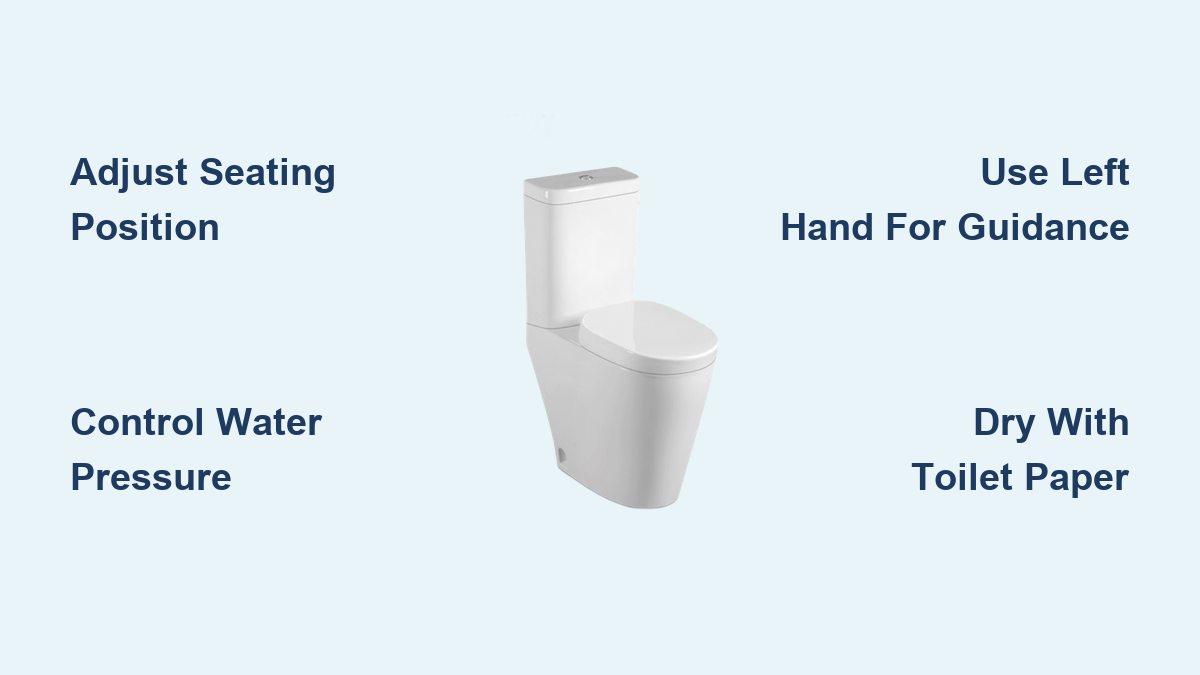
Most Turkish bidets shoot forward at a fixed angle, so natural sitting posture may not align the stream with the target area. You must shift your body to get proper alignment.
Try sliding your hips forward slightly to bring the target into the water path. You can also lean back or forward depending on nozzle height. Lifting one leg is especially helpful in squat toilets. Widening your stance can improve access to the stream.
If the seat is large and your frame is small, you may be able to reach from the front instead of behind.
Guide the Water Stream Effectively
Depending on water pressure and nozzle alignment, you may need to assist with your hand.
For low-pressure systems, which are common in older installations, use your left hand to hold apart the buttocks and redirect the water jet. Gently scrub if needed, then rinse your hand under the stream before drying.
For high-pressure units, which are increasingly common, you can clean effectively without hand contact. Position yourself so the forceful jet scrubs the area automatically. Avoid overuse since some sprays are strong enough to cause discomfort.
You can also use toilet paper as a barrier between your hand and the tap or skin to reduce direct contact.
Dry Off Properly
Water left on the skin can lead to chafing or discomfort. Drying is essential even if you feel mostly dry.
The most common method is toilet paper. Wipe gently until paper comes out clean. Paper towels are ideal in hotels or public restrooms because they are less likely to disintegrate. Some homes provide dedicated towels. Air drying is possible but impractical in most settings.
A sign of success is when the toilet paper comes out clean during drying. Carry tissues or wet wipes as backup, especially if you are unsure about water pressure or paper quality.
Complete Final Hygiene Steps
After washing and drying, finish with proper hygiene protocol.
Flush the toilet to dispose of waste. Wash your hands thoroughly with soap and water. Use toilet paper to turn off the tap and open the door in public restrooms. Avoid touching your face until your hands are clean.
Even if the bidet improves anal hygiene, poor handwashing defeats the purpose of using it.
Adjust for Different Water Pressure Levels
The valve controls both flow and force. Learning to modulate it is key to comfort.
Start with a slow turn, just a trickle at first. Increase gradually until cleaning is effective. Close the valve fully when done to prevent leaks.
High-pressure units clean without hand use but carry a risk of splash and discomfort. Low-pressure units are gentle and safe but require hand assistance. In homes, pressure is often stronger. In public restrooms, expect weaker flow.
Understand Cultural Hygiene Practices
In Turkey and many Muslim-majority countries, water is the gold standard for cleanliness.
The standard practice is to use the left hand for cleaning since the right hand is reserved for eating and greeting. Toilet paper is used only for drying, not wiping. Many locals consider the combination of paper and water superior to either alone.
Women may also use the bidet for genital cleaning after menstruation or urination. Men should be cautious since misdirected streams can lead to unintended cleaning of other areas.
Troubleshoot Common Problems
Having trouble getting clean? Try these fixes.
If the stream misses the target, shift your hips forward or backward. You can also lean slightly or adjust your seating depth.
If water pressure is low, wipe first and then use your left hand to assist. Check whether the valve is fully open.
If you fear mess and splashback, open the valve slowly. Sit securely and avoid sudden movements. Use extra paper to contain splashes.
If you are uncertain about drying, carry extra tissues. Prefer paper towels in public. Air dry briefly if privacy allows.
Maintain Your Turkish Bidet
Long-term use depends on cleanliness and care.
For users, wash hands thoroughly every time. Avoid touching the nozzle with bare hands. Use paper barriers on shared surfaces.
For homeowners, clean the exterior weekly with disinfectant. Flush the system occasionally to clear debris. Use brass or stainless steel nozzles because they last longer than plastic. Address leaks or low pressure promptly.
Hard water can cause mineral buildup, so descaling may be needed over time.
Frequently Asked Questions About Turkish Bidets
Do Turkish bidets provide warm water?
Most Turkish bidets deliver unheated water directly from the toilet supply. Cold water is the standard, which can be uncomfortable in winter but is generally tolerable once you adapt to the experience.
Is hand use required when using a Turkish bidet?
It depends on water pressure. Low-pressure units often require hand assistance using the left hand to direct the stream. High-pressure units can clean effectively without any hand contact. Many users find that hand guidance improves thoroughness regardless of pressure.
How is a Turkish bidet different from a Western bidet?
Turkish bidets are simple manual taps mounted near the toilet that spray cold water for anal cleansing. Western standalone bidets are separate basins, and electric bidet seats offer heated water, adjustable pressure, and built-in dryers. Turkish bidets are more basic but highly effective and low-maintenance.
Can women use a Turkish bidet?
Yes, women commonly use Turkish bidets for both anal and genital hygiene. Many women use them after menstruation or urination for additional cleaning. The same positioning and hand guidance techniques apply.
What should I do if the water pressure is too strong?
Start with the valve almost closed and open it very gradually. If the pressure remains uncomfortably high, try positioning yourself farther from the nozzle or using toilet paper as a buffer. Some users report that very high pressure can be painful, so exercise caution.
Is it hygienic to share a Turkish bidet in public restrooms?
Turkish bidets are considered hygienic when used properly. Always wash your hands afterward. Use toilet paper to operate the tap and avoid touching the nozzle directly. The water stream itself is clean since it comes from the plumbing supply.
Key Takeaways for Using a Turkish Bidet
Turkish bidets use cold water from a manual tap for anal cleansing. Body positioning is critical, so adjust your hips and posture to align with the water stream. Hand use is common, especially with low-pressure units. Toilet paper is for drying, not primary cleaning. Always wash your hands thoroughly after use. Operate the tap slowly to avoid splash and accidents. Combining water and paper offers superior hygiene compared to either alone. This fixture is common across Turkey, the Middle East, and Southeast Asia.
With practice, using a Turkish bidet becomes fast, clean, and second nature. Stay patient, stay dry, and embrace the upgrade in personal hygiene.