If you’ve recently installed a bidet or are considering one, you might be wondering exactly how long you should spray. The answer isn’t one-size-fits-all, but research and expert guidance agree that most people only need 20 to 60 seconds of targeted rinsing to achieve complete cleanliness. Going longer does not mean cleaner. In fact, overuse can lead to skin irritation or moisture buildup. Whether you’re using an electric seat, handheld sprayer, or portable bottle, the key is technique, not time.
Many first-time users spray too long, sometimes 2 to 3 minutes, because they have not yet dialed in the right pressure, aim, or body position. With practice, effective cleaning becomes faster and more intuitive. This guide breaks down exactly how long to use a bidet based on your model, anatomy, and health needs, so you can maximize hygiene, comfort, and efficiency.
Recommended Bidet Use Time: 20–60 Seconds
For the majority of users, 20 to 60 seconds of spraying is all it takes to feel clean. This range balances thorough rinsing with skin safety and water efficiency. Most electronic bidets are designed with automatic shut-offs around 30 to 60 seconds, reinforcing this optimal window.
Standard Cleaning Window
The standard cleaning window works for most situations:
- 20 seconds: Minimum for light cleaning or quick freshening
- 30 to 40 seconds: Ideal for most post-bowel movement sessions
- 60 seconds: Sufficient even for heavier clean-up when combined with proper technique
Longer spraying does not improve results. Instead, effectiveness depends on correct nozzle placement, water pressure, and slight body movement during rinsing. Once you have mastered your settings, you will likely settle into a 30 to 40 second routine.
First-Time Users: Allow Up to 90 Seconds
If you are new to bidets, give yourself grace. The first few uses may take up to 90 seconds as you adjust water temperature and pressure, learn how to aim the nozzle, find the best sitting position, and get comfortable with controls. This learning curve is normal. Within a few days, your sessions will shorten as you fine-tune your routine.
Extended Use: When Is It Necessary
Using a bidet for more than 2 minutes is uncommon and often signals a problem. Common causes include nozzle misalignment, low water pressure, incorrect body posture, or overcompensation due to poor spray coverage. If you consistently need more than 60 seconds, revisit your setup before assuming longer is better.
How Bidet Type Affects Cleaning Time

The design and features of your bidet significantly impact both cleaning efficiency and required duration.
Electronic Bidet Seats: 30–60 Seconds
Smart bidet seats like those from Toto, Brondell, or Bio Bidet are the most efficient, typically requiring 30 to 60 seconds thanks to advanced features. The oscillating mode sweeps the nozzle back and forth, covering more area in less time, often achieving full cleanliness in under 30 seconds. This is especially helpful for users with limited mobility or sensitivity. The pulsation mode uses rhythmic bursts of water to dislodge residue without needing longer exposure. Use it for stubborn clean-up instead of extending spray time.
The warm air dryer runs for 1 to 3 minutes after washing. Most users find 1 to 2 minutes sufficient. For best results, pat dry with 1 to 2 squares of toilet paper first, then use the dryer for a final hands-free finish.
Non-Electric Attachments: 30–60 Seconds
Manual bidet attachments like the DUDE Wiper 1000 rely on user control. Spray duration depends on how long you hold the valve open. Average use is 30 to 60 seconds. These provide cold water only, and some users shorten sessions due to discomfort. There is no automatic shut-off, so discipline is key to avoid overuse. Use short bursts and reposition between sprays for better control.
Handheld Bidet Sprayers: 15–45 Seconds
Handheld sprayers offer maximum control but require precision. Skilled users clean in 15 to 45 seconds by aiming directly at the target area, using short focused sprays, and moving side to side for full coverage. Avoid spraying aimlessly, as this wastes water and increases drying time.
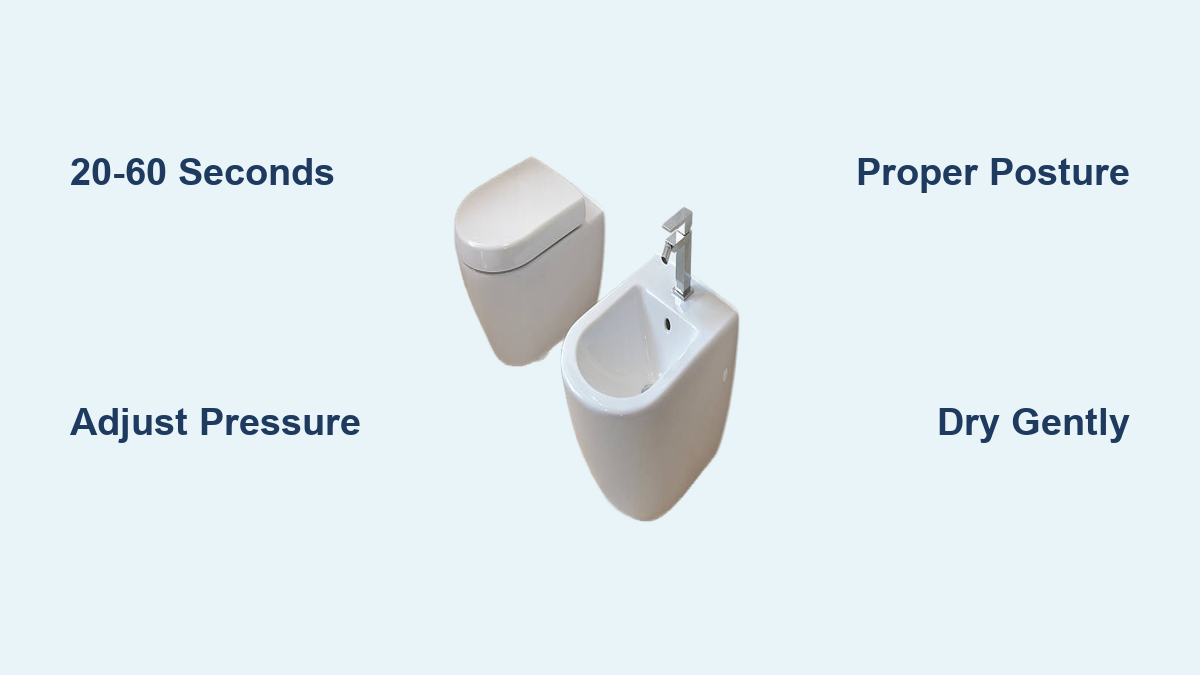
Freestanding Bidets: 30–60 Seconds
Common in Europe and Latin America, these standalone basins let users sit and rinse manually. Typical rinse is 30 to 60 seconds. Drying requires a personal towel that is not shared. More water is used than seat-mounted models, but still less than toilet paper production.
Portable Bidets: 15–40 Seconds
Travel bidets including bottle-style or pump models are limited by water capacity, naturally capping use time. Each squeeze delivers a short burst, ideal for targeted cleaning. They work well for postpartum care, camping, or temporary setups. Reapply if needed, but do not over-soak sensitive areas.
How Anatomy Affects Bidet Duration

Individual anatomy plays a critical role in determining optimal cleaning time and method.
For Individuals with a Vulva
Cleaning should follow a front-to-back sequence to prevent urinary tract infections. The recommended two-phase cleaning routine includes:
- Front wash (10 to 20 seconds): Gentle spray aimed at the vulva, not inside the vagina
- Rear wash (20 to 30 seconds): Switch to anal area after bowel movement
Total time is 30 to 50 seconds, with a clear separation between zones. If your bidet has dual nozzles, use them separately. Never rinse front and back with the same spray cycle.
For Individuals with a Penis and Scrotum
Focus is primarily on the anal region, with optional front rinsing. Spray should be aimed behind the scrotum toward the anus. Duration is typically 20 to 40 seconds. Front rinse, if used, should be brief and gentle, 5 to 10 seconds maximum. No extended cleaning is needed unless dealing with loose stools or incomplete wiping.
Medical Conditions That Change Bidet Time

Certain health conditions require adjustments to your bidet routine.
Hemorrhoids
Bidets are excellent for soothing hemorrhoids, but overuse can irritate. Use cool-to-lukewarm water, spray for 15 to 30 seconds at low pressure, and avoid prolonged soaking or high heat. Pat dry instead of rubbing.
Postpartum Recovery
After childbirth, gentle cleaning is key. Use a portable bidet bottle or low-pressure setting, spray for 20 to 30 seconds maximum, and avoid direct nozzle contact with healing tissue. Dab dry with a clean towel or soft paper.
IBS or Frequent Bowel Movements
Bidets reduce wiping trauma, making them ideal for IBS sufferers. Use short frequent sprays, about 20 seconds, after each movement. Skip harsh wipes, as water is gentler on sensitive skin.
Post-Surgical Patients
After anal or prostate surgery, minimize friction. Use precise short bursts, 10 to 20 seconds, and let water do the work without scrubbing. Follow your doctor’s instructions on water temperature and frequency.
How to Optimize Cleaning in Less Time
You can achieve thorough cleanliness faster by mastering a few key techniques.
Adjust Water Pressure and Temperature
Start low with the lowest pressure to avoid splashing. Increase only if needed, as high pressure does not clean better and can hurt. Ideal temperature is 95 to 100 degrees Fahrenheit, lukewarm, never hot. Cold water may shorten sessions due to discomfort, especially in non-electric models.
Use Oscillating or Pulsating Mode
The oscillating spray sweeps the nozzle side to side, covering more area faster and cutting cleaning time by up to 30 percent. The pulsating mode clears residue with rhythmic bursts. Use it instead of longer sprays for stubborn clean-up.
Reposition Your Body
Even perfect aim can miss if you are not sitting right. The ideal posture is to sit fully back on the seat, lean slightly forward, and keep feet flat or use a footstool to mimic a squatting position. This opens the anal canal slightly and improves spray access. Small shifts make a big difference, so move side to side during rinsing for full coverage.
Step-by-Step Bidet Routine Under 2 Minutes Total
Follow this structured approach for maximum cleanliness with minimal time and water use.
- Pre-wipe (optional, 5 seconds): Use 2 to 4 squares of toilet paper to remove bulk residue. This reduces spray time and water splatter.
- Reposition on seat (5 seconds): Sit back, lean forward, and align your body over the nozzle.
- Activate spray (20 to 60 seconds): Press Rear or open the T-valve, adjust nozzle position and pressure, and move slightly side to side. For women, rinse front first, then rear.
- Check cleanliness (10 seconds): Use toilet paper to test. If residue remains, repeat spray for 20 to 30 seconds.
- Dry off (20 to 60 seconds): Choose toilet paper dab (5 to 10 seconds, uses 75 to 90 percent less paper), reusable bidet towel (10 to 20 seconds, wash every 1 to 2 days), warm air dryer (1 to 3 minutes, hands-free), or hybrid method (30 seconds dryer plus light dab, most effective). Never rub. Pat gently to avoid irritation.
Common Mistakes That Extend Cleaning Time
Most extended cleaning sessions stem from preventable errors.
Wrong Nozzle Position
Most not-clean complaints stem from misaligned nozzles. Fix it by using the remote to adjust front/back and side-to-side, and clean the nozzle monthly using the self-clean function or a soft cloth.
Sitting Too Far Forward
This causes spray to hit the toilet bowl instead of you. Sit fully back and lean forward slightly.
Using Too Much Pressure
High pressure causes splashing and discomfort. Start low and increase only if needed.
Leaving Handheld Sprayer On
Always close the T-valve after use to prevent leaks and extend fixture life.
Using Soap Regularly
Water alone is sufficient. Soap can disrupt skin’s natural pH and cause irritation unless prescribed by a doctor.
Drying: How Long and What Works Best
Drying is a critical phase that affects comfort and hygiene.
| Method | Duration | Efficiency |
|---|---|---|
| Toilet paper (dab only) | 5–10 sec | 75–90% less paper used |
| Reusable bidet towel | 10–20 sec | Eco-friendly but wash every 1–2 days |
| Warm air dryer | 1–3 min | Hands-free, great for elderly |
| Hybrid (dryer + dab) | 30–60 sec | Best balance of dryness and speed |
Best practice is to dry with warm air for 30 to 60 seconds, then dab with 1 to 2 squares of toilet paper for a completely dry finish.
When to Worry: Red Flags in Bidet Use
Spraying Over 3 Minutes Regularly
This may indicate poor aim requiring compensation, low water pressure, or obsessive behavior in rare cases. Re-evaluate your settings. If problems persist, consult the manual or customer support.
Skin Irritation or Itching
If you experience stinging, redness, or itching, reduce spray time, lower pressure, use cooler water, and stop using soap or additives. Consult a doctor if symptoms continue.
Increased UTIs or Yeast Infections
Frequent warm water rinsing may disrupt vaginal flora. Women should rinse front first then rear, use separate cycles if possible, avoid high heat and prolonged exposure, and skip soap and scented products.
Environmental Benefits of Short, Efficient Use
Using your bidet for 20 to 60 seconds is not just healthy, it is sustainable. Water used per rinse is less than 0.5 liters (one-eighth of a gallon). Toilet paper saved is 75 to 100 percent reduction reported by users. Water to make one toilet paper roll is about 37 gallons. Trees saved annually with bidet adoption could reach up to 15 million.
Final Tips for Perfect Bidet Timing
Start with 20 to 30 seconds and check cleanliness. Extend to 60 seconds only if needed. Use oscillating or pulsating mode for faster cleaning. Reposition your body by leaning forward and shifting side to side. Dry effectively by combining warm air with a light dab. Clean the nozzle monthly to maintain hygiene. Close the T-valve on manual models after each use. Listen to your body and stop if you feel irritation.
Frequently Asked Questions About How Long to Use a Bidet
How many seconds should I use a bidet?
Most users achieve complete cleanliness in 20 to 60 seconds. Start with 20 to 30 seconds and assess. Extend to 60 seconds only if residue remains after checking with toilet paper.
Can using a bidet too long cause skin problems?
Yes, spraying for more than 2 to 3 minutes regularly can cause skin irritation, redness, or itching. Stick to the 20 to 60 second range and use low to moderate pressure.
Do electronic bidets shut off automatically?
Most electronic bidet seats have automatic shut-off cycles lasting 30 to 60 seconds. This reinforces the recommended cleaning window and prevents overuse.
How long does the bidet dryer take?
The warm air dryer typically runs for 1 to 3 minutes. Most users find 1 to 2 minutes sufficient, especially if they pat dry with 1 to 2 squares of toilet paper first.
Why do I need more than 60 seconds to get clean?
If you consistently need more than 60 seconds, check your nozzle position, increase water pressure gradually, and adjust your body position. Sitting too far forward or back can cause the spray to miss the target area.
Is 20 seconds enough after a bowel movement?
For most people, 20 seconds is enough for light cleaning. However, after a bowel movement, 30 to 40 seconds is typically ideal. Use a brief pre-wipe with 2 to 4 squares of toilet paper to remove bulk residue first.
Key Takeaways for Optimizing Your Bidet Routine
The ideal bidet session lasts 20 to 60 seconds, long enough to clean and short enough to protect your skin. With the right technique, you will be done in under a minute, drier than ever, and using a fraction of the toilet paper. Whether you are using a high-tech seat or a simple sprayer, focus on aim, pressure, and posture rather than duration. The key factors for effectiveness are correct nozzle alignment, adequate water pressure, appropriate body posture, and an effective drying method. In no time, your bidet will become a fast, refreshing, and essential part of your daily routine.