Using a bidet towel is the final, essential step in achieving complete personal hygiene after water cleansing. As more people switch from toilet paper to bidets for improved cleanliness and sustainability, knowing how to use a bidet towel properly ensures comfort, prevents irritation, and maintains sanitation. This small but dedicated cloth replaces or reduces reliance on toilet paper, offering a softer, more effective drying method after using a bidet.
You will learn exactly when to use it, how to dry safely, which materials work best, and how to store and wash it without cross-contamination. Whether you are new to bidets or upgrading your routine, this guide delivers actionable, hygienic, and sustainable practices.
Choose the Right Bidet Towel Type

Selecting the proper towel is the foundation of effective bidet drying. The right material and quantity ensure comfort, hygiene, and convenience.
Pick Reusable Over Disposable
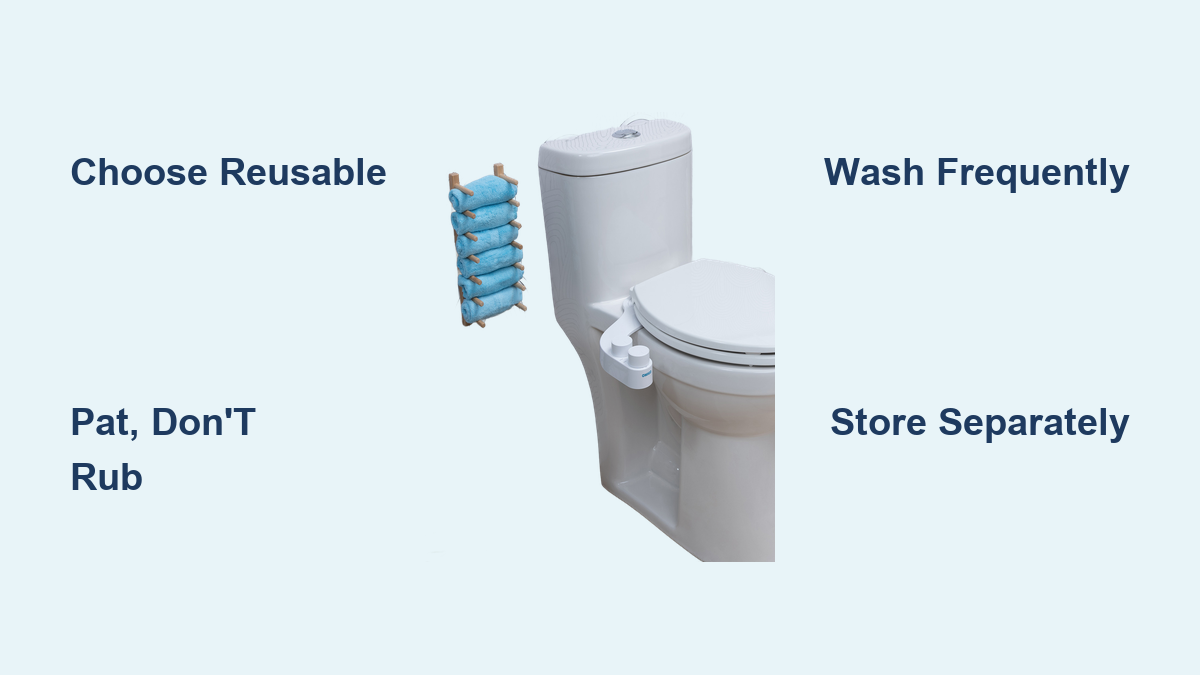
Opt for reusable bidet towels made from cotton, bamboo, or microfiber to reduce waste and save money. These small cloths typically measure 12″ x 12″ or hand-towel size, designed for one-time use then laundering. Unlike disposable wipes, they do not contribute to landfill waste and are gentler on sensitive skin.
Switching to reusable towels eliminates up to 141 rolls of toilet paper per person annually, saving 37,000 gallons of water and 1.5 pounds of wood each year.
Compare Material Options
Each fabric offers unique benefits for different needs:
- Cotton washcloths: Soft, absorbent, breathable, ideal for daily use and sensitive skin
- Bamboo fiber: Naturally antimicrobial, odor-resistant, and eco-friendly
- Microfiber: Highly absorbent, quick-drying, compact, perfect for travel or humid climates
- Terry cloth mini-towels: Extra thickness for those who prefer more coverage
Avoid using regular hand or bath towels. A dedicated small drying cloth prevents cross-contamination and fits easily in storage bins.
Get Enough Towels for Rotation
Keep five to seven bidet towels per person to maintain a clean supply between washes. With daily use and every-other-day laundering, this allows enough clean cloths while others are in the laundry.
Prepare for Drying After Bidet Rinse
Proper preparation before drying ensures optimal hygiene and skin health. Follow these steps before reaching for your towel.
Complete the Bidet Wash First
Before reaching for your towel, ensure you have fully rinsed using the rear wash function on electric bidets or a handheld sprayer to clean the anal area. For feminine hygiene, face forward and rinse from front to back to prevent urinary tract infections. Adjust water temperature to cool or lukewarm, as hot water can irritate skin or disrupt vaginal flora. Duration should be 20 to 60 seconds, shifting slightly to cover all areas.
A 2016 Japanese study found that pre-defecation bidet use may increase anal itching in men. Always use the bidet after, not before, bowel movements.
Skip Soap Unless Necessary
Water alone is sufficient for most cleansing needs. Avoid soap unless dealing with sticky residue, menstruation, or medical requirements. If used, choose a mild, unscented formula and rinse thoroughly to prevent irritation.
Use Air Dryer First If Available
Many electric bidet seats include a warm air dryer. Run it for 30 to 60 seconds to remove most moisture, then finish with one light dab of the towel. This hybrid method speeds drying and reduces towel dampness, lowering bacterial growth risk.
Dry Gently With Proper Technique

The drying technique matters as much as the cleansing itself. Improper drying can cause irritation, micro-tears, or worsen existing conditions.
Pat, Do Not Rub
After rinsing, gently pat or dab the area dry. Never rub, as friction can cause micro-tears, chafing, or worsen conditions like hemorrhoids or fissures. Fold the towel to use a fresh section if multiple passes are needed. Apply minimal pressure, especially with sensitive skin or post-surgery recovery.
Microfiber and bamboo cloths are highly absorbent, requiring fewer passes than cotton.
Focus on Front-to-Back for Women
Women should always dry from front to back after rinsing. This minimizes the risk of transferring bacteria from the anus to the urethra, helping prevent urinary tract infections.
Excessive warm water use may disrupt vaginal pH and increase risk of bacterial vaginosis. Use cool-to-lukewarm water and limit frequency.
Combine Methods for Full Dryness
For best results, use the air dryer for 30 seconds, then finish with one light pat using a clean bidet towel. Use one to two sheets of toilet paper only if needed. This combination reduces TP use by 75 to 90 percent while ensuring comfort.
Store Clean and Used Towels Separately
Proper storage prevents contamination and maintains hygiene. Separation is critical for both clean and used towels.
Keep Clean Towels Dry and Covered
Store clean bidet towels in a designated basket, drawer, or hook near the toilet. Use a lidded or covered container to protect from toilet plume, the microscopic aerosols released during flushing that can carry bacteria.
Install suction hooks, magnetic holders, or over-toilet shelves in small bathrooms. Use color-coded bins in shared households to assign towels by user.
Place Used Towels in a Designated Bin
Immediately after use, place the towel into a ventilated, lidded laundry bin or small trash can labeled “used.” Never leave it on the floor, toilet seat, or general towel rack.
In small bathrooms, users often repurpose a small trashcan as a dedicated laundry basket for these cloths.
Prevent Odor and Bacterial Growth
Damp cloths breed bacteria and mold. Ensure used towels go into a well-ventilated container and are washed within one to three days. Avoid sealing them in plastic bags unless machine washing immediately.
Wash Towels Frequently and Correctly
Regular washing is essential for maintaining hygiene. Follow these protocols to keep your towels safe and effective.
Launder Every One to Three Days
Wash bidet towels after every one to three uses, or every one to three days, whichever comes first. More frequent washing is recommended for heavy use or sensitive skin.
Many users toss each cloth in the hamper after single use and wash with their whites.
Use Hot Water and Natural Sanitizers
Wash in hot water of at least 140 degrees Fahrenheit with regular detergent. Add one-half cup of white vinegar or oxygen bleach to sanitize and remove odors. Avoid chlorine bleach on microfiber, as it degrades fibers over time. Dry completely in a dryer or sunny, ventilated area.
Replace Every Three to Six Months
Even with proper care, towels lose absorbency and develop wear. Replace them every three to six months, or sooner if mildew appears, odor persists after washing, or fabric thins or frays.
Worn or damp towels increase infection risk due to bacterial and fungal growth.
Follow Household and Guest Etiquette
In shared living situations, proper etiquette ensures hygiene and prevents awkward moments. Clear communication and organization are key.
Assign Personal Towels in Shared Homes
In multi-user bathrooms, provide color-coded or labeled towels for each person. Use separate baskets for clean and used towels. Educate all users on single-use and proper disposal rules.
Research shows three percent of bidet users employ a personal towel washed as needed, while only one percent use a fresh towel every time. Zero percent admit to sharing an “arse towel.”
Handle Guest Situations Gracefully
In someone else’s home, ask before using a towel near the bidet. It may be a hand towel, not intended for bidet use. If unsure, say: “Is there a preferred way to dry off after the bidet?” In public restrooms, dry with toilet paper unless you bring your own travel towel.
This method can be especially off-putting if you have guests using the same restroom. Provide clear instructions or alternative options.
Adapt for Medical and Travel Needs
Bidet towels serve specific needs beyond everyday use. Understanding these applications maximizes their benefits.
Support Sensitive Skin and Medical Conditions
Bidet towels are ideal for people with hemorrhoids, anal fissures, IBD or IBS, postpartum or post-surgical recovery. Water cleansing reduces friction compared to dry wiping, and soft reusable cloths like bamboo microfiber minimize irritation.
Travel With a Portable System
When traveling, pack one to two microfiber cloths in a ventilated pouch. Pair with a portable bidet bottle such as a Shattaf or TravelSpray. Wash by hand with mild soap, hang to dry, and store separately.
If no towel is provided at a hotel, use toilet paper or bring your own travel kit for full control.
Avoid Common Mistakes
Steering clear of these errors ensures your bidet towel routine remains hygienic and effective.
Never Reuse a Towel Without Washing
Even if the cloth looks clean, it has contacted mucosal areas and sweat. Reusing unwashed towels increases infection risk. Treat them like underwear.
Do Not Use Hand or Bath Towels
Using a regular towel for drying after a bidet creates cross-contamination risk. Keep dedicated, small cloths strictly for this purpose. Bidet towels belong to private areas only, while hand towels belong to hands only.
Do Not Leave Towels Damp
Storing used cloths in a pile or sealed container encourages mold and bacteria. Always place them in a ventilated bin and wash promptly.
Frequently Asked Questions About Bidet Towels
Do You Wipe Before or After a Bidet?
Light pre-wiping removes bulk waste for more efficient rinsing. Post-drying is always required using a towel, toilet paper, or air dryer.
Is a Bidet Towel Sanitary?
Yes, if used by one person only, washed frequently in hot water, stored dry and clean, and not shared or left damp.
Can I Use a Regular Hand Towel?
Not recommended. Use a dedicated, smaller towel to avoid cross-contamination between hands and private areas.
How Often Should I Wash Bidet Towels?
Wash every one to three days or after two to three uses, whichever comes first. More frequent washing is best for heavy use or sensitive skin.
Are Bidet Towels Common?
Yes, in Japan, Italy, France, and South Korea. They are growing rapidly in the United States and Canada as bidet seats gain popularity.
Can I Skip the Towel?
Yes. Alternatives include toilet paper, built-in air dryer, or a combination of dryer with minimal toilet paper.
Key Takeaways for Using a Bidet Towel
Using a bidet towel correctly completes the rinse-dry-sanitize hygiene cycle. With the right materials, storage, and laundering habits, it offers a cleaner, softer, and more sustainable alternative to toilet paper. Choose reusable bamboo or microfiber towels for eco-friendliness, maintain a rotation of five to seven towels per person, and wash them every one to three days in hot water with vinegar.
Always pat gently rather than rub, store clean and used towels separately, and replace towels every three to six months. Whether you prioritize eco-living, medical comfort, or daily convenience, mastering how to use a bidet towel elevates your bathroom routine safely, hygienically, and effectively.