
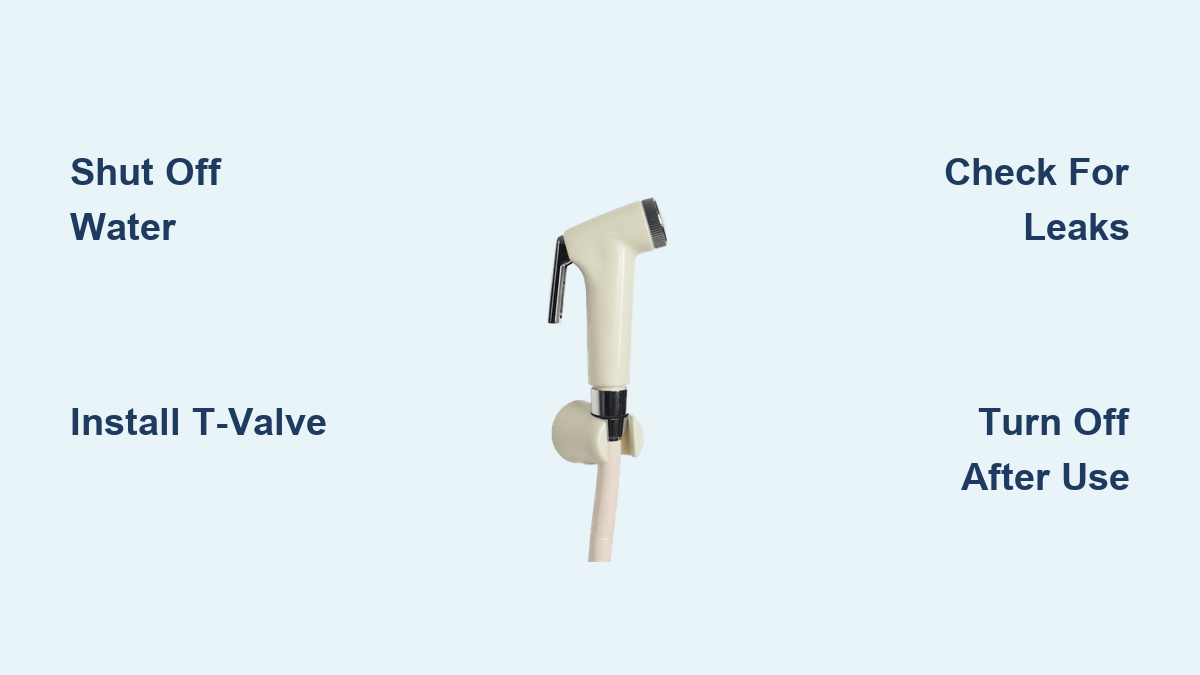
Imagine upgrading your bathroom hygiene with just one simple, affordable addition. Installing a bidet spray brings spa-like cleanliness to your daily routine using nothing more than your existing toilet plumbing. Whether you are a homeowner looking to boost comfort or a renter wanting a reversible upgrade, a handheld bidet sprayer is one of the easiest DIY plumbing projects you can tackle in under 30 minutes.
This guide walks you through every step of installing a bidet spray using only basic tools and standard household fixtures. You will learn how to connect it safely to your toilet water supply, avoid common leaks, and ensure long-term reliability. By the end, you will not only have a cleaner bathroom experience but also reduce toilet paper use by up to 80 percent.
Choose the Right Bidet Spray Type
Handheld Sprayer vs. Mechanical Bidet Seat
Most people choose between two types of bidet installations. The handheld sprayer is far more common for DIY installs because it requires no electrical outlet, works on any standard toilet, and costs under 80 dollars. It uses a flexible hose and trigger nozzle mounted on a wall or tank bracket, just like a kitchen sink sprayer.
The mechanical bidet seat replaces your existing toilet seat and includes self-cleaning nozzles for rear and feminine wash. These are non-electric, powered solely by water pressure, and often come with a side-mounted button or lever. While slightly more complex to install, they offer hands-free operation and a sleeker look.
For most users, especially renters or first-time upgraders, the handheld bidet sprayer is the best choice. It is easy to install, fully removable, and highly effective.
Confirm Your Toilet Compatibility First
:max_bytes(150000):strip_icc()/flex-lines-2718729-hero-8be70f1945954c6eb52ff9a0f2cc3901.jpg)
Before buying, verify your toilet setup supports installation. Nearly all North American toilets use a flexible braided stainless steel water supply line connecting the shutoff valve to the fill valve under the tank. This allows space for a T-valve, a small splitter that diverts water to both the toilet and the bidet.
If your supply line is rigid metal pipe, you will need to replace it with a flexible one. Available at any hardware store for under 10 dollars, flexible lines provide the clearance needed for T-valve installation. Without this, the T-valve will not fit and installation becomes much harder.
Also check your water pressure. Standard household pressure between 40 and 80 psi works fine, but optimal performance happens at 40 to 60 psi. If your home has low pressure, consider a pressurized bidet model designed to boost flow.
Gather Tools and Components
What Comes in the Kit
Every bidet spray kit comes with essential parts. The sprayer head features a trigger or lever for controlling water flow. The flexible hose, typically 20 to 48 inches long, is usually braided stainless steel to prevent kinking. The T-valve is a brass or plastic three-way fitting that splits the water supply.
The mounting bracket holds the sprayer when not in use, available in tank-mounted, wall-mounted, or adhesive types. Rubber washers come pre-installed at each connection point to create a watertight seal. Some kits include PTFE tape, extra washers, or dual nozzles for different spray patterns.
Tools You Might Need
While most connections are hand-tightened, keep these tools nearby. An adjustable wrench helps with final tightening, though you should use it gently on plastic fittings. A screwdriver secures brackets to the wall or tank. A drill is only necessary if you are wall-mounting into tile or drywall.
Have a towel or bucket ready to catch residual water during the installation process. A soft brush will be useful for future nozzle cleaning. Keep PTFE tape on hand as a backup if leaks develop after installation.
Never overtighten connections. Hand-tightening plus a quarter-turn with a wrench is enough. Over-torquing cracks plastic threads and distorts rubber washers, leading to leaks.
Shut Off Water Supply Safely
Locate the Shutoff Valve
Find the water shutoff valve behind or beside your toilet, near the floor. It looks like a small lever or knob connected to the wall or floor pipe. Turn it clockwise until fully closed to stop water from flowing into the toilet.
Test That the Water Is Off
Flush the toilet after shutting off the valve. If it does not refill, the valve is off. Hold the handle down to empty as much water as possible from the tank. Leave the bowl and tank empty during installation.
Place a towel or small bucket under the fill valve connection point to catch any remaining drips. Even after draining, about a quarter inch of water may linger in the line.
Never disconnect plumbing with water still pressurized. Even a small leak can cause major water damage to your bathroom floor and subfloor.
Disconnect the Existing Supply Line
Access the Fill Valve
Under the toilet tank, locate the fill valve, the plastic or brass component where the supply line attaches. It is usually on the left side of the tank. Unscrew the supply line from the bottom of the fill valve, not from the wall shutoff.
Keep the line and its rubber washer clean and ready for reconnection. This step creates space to install the T-valve. The original supply line will reconnect to the T-valve, not directly to the fill valve.
Lay down a towel to protect the floor and prevent losing small parts during this step.
Install the T-Valve

Attach T-Valve to the Fill Valve
Take the T-valve and inspect the top opening. Ensure a flat rubber washer is seated inside this creates the seal against the fill valve. Screw the top port of the T-valve onto the fill valve by hand, turning clockwise until snug.
Then use an adjustable wrench for a quarter-turn final tightening. Do not force it. Leave slight rotational freedom so the side outlet aligns well with the hose.
Reconnect the Original Supply Line
Now attach the original supply line to the bottom port of the T-valve. Hand-tighten first, then lightly secure with a wrench. Ensure the connection is straight and firm. Leaks are common at this point if the washer shifts during tightening.
Connect the Bidet Hose
Remove the blue cap from the side outlet of the T-valve. Check that a rubber washer is in place. Take the flexible bidet hose and screw one end into the side outlet. Hand-tighten securely.
Need better hose alignment? Loosen the plastic wing nut on the T-valve to rotate the side outlet for easier routing.
Mount the Bidet Holder
Tank-Mounted Bracket
The tank-mounted bracket is ideal for quick, temporary installs. Slide the smaller bracket arm under the toilet tank rim. Align screw holes and insert the provided screws through the outer plate.
Hand-tighten, then use a screwdriver to secure both sides. Avoid overtightening because porcelain tanks can crack under excessive pressure. Snap the holster into the bracket until it clicks. Test stability by gently pulling on the sprayer.
This method may slip on glossy or oddly shaped tanks.
Wall-Mounted Bracket
Wall mounting is more stable and cleaner-looking. Position the holster within 18 to 24 inches of the toilet center, at a comfortable reach. Mark drill points on the wall.
For drywall, use the included anchors. For tile, use a masonry bit and secure with screws. Mount the bracket and snap in the holster. This method avoids stress on the tank and reduces wobble over time.
Adhesive Mount
The adhesive mount uses high-strength double-sided tape, commonly 3M VHB. Clean the surface with alcohol and let it dry completely before pressing firmly.
Wait 24 hours before first use to ensure full adhesion. This option is best for temporary setups or rentals where drilling is not allowed.
Assemble and Attach the Sprayer
Prepare the Nozzle
Remove all plastic caps and blue covers from the sprayer head and hose ends. Verify rubber washers are present at both hose connections and inside the sprayer fitting.
Screw the sprayer head onto the free end of the hose. Hand-tighten. No tools are needed at this connection.
Position for Use
Rotate the sprayer head 45 degrees toward the wall. This makes it easier to grab and store in the holster. Some models have dual nozzles, adjustable spray patterns, or non-slip grips. Familiarize yourself with the controls before first use.
Restore Water and Test for Leaks
Turn On the Water Supply
Slowly open the shutoff valve by turning it counterclockwise. Let the toilet tank refill completely. Watch for bubbling or hissing sounds, which may indicate air in the line.
Inspect Every Connection
Check every joint for leaks. This includes the bottom of the T-valve where the supply line connects, the top of the T-valve at the fill valve, the side outlet where the bidet hose attaches, and the sprayer head connection.
Look for dripping, seepage, misting, or pulsing. Even a tiny leak can grow over time into a major problem.
If you see a leak, shut off water immediately. Re-tighten by hand. Disassemble and check washer placement. Apply 4 to 5 wraps of PTFE tape on male threads only as a last resort. Wait 24 hours and recheck because some leaks appear only after pressurization.
How to Operate the Bidet Spray
Open the T-Valve
Rotate the side lever on the T-valve 90 degrees to open it, usually to the horizontal position. This pressurizes the hose and allows water to flow when you activate the sprayer.
Never leave it open after use. Constant pressure causes leaks or bursts.
Activate the Spray
Squeeze the trigger on the sprayer. A light press gives a gentle rinse. A full squeeze increases intensity for more thorough cleaning.
Some models let you adjust the spray pattern by rotating the nozzle between mist and jet settings.
Adjust Flow for Comfort
Most users set the T-valve to 20 to 30 percent open. This provides enough flow for cleaning without over-pressurizing the hose. Close it completely after each use to extend the life of your system.
Critical Safety Rule: Turn Off After Use
Why Turning Off Matters
The single biggest mistake users make is leaving the T-valve open. Even when the trigger is released, the hose stays pressurized, just like a garden hose with the spigot on. Over time, this stress leads to degraded seals, micro-cracks in the hose, sudden leaks or bursts, and potential water damage or mold.
You would not leave your shower running 24 hours a day. Treat the bidet the same way.
Follow the Shutdown Routine
Make this a habit after every use. First, release the sprayer trigger. Second, turn the T-valve lever to the off position, usually downward or vertical. Third, hang the sprayer in the holster. This simple routine is the key to a leak-free, long-lasting system.
Maintenance and Troubleshooting
Monthly Care Tips
Flush the hose by running water through it for 30 seconds to clear mineral buildup. Clean the nozzle with a soft brush to remove debris. Inspect washers and replace them if cracked or flattened.
Check bracket tightness and re-secure screws if they become loose. In hard water areas, mineral deposits clog nozzles more quickly, so flush more frequently.
Fix Common Issues
Low water pressure usually stems from a kinked hose, clogged nozzle, or partially closed T-valve. Straighten the hose, clean the nozzle, and open the valve fully.
Leaking at the T-valve typically means a missing washer or overtightened fitting. Disassemble, check the washer, and hand-tighten only.
Hose bulging or cracking happens when left pressurized after use. Replace the hose and always shut off the T-valve afterward.
Sprayer won t stop dripping due to a worn valve seal or debris in the trigger. Clean or replace the sprayer head.
Holder feels loose because of weak anchors or loose screws. Use stronger anchors for tile or re-tighten existing screws.
Remove or Upgrade Later
Handheld bidet sprayers are fully reversible, making them perfect for renters. To remove, shut off water first. Disconnect the bidet hose from the T-valve. Unscrew the T-valve from the fill valve.
Reconnect the supply line directly to the fill valve. Remove the bracket from the tank or wall. Cap or store parts for future use. No damage, no patches, no trace of installation remains.
Final Installation Checklist
Water shut off before starting. T-valve installed with rubber washer in place. All connections hand-tightened without overtightening. Bidet hose connected to side outlet. Holder securely mounted, wall-mounted preferred. Water restored with no leaks detected. T-valve opened and tested successfully. T-valve turned off after testing. Sprayer stored in the holster.
Key Takeaways for Installing Your Bidet Spray
Installing a bidet spray is one of the simplest, most impactful upgrades you can make to your bathroom. For less than 80 dollars and under 30 minutes of effort, you gain superior hygiene, cut toilet paper use by up to 80 percent, and reduce environmental waste, all without permanent changes to your plumbing.
Success comes down to three things. First, always use rubber washers at every threaded connection. Second, hand-tighten all fittings and use only a quarter-turn with a wrench. Third, turn off the T-valve after every single use to prevent leaks and extend the life of your equipment.
Whether you are a first-time DIYer or a seasoned homeowner, this project is accessible, reversible, and rewarding. Your cleaner, greener bathroom starts now.
Frequently Asked Questions About Installing a Bidet Spray
Do I need a plumber to install a bidet spray?
No, most homeowners can install a handheld bidet spray themselves in 10 to 30 minutes. The process requires only basic tools and involves connecting a T-valve to your existing toilet water supply line.
Will a bidet spray work with any toilet?
Handheld bidet sprayers work with nearly all standard toilets in North America. The key requirement is having a flexible braided supply line. If you have rigid metal pipe, simply replace it with a flexible line before installation.
Can I remove the bidet spray when I move?
Yes, handheld bidet sprayers are fully removable. Simply disconnect the hose, remove the T-valve, reconnect your original supply line, and take down the bracket. No permanent modifications remain.
Why does my bidet spray leak?
Most leaks occur from missing or misaligned rubber washers, overtightened plastic fittings, or forgetting to turn off the T-valve after use. Check washer placement first, then hand-tighten connections without tools.
How often should I clean the bidet nozzle?
Clean the nozzle monthly with a soft brush to remove mineral deposits, especially in hard water areas. Some models have self-cleaning nozzles that extend and retract automatically.