
If you’ve ever wondered how to use a bidet sprayer, you’re not alone. Millions around the world rely on this simple, effective tool for superior hygiene after using the toilet. Unlike dry wiping, a bidet sprayer delivers a targeted stream of water to clean your intimate areas with precision, reducing irritation, cutting toilet paper use by up to 100%, and promoting better personal health.
This guide walks you through everything you need to know about how to use a bidet sprayer safely and effectively. You’ll learn step-by-step techniques, gender-specific methods, cleaning tips, installation basics, and how to handle common concerns like splashback. Whether you’re installing one at home or encountering it while traveling, you’ll walk away confident in your ability to use a bidet sprayer correctly.
Step-by-Step Usage Instructions
Turn On the Water Supply
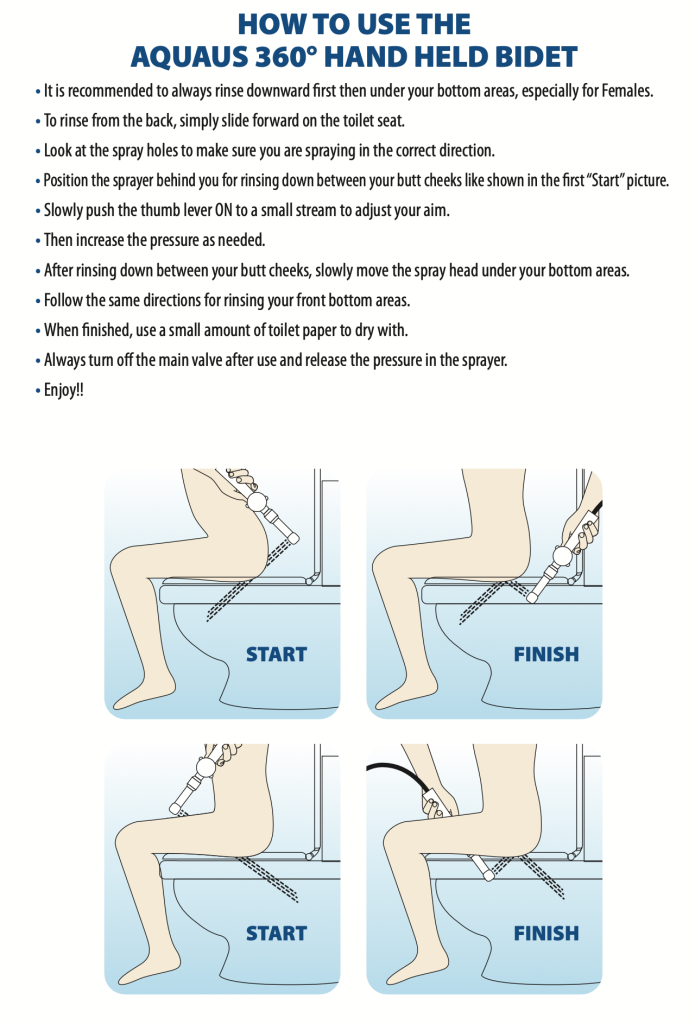
Before using the sprayer, ensure water is flowing to the device. Most bidet sprayers connect via a T-valve installed on your toilet’s water line. Locate the side lever on the T-valve behind the toilet and turn it counterclockwise to open the outlet. This pressurizes the hose but won’t release water until you press the trigger, so it’s safe to handle.
In some regions like Southeast Asia, the sprayer may stay pressurized 24/7. Always check the T-valve position before grabbing the nozzle to avoid unexpected water flow.
Sit and Position Properly
After finishing your business, remain seated on the toilet. For best access, lean slightly forward and shift your weight onto your thighs. Lift your buttocks slightly off the seat if needed, and relax your muscles to allow thorough rinsing.
Staying seated prevents imbalance and ensures accurate aiming throughout the cleaning process.
Retrieve and Aim the Nozzle
Grab the sprayer from its mount, usually with your right hand since most units mount on the right side. Lower the nozzle from behind, positioning it between your legs and just under your buttocks. Hold it 1 to 3 inches away from your body. Never insert the tip into any body opening.
Keep the nozzle clean by avoiding direct contact with fecal matter whenever possible.
Test and Activate the Spray
Press the trigger or push the button to start the flow. But first, spray into the empty bowl to test pressure and direction. Start with low to moderate pressure to avoid splashback. Adjust using the trigger or the T-valve if your model lacks on-handle control.
Some models like the Aquaus 360° offer dual controls for switching between a gentle rinse and a powerful jet with your thumb.
Cleanse Effectively
For Everyone: Anal Rinse
Aim the stream at the anus using a back-to-front motion to prevent bacteria from spreading forward. Alternatively, use the rear strike method: aim upward from below, starting at the crease and moving toward the opening. Rinse for 20 to 60 seconds depending on need.
For Women: External Genital Cleaning
After urination or during menstruation, reposition the nozzle to clean the vulva. Always use a front-to-back motion to reduce the risk of UTIs. Use only external rinsing, never spray inside the vaginal canal.
Lukewarm or cold water is safest for regular use. Warm water may disrupt pH balance and increase the risk of bacterial vaginitis.
Rinse, Store, and Shut Off
Release the trigger to stop the flow. Then briefly spray the nozzle tip into the toilet bowl to rinse off droplets. Return the sprayer securely to its bracket. Turn the T-valve’s side lever clockwise to shut off water to the hose.
Always turn off the T-valve after use. Leaving it open increases the risk of leaks, hose damage, and bathroom flooding.
Dry Off Properly
Choose your preferred drying method. Pat dry with toilet paper, which is most common in Western homes. Use a dedicated bidet towel, a soft washable cloth kept nearby. Air dry by sitting briefly with buttocks exposed. For travel, use disposable wipes or tissues.
Always wash your hands thoroughly afterward, even if you didn’t touch anything directly.
Gender-Specific Techniques

For Men: Clean and Comfortable Use
Men primarily use the sprayer for anal cleansing after bowel movements. Use your right hand from behind, keeping the nozzle outside the body. Avoid spraying through the scrotum or penis because this can cause splashback and discomfort.
If water drips onto your testicles, use lower pressure, angle the spray slightly forward, and tense your pelvic floor muscles. Interestingly, the scrotum often acts as a natural deflector, guiding excess water into the bowl when used correctly.
For Women: Safe and Effective Hygiene
Women benefit from dual-use: anal cleaning and external genital rinsing. After urination or during menstruation, the sprayer helps maintain freshness and reduce odor.
Always rinse the vulva from front to back to prevent bacteria from entering the urethra. Avoid strong jets or internal washing because this can disrupt natural flora.
Frequent use of warm water may increase the risk of bacterial vaginitis. Stick to lukewarm or cold water for daily use. Postpartum, a bidet sprayer is a soothing alternative to wiping, reducing irritation and supporting healing.
Avoiding Common Issues
Reduce Splashback
Splashback is normal due to water impact, but you can minimize it. Lower the pressure. Increase distance up to 3 inches. Adjust the angle to be more perpendicular. Use short bursts instead of continuous spray.
Most users report minor misting is unavoidable but manageable with practice.
Keep the Nozzle Clean
The nozzle doesn’t need to be sterile, but hygiene matters. Never insert it into the body. Keep it just outside the cleaning zone. Rinse the tip in the bowl after each use. Clean weekly with vinegar solution or mild soap.
Avoid bleach or ammonia because these can degrade seals and cause damage.
Handle Hand Involvement Confidently
Using your hand doesn’t mean getting it dirty. With proper positioning from behind, contact is minimal. If needed, use your non-dominant hand to gently separate your buttocks.
Always wash your hands thoroughly after use, just like after using the toilet.
Installation Made Simple
What You’ll Need
You will need an adjustable wrench, a towel to catch drips, a screwdriver for wall mounting, and a flexible toilet supply line.
Step-by-Step Setup
- Shut off water to the toilet by turning the valve clockwise.
- Flush and drain the tank, leaving a little water at the bottom.
- Install the T-valve on the shut-off valve, hand-tightening to avoid cross-threading.
- Reconnect the toilet supply line to the bottom port of the T-valve.
- Attach the sprayer hose to the side outlet using the provided nut and washer.
- Connect the other end to the sprayer handle.
- Mount the bracket either over the tank or on the wall.
- Turn water back on, check for leaks, test the spray, then shut off the T-valve.
Most DIY users complete installation in 15 to 30 minutes.
Never skip turning off the T-valve after testing. Constant pressure weakens hoses over time.
Maintenance and Safety
Shut Off After Every Use
This is the most important rule. Leaving the T-valve open risks leaks at connections, hose degradation, and sudden bursts leading to flooding. Always turn it clockwise after use.
Clean Regularly
Wipe down the sprayer, hose, and bracket weekly. Use dish soap or vinegar, never abrasive cleaners. Soak the nozzle in 1:1 vinegar-water to remove mineral buildup. Replace O-rings and washers annually if worn.
Ensure the sprayer dries between uses to prevent mold growth.
Cultural and Travel Tips
Islamic Hygiene (Istinja)
In Muslim cultures, water cleansing after toilet use is a religious duty. The sprayer is known as a shattaf, and the left hand is traditionally used for cleaning. However, most modern installations are designed for right-hand use.
Emphasis is placed on thorough rinsing and complete drying.
Thailand: The Bum Gun Nation
In Thailand, bidet sprayers called bum guns are standard. They deliver cold water only. In public restrooms, prime the nozzle by pressing the button before sitting down. Supplies like wipes or towels are often unavailable, so carry hand sanitizer and disposable wipes.
Japan and Korea
While electric bidet seats like TOTO Washlets dominate, handheld sprayers still appear in older or budget-friendly installations.
Troubleshooting Common Problems
Weak Pressure
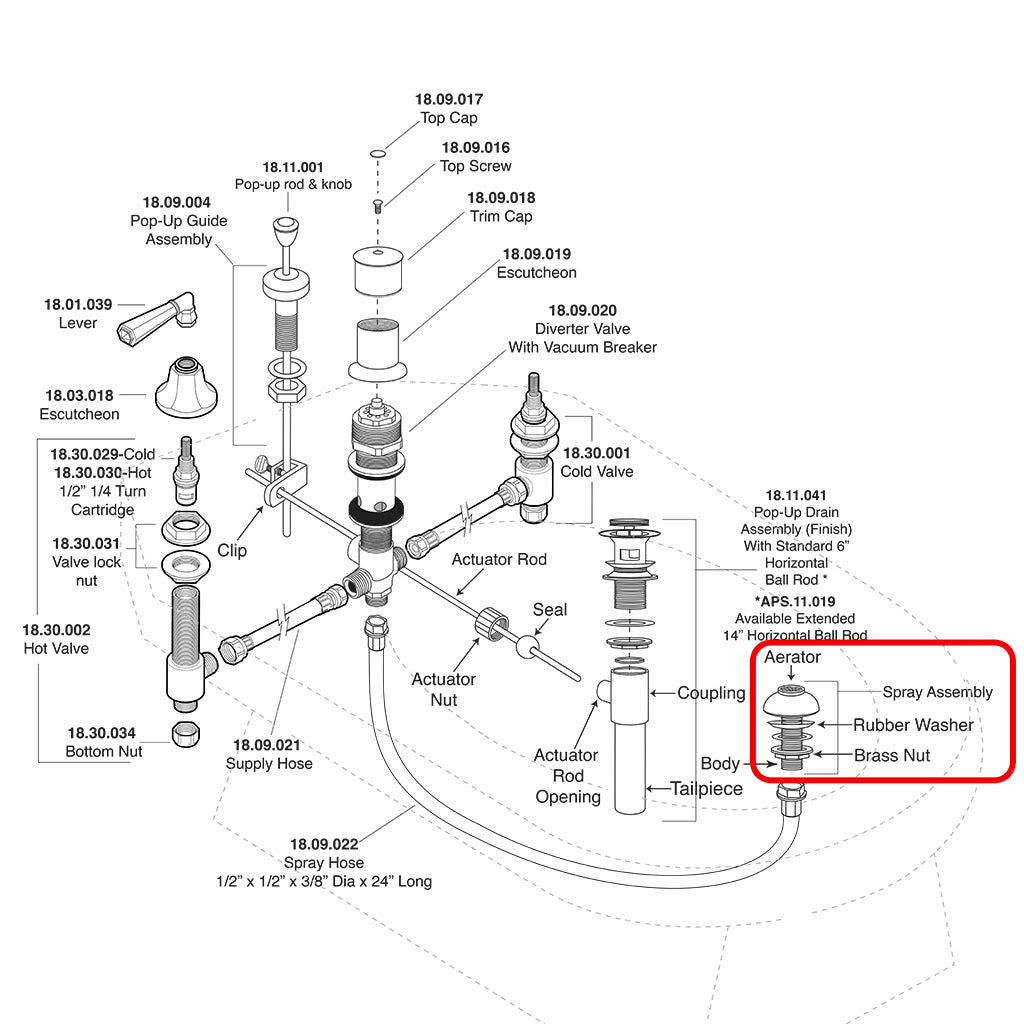
Causes include a clogged nozzle, partially closed T-valve, or low home pressure. Clean the aerator, open the T-valve fully, or upgrade to a pressure-boosting model.
Leaking Hose
Loose fittings, worn washers, or cracked O-rings cause leaks. Tighten connections, replace seals, and inspect for damage.
Sprayer Won’t Shut Off
A stuck trigger or debris in the valve causes this issue. Disassemble, clean, lubricate, or contact the manufacturer.
Bad Smell
Bacteria in the hose or nozzle causes odors. Flush with vinegar, clean regularly, and ensure proper drying.
Frequently Asked Questions About Using a Bidet Sprayer
Is a bidet sprayer difficult to use for beginners?
Most users adapt quickly. Start with a wipe-first method: remove bulk residue with toilet paper, then use the sprayer for a final clean. This eases the transition significantly.
Can women use a bidet sprayer safely?
Yes. Women can use it for both anal and external genital cleaning. Always use a front-to-back motion to prevent UTIs, and avoid spraying inside the vaginal canal.
Does using a bidet sprayer cause splashback?
Some minor splashback is normal and unavoidable. You can minimize it by using lower pressure, increasing distance to 3 inches, and using short bursts instead of continuous spray.
How do I keep the nozzle clean?
Rinse the nozzle tip in the bowl after each use. Clean weekly with mild soap or vinegar solution. Never insert the nozzle into any body opening.
Do I need to turn off the water supply after every use?
Yes. Always turn off the T-valve after use to prevent leaks, hose degradation, and potential flooding from prolonged pressure.
Can I use a bidet sprayer with cold water in winter?
Yes, though cold water can be uncomfortable. Upgrade to a warm water model, install an electric bidet seat, or run hot water at the sink briefly to warm shared plumbing lines.
Key Takeaways for Using a Bidet Sprayer
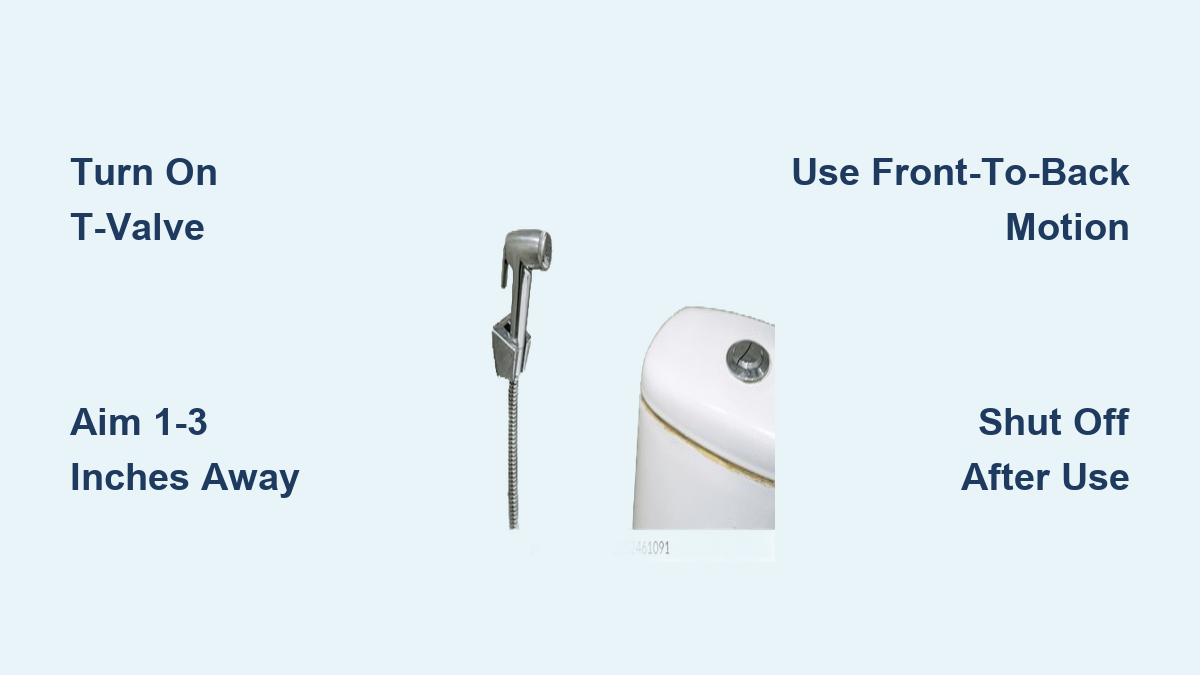
Mastering how to use a bidet sprayer isn’t complicated, it’s just different. The process involves turning on the T-valve, positioning yourself correctly, aiming the nozzle 1 to 3 inches away, testing pressure in the bowl first, and cleansing with appropriate techniques for your needs.
Always remember to turn off the T-valve after each use to prevent system damage and potential flooding. Women should use front-to-back motions for genital cleaning, while everyone should use back-to-front motions for anal cleansing to prevent bacterial spread.
With practice, most users find bidet sprayers more comfortable, cleaner, and more sustainable than toilet paper alone. Once you try it, you might say like so many others: I cannot go back.